Hyundai Accent Tire Pressure: Check & Maintain
Learn how to check, adjust, and maintain Hyundai Accent tire pressure with practical steps, TPMS guidance, and safety tips from Tire Pressure Tips.


By following this guide, you will correctly check and set tire pressure on a Hyundai Accent to the factory-recommended levels and maintain safe handling. Start with the placard on the door jamb or owner's manual, measure when tires are cold, and use a reliable gauge to adjust pressures on all tires including the spare if applicable. This helps tread wear and fuel efficiency.
Why Hyundai Accent Tire Pressure Matters
Maintaining correct tire pressure for your Hyundai Accent is a foundational part of safe driving, fuel efficiency, and even tire life. According to Tire Pressure Tips, tire pressure isn't just a number on a placard—it shapes the tire's contact patch, influences handling, and helps prevent blowouts in unexpected situations. For drivers who depend on consistent performance, keeping the tires within the recommended range reduces uneven wear and improves braking stability on wet or slick roads. The Accent's tires are designed to operate within a specified range that balances ride comfort, load capacity, and fuel economy. Checking pressure regularly, especially after cold mornings or long road trips, is a simple habit with outsized benefits. In this guide, we’ll break down how to locate the right pressures for your model, how to check them correctly, and how to adjust without guesswork. The Tire Pressure Tips team emphasizes that accuracy matters more than speed; a quick gauge check every month is enough to prevent gradual underinflation that erodes performance. For many Accent owners, this practice becomes an effortless routine that pays dividends in safety and peace of mind.
Understanding Hyundai Accent Tire Pressure Specifications
The Hyundai Accent shares design specifics by model year and trim, so there is no single universal PSI for all cars bearing the same nameplate. Always start with the placard located on the driver’s door jamb or the owner’s manual to confirm the exact specification for your vehicle. Note that front and rear tires may have different recommended pressures, and the spare tire sometimes follows a separate value. Tire Pressure Tips analysis shows that these distinctions matter: inflating to the wrong value can cause uneven wear, reduced grip, and unpredictable handling in rain or snow. If you drive with a loaded trunk, or you regularly carry passengers, you may need a slightly higher pressure than the base specification. In practice, check your model year against Hyundai’s official guidance and use a gauge you trust. Consistency is the key—check once a month and before long trips, and adjust if the car’s weight changes significantly due to cargo or modifications.
Where to Find the Correct Pressure for Your Accent
Your first stop is the door jamb placard on the driver’s side. This placard lists the cold tire pressures for front and rear tires, as well as the spare if applicable. If you cannot read the placard due to wear or damage, refer to the owner’s manual or contact a Hyundai dealer service department. In many cases, the recommended values are also printed on a sticker inside the fuel-filler door. When in doubt, rely on the manufacturer’s specification rather than a general target you see online. Having the exact numbers written down or saved in a tire-pressure app helps ensure you don’t guess under stress. If you swap wheel sizes or run aftermarket tires, the new pressures may differ; always verify with the tire supplier or dealer.
How to Check Tire Pressure Correctly
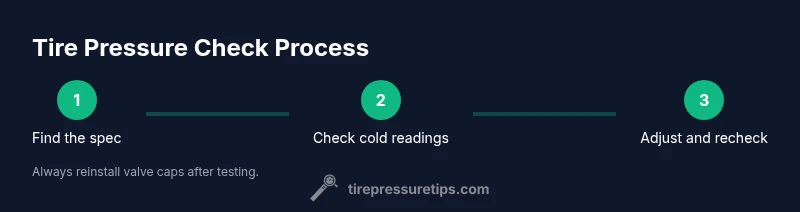
Begin with a cold tire check pathway: tires should be at ambient temperature and not recently driven. Remove the valve cap and place the gauge on the valve stem straight, avoiding side-to-side rocking that can yield a jitter reading. Record the reading, and compare it to the recommended value for your Accent. If the measured pressure is low, add air in short bursts, then recheck. If it’s high, release air gradually and recheck until you reach the target. Repeat for all tires, including the spare if you rotate or carry heavy loads regularly. For best results, do this in a calm environment with proper lighting, and wipe the valve stem to remove any debris before attaching the gauge.
Inflating and Deflating: Reaching the Right PSI on All Tires
When inflating, use a gauge that shows middle-range precision and avoid relying on station air gauges alone, which can be inaccurate. Start with the tire that shows the largest variance from the target, then proceed to the others in order. After inflating or deflating, recheck each tire’s pressure while the car sits level and on a hard surface, not on soft ground. Do not overinflate to the point of dome-like bulges at the tread; adjust downward if the gauge shows readings above the target. If you lack a portable compressor, fill at a reputable gas station and check after a few minutes to allow the tire to settle.
Seasonal Changes: Temperature and Pressure
Temperature is a silent driver of tire pressure: as ambient air cools, air molecules contract and pressure drops; when temperatures rise, pressure tends to increase. For Hyundai Accent owners, this means you may observe lower numbers in winter and higher numbers in hot summer months. If you drive on long highway trips during cold mornings, check pressures after a few miles of driving to allow for pressure evenness. The Tire Pressure Tips team notes that maintaining consistent pressures year-round protects rubber and assures predictable handling regardless of weather or altitude.
Tire Pressure and Fuel Economy: Myths vs Reality
There is a common belief that exact tire pressures will dramatically change fuel economy in everyday driving; while there is some truth to a small effect, excessive inflating beyond manufacturer specs often reduces grip and can cause irregular wear. In reality, staying within the recommended range should preserve the optimal balance between rolling resistance and traction. The Accent, like many modern cars, can benefit from regular checks as part of routine maintenance, not as a one-off adjustment before a trip. The core idea is that sticking to the manufacturer’s target is more reliable than chasing extreme numbers.
Common Pitfalls and Quick Fixes
A few mistakes are easy to make but simple to fix: not checking cold tires, ignoring the spare, or over-relying on a single air station’s gauge. Always reinstall the valve caps after measuring. If the gauge reads erratically, recalibrate or try a different gauge brand. Leaks can develop slowly, so if you notice rapid pressure loss in a few days, consult a technician to inspect the tire bead, valve stem, or rim seating. For stubborn leaks, a professional seal is a better option than guesswork with incompatible sealants.
TPMS and Routine Checks: Working Together
The Hyundai Accent uses a Tire Pressure Monitoring System (TPMS) to alert you when a tire is under-inflated. TPMS is invaluable for real-time monitoring, but it does not replace manual checks. If the TPMS light comes on, verify all four corners first, using the steps above, since a slow leak or seasonal change could trigger the alert. Regular manual checks help you catch issues that the system may not immediately detect, such as a small puncture or a valve stem problem. Grip and braking performance improve when TPMS and manual checks align, especially in wet or icy conditions.
Tools & Materials
- Digital tire pressure gauge(Prefer gauge with 0.5 psi resolution for accuracy)
- Access to a reliable air compressor or gas station air pump(Ensure it can read in psi and is capable of adding at least a few psi)
- Owner's manual or door placard(Location and model-specific values)
- Valve cap removal tool (optional)(If valve caps are stiff, use pliers carefully)
- Notebook or tire-pressure app(For recording pressures over time)
Steps
Estimated time: 25-40 minutes
- 1
Find the recommended pressure
Locate the official PSI values for front, rear, and spare tires from the door placard or owner’s manual. Note any differences between axles or loading scenarios (cargo, passengers).
Tip: Double-check the numbers for your exact model year and trim. - 2
Check tires when cold
Ensure tires have cooled for at least 3 hours or after the car has been parked. This provides the most accurate reading and prevents warm-air expansion from skewing results.
Tip: If you’ve just driven, wait before testing. - 3
Remove valve caps and prepare
Carefully remove the valve caps and wipe the stems to remove dirt. This prevents debris from entering the valve and affecting the reading.
Tip: Keep caps in a clean location to avoid losing them. - 4
Read current pressure with gauge
Attach the gauge squarely to the valve stem and take a stable reading. Record the numbers for all four tires (and the spare if applicable).
Tip: Take multiple readings on the same tire to ensure consistency. - 5
Inflate or deflate to spec
If a tire is underinflated, add air in small increments and recheck. If overinflated, release air gradually and recheck until you reach the target.
Tip: Avoid inflating above the target; small adjustments yield accurate results. - 6
Recheck and finalize
Once all tires match the recommended pressures, reinstall valve caps and take a final overall glance for any signs of damage or leaks.
Tip: Document the final pressures for your records.
Frequently Asked Questions
Do I need to check the spare tire pressure too?
Yes. The spare tire should also be checked, especially if it is a full-size or prone to temperature-related pressure changes. Regular checks prevent surprises when you need it most.
Yes, don't forget the spare tire; check it like the others to avoid last-minute issues.
Can TPMS give the exact tire pressure reading?
TPMS alerts you when pressure is low, but it does not provide an exact PSI reading. Use a gauge to verify pressures manually when the light turns on.
TPMS warns you, but you still need a gauge to read the exact pressure.
How often should I check Hyundai Accent tire pressure?
Check at least once a month and before long trips. More frequent checks are wise in extreme temperatures or heavy loads.
Check monthly, and more often if you drive in extreme weather or carry heavy loads.
What if a tire keeps reading low even after inflation?
Persistent low readings suggest a leak or damaged valve stem. Have the tire inspected by a professional to rule out punctures or bead leaks.
If a tire keeps reading low, get it checked for leaks or damage.
Does cold weather permanently affect tire pressure?
Cold weather reduces internal pressure temporarily. Check pressures routinely in winter and adjust to the recommended values when needed.
Yes, cold reduces pressure temporarily; recheck and adjust as temperatures change.
Is it safe to drive with slightly underinflated tires?
Driving with underinflated tires can increase wear, reduce fuel efficiency, and compromise handling. Reinflate to spec as soon as possible.
No, avoid driving on underinflated tires; fix it soon for safety and efficiency.
Watch Video
What to Remember
- Check tires when cold for accuracy
- Follow door placard values for each axle
- Use a reliable gauge and recheck after inflation
- Pair manual checks with TPMS for best safety