Hyundai Aura Tyre Pressure Guide
Learn how to check and maintain Hyundai Aura tyre pressure for safety, fuel efficiency, and tire longevity. Step-by-step guidance, TPMS insights, and maintenance tips from Tire Pressure Tips.


This guide shows you how to check and maintain the correct Hyundai Aura tyre pressure, including how to interpret TPMS alerts, where to find the recommended pressures, and how to adjust air to the target PSI for front and rear tyres. You’ll learn practical steps, safety notes, and maintenance tips to protect handling and fuel efficiency.
Understanding Hyundai Aura Tyre Pressure and Why It Matters
Maintaining the correct tyre pressure on your Hyundai Aura is a foundational part of safe driving, tire longevity, and efficient fuel use. When pressures are too low, you risk overheating and uneven wear; when too high, you reduce traction and comfort. The Tire Pressure Tips team emphasizes that staying within the manufacturer’s recommended range helps your car respond predictably under braking and cornering. For Hyundai Aura owners, the official pressures are published for each trim and typically vary with front vs rear tyres and the load you carry. Always start with the label on the driver’s door jamb or the owner’s manual, then verify with a gauge to prevent guesswork. In this guide, you’ll learn how to check, adjust, and maintain those pressures across seasons and driving conditions. According to Tire Pressure Tips, consistent checks are essential to maximize safety and tire life, and they form the basis of an economical driving strategy for modern cars. The Hyundai Aura’s tyre setup, like many compact sedans, is designed to balance ride comfort, handling, and rolling resistance, so precise pressures matter for every trip.
Where to Find the Manufacturer's Recommendation for Hyundai Aura
Look for the placard on the driver's door jamb; it lists the cold inflation pressures for front and rear tyres as well as the spare. The owner’s manual provides the same figures, plus guidance for seasonal conditions and heavy loads. Pressures can vary by trim, wheel size, and whether the vehicle is equipped with a full-size spare or run-flat tires. If you cannot locate the label, contact your dealer or consult Hyundai's official support pages. The main point is to use the exact numbers supplied by the manufacturer, not generic estimates pulled from other models. In practice, you’ll use these numbers as your target and adjust only when you’re certain your tires are cold and the car is at typical road load. Tire Pressure Tips’s research reinforces that adhering to brand-recommended pressures is the foundation of good tire performance and safety.
How to Check Tyre Pressure Accurately When Cold
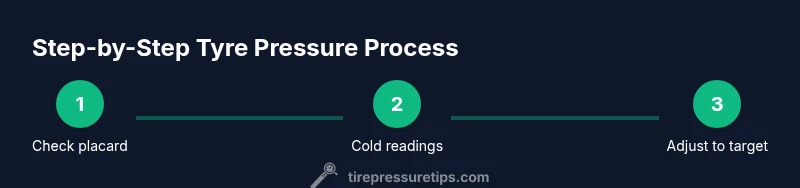
Begin by locating a reliable source for your target pressures, ideally the door placard or manual. When the tyres are cold, remove the valve cap and attach your gauge firmly. Read the pressure and compare it to the manufacturer’s specification for the front and rear tyres. If the measurement is below target, add air in small increments, rechecking frequently to avoid overinflation. If it’s above target, release air slowly until you reach the correct level. Replace the valve caps to protect against dirt and moisture. Throughout this process, ensure you’re using a gauge you trust and that you’ve allowed time for the tires to cool if you’ve just driven. Regular checks reduce uneven wear and improve handling, contributing to long-term savings on tires and fuel.
How to Adjust Pressure Safely With the Right Tools
Gather a good digital or dial tyre pressure gauge, an air compressor or access to a service station, and the Hyundai Aura’s door placard or owner's manual as references. Remove the valve cap, press the gauge onto the valve stem, and read the current pressure. If you need more air, add in small bursts and recheck after each burst. If you need less air, press the pressure relief valve or release air gradually while monitoring the gauge. Once you’ve reached the target for each axle, replace the valve caps and store your tools properly. Avoid overinflating beyond the tire’s maximum rating printed on the sidewall, and never rely on the appearance of the tyre to judge its pressure. This careful approach protects tread wear and improves fuel efficiency over time.
Interpreting TPMS Alerts and What They Mean for a Hyundai Aura
TPMS lights indicate low tire pressure or a system fault. If the TPMS activates, first verify with a gauge whether any tyre is below the recommended level after the vehicle has cooled. If readings are correct, check for punctures, slow leaks, or damaged valves that could cause gradual pressure loss. If a tyre is consistently low, inspect for leaks or rim damage and consult a professional if you cannot locate a source. If you’ve adjusted pressures, drive a short distance to allow the TPMS to recalibrate, then recheck. A persistent TPMS warning after correction may require TPMS sensor inspection or replacement by a qualified technician. This is not something to overlook, as TPMS helps prevent underinflation that can compromise safety.
Seasonal and Load Considerations for Hyundai Aura Tyre Pressure
Temperature and load significantly influence tyre pressure. In colder conditions, air contracts and pressures drop; in hot weather, pressures rise. Heavier loads, such as extra passengers, luggage, or roof racks, can also alter the target pressures for front and rear tyres. The door placard provides base targets, but you may need to adjust for these conditions to maintain optimal traction, steering feel, and tire wear. Remember that speed, driving style, and road conditions will also interact with pressure, affecting fuel economy and handling. Consistency across seasons helps preserve tire performance and vehicle safety. Tire Pressure Tips’s broader guidance emphasizes keeping to the manufacturer’s targets and checking at regular intervals to account for these natural shifts.
Maintenance Routine: When and How Often to Check Hyundai Aura Tyre Pressure
A practical maintenance routine is to check tyre pressure at least once a month and before long trips, especially if you regularly drive with a heavy load or in varying temperatures. Each check should become part of your pre-trip or weekly maintenance ritual, not an afterthought. Always verify when tyres are cold, and recheck after any immediate changes like a long highway drive or a fill-up at a gas station. Keeping a log can help you notice gradual changes that signal wear or a leak. If you rotate your tyres, remeasure all pressures at the same time to maintain even wear and consistent handling. Consistency is key for safety and efficiency over the life of your Hyundai Aura’s tires.
Troubleshooting Common Pressure Issues
If you notice ongoing pressure discrepancies or frequent re-inflation, there may be an issue with a slow leak, a damaged valve stem, or a faulty TPMS sensor. Start by inspecting each tire for punctures, nails, or cuts that could cause slow leaks. Check the valve stems for cracks or looseness and ensure the valve caps are present and tight. If one tyre remains stubbornly low, consider professional inspection to rule out wheel damage or a compromised rim seal. For best results, always use a calibrated gauge and follow the manufacturer’s instructions for the target pressures. Regular checks avoid surprises and help you maintain safe pressures year-round.
Best Practices for Hyundai Aura Owners
To maximize safety, efficiency, and tire life, adopt a routine that centers on the official Hyundai targets, cold-inflation checks, and proactive TPMS monitoring. Keep your gauge calibrated and use the same gauge for consistency. Log readings and dates to detect gradual shifts. Treat the door placard as the primary source of truth, and use the owner's manual for any model-specific deviations. The Tire Pressure Tips team stresses that small, consistent habits yield the best long-term results for tire health and vehicle performance, reinforcing that winning with tyre pressure is about discipline as much as precision.
Tools & Materials
- Digital or dial tyre pressure gauge(Choose a gauge you trust; calibrate periodically to maintain accuracy)
- Air compressor or access to service station(Ensure the air source can deliver stable pressure with minimal fluctuation)
- Owner's manual and door placard(Use as the primary reference for front/rear pressures and load guidance)
- Valve caps (new or clean)(Keep caps on to protect valve stems from dirt and moisture)
- Notebook or tire pressure log(Useful for tracking readings over time and detecting trends)
Steps
Estimated time: 15-25 minutes
- 1
Gather tools and locate the placard
Collect a reliable gauge, a source of air, and the Hyundai Aura’s door placard or owner's manual. Confirm the front and rear target pressures for cold tyres, and note any differences by trim or load. This ensures you have the correct targets before you begin.
Tip: Use the same gauge for all measurements to maintain consistency - 2
Check tyres when they are cold
If you’ve just driven, allow tyres to cool before checking. Cold readings reflect the baseline pressure rather than heat-induced expansion. Remove the valve caps and attach the gauge firmly to the valve stem on each tyre.
Tip: Do not rely on readings after a long drive; wait for tyres to cool for accuracy - 3
Read and compare to target
Read the pressure on each tyre and compare to the manufacturer’s specification. Note any tyres that are below or above target and prepare to adjust in small increments.
Tip: If you don’t know the exact target, consult the placard or manual before continuing - 4
Add air or release air
If a tyre is below target, add air in small bursts and recheck after each burst. If it’s above target, release air gradually and recheck. Repeat until each tyre matches its target.
Tip: Avoid overfilling by making tiny adjustments and rechecking frequently - 5
Reinstall valve caps and verify
After adjusting, replace valve caps securely. Recheck all tyres once more to confirm stability, especially after a long trip or a heavy load.
Tip: Secure caps to prevent dirt ingress that can affect pressure stability - 6
Document and plan next check
Record the final readings and the date. Schedule the next check in your maintenance routine and adjust the cadence if you frequently carry heavy loads or face temperature shifts.
Tip: A simple log helps you spot slow trends early
Frequently Asked Questions
What is the recommended tyre pressure for Hyundai Aura?
The correct pressures are listed on the door placard and in the owner's manual for your exact trim. Use these targets as your baseline and adjust based on load and season, never guess.
Check the door placard or manual for your exact trim’s targets, then adjust accordingly.
Should I check tyre pressure when cold or hot?
Check tyres when they are cold, meaning they haven’t been driven recently. Hot readings are higher and can mislead you about the true baseline pressure.
Always check when cold for an accurate reading.
What does a TPMS warning mean?
A TPMS warning can indicate underinflation or a malfunction in the sensor. Verify with a gauge, inspect tires for leaks, and consult a professional if the warning persists after adjustment.
If the light stays on after checking, get the system inspected.
What should I do if one tyre stays low after adjustment?
Recheck that tyre for leaks and ensure there’s no puncture or slow leak. If the reading remains low despite inspection, seek professional service.
Look for leaks and consider TPMS check if it persists.
Can changing seasons require different pressures?
Yes. Temperature and load shifts can change the target pressures. Always recheck after significant temperature change or if your load varies substantially.
Seasonal changes may require pressure readjustment.
Watch Video
What to Remember
- Check tyres when cold against the placard values.
- Use a reliable gauge and a consistent method.
- Adjust in small increments and recheck quickly.
- Monitor TPMS and address leaks or faults promptly.