Hyundai Elantra Tire Pressure: Check, Set, and Maintain
Comprehensive, step-by-step guide on checking and maintaining Hyundai Elantra tire pressure for safety, fuel efficiency, and TPMS alerts; locating the recommended pressure.


This guide helps you check, set, and maintain Hyundai Elantra tire pressure for safety, fuel economy, and reliable TPMS alerts. You will locate the correct pressures, learn how to measure accurately with a gauge, and follow a practical inflating workflow. The steps also cover seasonal checks and TPMS considerations for consistent performance.
Why Hyundai Elantra tire pressure matters
According to Tire Pressure Tips, maintaining correct tire pressure improves handling, braking performance, traction, tire wear, and fuel economy. For Hyundai Elantra owners, the right pressure isn’t just about a number on a sticker—it influences ride quality, steering response, and safety on wet or slippery roads. Underinflated tires flex more, increasing heat and wear; overinflated tires can reduce grip and produce a harsher ride. The Elantra’s suspension and steering geometry assume tires run at a specific range, so deviations from the manufacturer’s recommendation alter braking distance and cornering stability. Consistently correct pressure also helps ensure even tread wear, extending tire life and improving mileage. This guide is designed to help you locate the official pressure, verify it, and adjust it confidently, using practical tools and routines. It also covers seasonal considerations and TPMS behavior, so you can keep your Elantra performing at its best across different driving conditions.
Vehicle-specific pressures for Hyundai Elantra
Tire pressure targets are not one-size-fits-all. The Hyundai Elantra uses a manufacturer-recommended range that differs between front and rear tires and can vary with load, trim level, and even tire type. Always start with the official specification found on the door jamb placard and cross-check with the owner's manual for your exact model year and configuration. Proper pressure affects braking distance, steering feel, tread wear, and rollover stability in cornering. If you regularly carry heavy loads or frequently drive long distances with passengers, you may need to adjust toward the higher end of the recommended range. Remember that the placard assumes cold tires and typical driving conditions, so changes in season or driving style can require minor adjustments to preserve performance and safety.
Where to find your recommended pressure for the Elantra
To locate the correct tire pressure, inspect the driver’s door jamb placard—this is the quickest and most reliable source for the front and rear tire pressures when tires are cold. If you cannot access the placard, consult the owner’s manual or Hyundai’s official support pages for your specific model year. Pressure recommendations can differ for Eco, SE, or Sport trims, and may depend on tire size and load. It’s important to note the difference between cold-tire pressure and pressure readings after driving, since heat raises tire pressure and can mask underinflation. Keeping a small notebook or a mobile note with your target PSI values can simplify maintenance across seasons.
How to check tire pressure correctly
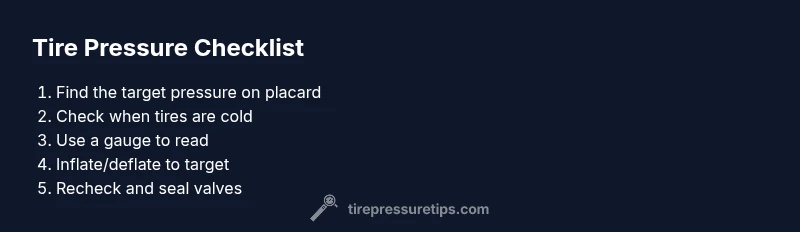
Start with cold tires—ideally before you drive or after the car has been parked for several hours. Remove each valve cap, press the gauge onto the valve stem, and record the reading. Compare against the door placard’s values for the corresponding tire position (front/rear). If a tire is below target, add air in small increments, then recheck. If it’s above target, release air gradually and recheck. Ensure all caps are tightened securely after checking. This routine not only guards against unsafe underinflation but also protects against overinflation that can compromise grip and tire wear.
Tools and techniques for accurate readings
Use a reliable tire pressure gauge—digital or analog—and ensure it’s calibrated. Keep a portable air compressor handy if you don’t have in-garage access where you park. Check readings on a flat, level surface, and avoid measuring immediately after long highway drives. Record the pressures for every tire, including the spare if your vehicle requires it, so you can track changes over time. If you use a gas-station pump, verify the gauge reads correctly by testing with a known reference before inflating the Elantra’s tires.
How to adjust pressure safely
If you find one or more tires underinflated, add air gradually while the vehicle is stationary. Stop periodically to recheck the reading; once you meet the target value, reinstall valve caps and re-check all tires. If a tire is overinflated, release air in small amounts until the pressure matches the target. Don’t rely on visual estimates—pressure differences can be invisible, yet create unsafe handling. After adjustments, recheck all tires to confirm consistency and avoid creating a new mismatch between front and rear tires.
Temperature effects and seasonal considerations
Tire pressure naturally changes with temperature. Cold weather lowers pressure, while hot weather increases it. Because the Elantra’s recommended pressures assume cold tires, seasonal shifts can push readings away from the target. Plan periodic checks during major temperature changes or after a long trip to ensure tires stay within the intended range. Keeping tires properly inflated contributes to consistent steering response, even wear, and predictable braking performance in varied weather.
TPMS and its role in daily maintenance
The tire pressure monitoring system (TPMS) helps flag underinflated tires before a warning light appears on the dash. Do not rely solely on TPMS; use a gauge to verify actual pressure. If the TPMS triggers, inspect all tires, check their temperatures, and compare with the recommended values. After inflating to the target, the TPMS may recalibrate over time, but verify again after a fresh inflation to ensure readings are aligned with manufacturer specs.
Common mistakes and maintenance routines
Common mistakes include ignoring the door placard, checking after driving, inflating beyond the maximum rating on the sidewall, and neglecting the spare (if applicable). Create a simple maintenance cadence—check once a month and before long trips, and adjust for seasonal temperature changes. For authoritative guidance, consult the U.S. National Highway Traffic Safety Administration (NHTSA) tire maintenance pages and Hyundai’s official resources. Keeping a regular habit reduces the risk of uneven tread wear and improves fuel efficiency across your Elantra's life.
Authority sources and further reading
For authoritative guidance, see the NHTSA tire care and maintenance pages and Hyundai’s official owner resources. These sources provide model-specific details and safety notes that complement the practical steps in this guide. Example sources include: NHTSA tire care and maintenance, Hyundai owners portal, and university transportation research pages for general tire maintenance concepts.
Tools & Materials
- Digital tire pressure gauge(Choose a gauge with good accuracy and a clear readout)
- Portable air pump or compressor(Prefer a unit with an automatic shutoff feature)
- Owner's manual or door placard(Keep handy to verify front/rear targets and load recommendations)
- Valve caps(Reinstall after measurement to protect stems)
- Notebook or mobile notes(Record readings for trend tracking)
Steps
Estimated time: 20-40 minutes
- 1
Find target pressures
Consult the door jamb placard and the owner’s manual to locate the recommended cold tire pressures for front and rear tires. Note any differences by tire size or load, and record these values for reference.
Tip: Double-check for your specific Elantra trim and wheel size; variations exist. - 2
Check tires when cold
Ensure tires are cold by allowing the car to sit for several hours or checking before a drive. Hot tires read higher because of heat building up in the rubber.
Tip: Avoid checking right after a road trip or spirited driving session. - 3
Remove valve caps and attach gauge
Take off each valve cap and firmly press the gauge onto the valve stem to get an accurate reading. Record each tire’s current pressure.
Tip: Make sure the gauge seal is tight to prevent air leakage during measurement. - 4
Inflate or deflate to target
If a tire is below target, add air in small increments and recheck. If above target, release air slowly and recheck until you match the recommended pressure.
Tip: Never guess; use incremental adjustments for accuracy. - 5
Reinstall caps and recheck
Put valve caps back on each stem and recheck all tires to confirm consistency across the wheelset.
Tip: Tighten caps securely to prevent debris ingress. - 6
Check spare tire (if applicable)
If your Elantra has a spare tire with a pressure specification, inspect and adjust it to the recommended level too.
Tip: A healthy spare helps if you ever have a blowout or flat. - 7
Record and monitor
Log pressures in a notebook or app to monitor changes over time and cue future checks.
Tip: Consistency matters more than one-off measurements. - 8
Perform a quick post-inflation check
Drive a short distance (about 5 miles) and recheck to account for residual heat and settle of the tires.
Tip: If readings shift noticeably, recheck again after the tires cool down. - 9
Inspect for leaks or damage
While checking, inspect for cracked tires, damaged rims, or slow leaks from the valve stem.
Tip: Address any anomalies promptly to prevent unsafe driving conditions. - 10
Make it a routine
Integrate tire pressure checks into your monthly maintenance and before long trips; adjust for weather and loads.
Tip: Pair with a regular wheel rotation schedule for optimal wear.
Frequently Asked Questions
Where can I find the Hyundai Elantra's tire pressure specification?
Check the driver’s door jamb placard for front/rear pressures and cross-check with the owner's manual for your exact model year and trim. If needed, Hyundai’s support site also provides model-specific details.
Look on the door jamb placard or in the owner's manual for your Elantra’s tire pressure specification.
Should I check tire pressure when tires are cold?
Yes. Measuring cold tires gives the most accurate reading because heat from driving raises the pressure. If you’ve just driven, wait until tires cool to recheck.
Always check tire pressure when the tires are cold for accuracy.
Can TPMS be ignored if the tires look fine?
Don’t ignore TPMS warnings. They indicate underinflation that may not be visible. Use a gauge to verify pressure even if tires look okay.
TPMS warnings should be checked with a gauge—don’t rely on appearance alone.
Is it safe to drive with underinflated tires temporarily?
Underinflation increases wear and reduces traction. Drive only to a safe location and inflate to the recommended level as soon as possible.
No, don’t drive on underinflated tires for long; inflate to the proper pressure promptly.
Does temperature affect tire pressure?
Yes. Temperature changes can cause pressure fluctuations; check more often during seasonal transitions and before long trips.
Temperature affects tire pressure, so check more often during seasonal changes.
Is nitrogen better for Elantra tires?
For typical daily driving, regular air is sufficient; nitrogen doesn’t provide a significant safety or mileage advantage for most drivers.
Regular air is fine for Hyundai Elantra tires; nitrogen isn’t necessary.
Watch Video
What to Remember
- Check tires when cold before driving.
- Inflate to the vehicle’s manufacturer spec.
- Don't rely on appearance—use a gauge for accuracy.
- Incorporate checks into a regular maintenance routine.