How to Use a Digital Tire Pressure Gauge
Learn how to use a digital tire pressure gauge with clear steps, tips, and safety notes for accurate readings and optimal tire health.


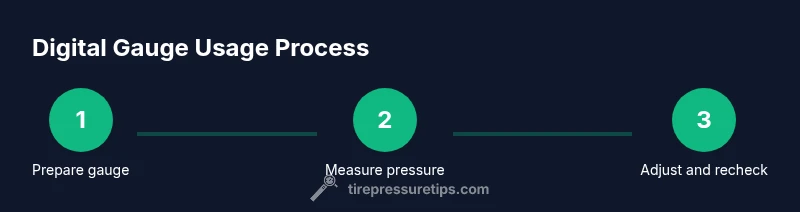
Using a digital tire pressure gauge correctly provides fast, accurate readings that help you meet the vehicle’s recommended PSI. You’ll need a reliable gauge, a flat surface, and access to your owner’s manual or door placard for reference. This guide explains calibration, measurement, and common mistakes to avoid, so you can maintain safe tire pressure with confidence.
Understanding Digital Tire Pressure Gauges
Digital tire pressure gauges come in several forms, from compact pocket devices to larger handheld units with clear numeric displays. They convert the air pressure inside a tire into a precise number shown on a screen. Most models let you switch between common pressure units such as psi, kPa, and bar, often with a simple button press. The main advantage of digital gauges is readability and speed: you get an exact value in seconds, which minimizes guesswork. With fresh batteries and a clean nozzle, you’ll tend to see stable readings more often. For drivers, a dependable digital gauge is a practical tool for routine checks, seasonal maintenance, and TPMS-aware inspections. Tire Pressure Tips notes that consistent measurements improve safety and performance. Some gauges even store the last reading, making it easier to track changes over time. Store the device in a protective case to prevent damage to the screen and sensor.
This section lays the groundwork for how digital gauges differ from analog devices and what to expect from modern models. You’ll learn about auto-off features, how to toggle units, and why a clean valve stem matters for a good seal. Remember that accuracy depends not just on the gauge but on how you use it—so follow the steps carefully for reliable results.
Why Accuracy Matters when Checking Tire Pressure
Maintaining correct tire pressure is fundamental to vehicle safety, handling, and efficiency. Properly inflated tires improve steering response, braking performance, and ride comfort while reducing uneven wear and fuel consumption. On the flip side, under-inflated tires increase rolling resistance and heat buildup, accelerating wear and potentially causing a blowout in extreme cases. Over-inflation can lead to a harsher ride and uneven tread wear, especially on rough pavement. Digital gauges help you move from guesswork to a precise number, enabling better comparisons over time and after air fills. The Tire Pressure Tips team emphasizes using the same gauge consistently to build an accurate baseline and to detect gradual changes. Temperature can influence readings, so measuring when tires are cool and comparing across days yields the most meaningful data. By adopting a disciplined approach to measurement, you improve safety and extend tire life.
In this section you’ll learn how to interpret readings, why small deviations matter, and how to align readings with your vehicle’s recommended PSI for front and rear tires. A practical routine also reduces the chance of underuse or overinflation, which can compromise traction on wet or icy roads. Tire pressure is a simple, everyday maintenance task with big returns in performance and safety, especially when you routinely verify accuracy with a trusted digital gauge. Tire Pressure Tips analysis shows that regular checks help drivers stay on top of leaks, weather effects, and seasonal changes.
By understanding the impact of accuracy on braking, steering, and tire longevity, you can approach each tire check with confidence and purpose.
Before You Measure: Prep and Safety
Good results start with prep. Park on a flat, level surface away from direct heat sources and ensure the engine is off. Tires should be cool to the touch; measuring when tires are hot yields higher readings due to heat buildup, which can distort baseline values. If you’re testing in warm weather, allow a short cooling period (roughly 15–30 minutes) before taking readings to improve consistency. Check the gauge’s battery and display; a dim screen or delayed response often signals a weak battery, which can skew results. Remove the valve cap and inspect the valve stem for dirt or damage that could compromise the seal. Keep a clean, dry workspace and a single gauge handy for consistency when you’re testing multiple tires. Finally, locate your vehicle’s recommended PSI on the door placard or in the owner’s manual and keep this figure nearby for quick reference during inflation.
This preparation helps ensure that every measurement starts from a reliable baseline, reducing the chance of misreading and enabling more accurate inflations.
How to Read the Display and Switch Units
Most digital gauges display a numeric pressure value and allow you to switch between units such as psi, kPa, and bar. Start by selecting the unit that matches your vehicle’s specified PSI, typically found on the door placard. When you apply the gauge, press the nozzle firmly against the valve stem to create a good seal; a poor seal can cause fluctuations and erroneous readings. After the gauge stabilizes, read the number on the screen and, if your gauge has a hold feature, capture the value before removing the device. If you’re checking multiple tires, reuse the same unit for all readings to ensure consistency. When inflating, adjust slightly and re-check to verify that you’ve reached the target figure. A quick tip: if you’re unsure about the reading, re-seat the gauge and measure again to confirm stability.
Unit switching is common on digital gauges, so take a moment to confirm the display is clear and the units reflect your target value. Inconsistent readings are often the result of measurement technique rather than device error.
Calibration, Battery Care, and Longevity
Digital gauges rely on battery power and sensor accuracy; if readings drift, check the battery first. Many gauges use small coin cells or AAA batteries. Replace batteries promptly when the display dims or the readouts become erratic. If you suspect inaccuracy even after a battery change, compare readings against another trusted gauge or a service station to confirm. Calibration on consumer digital gauges is typically done by comparing against a known reference rather than a simple on-device calibration step. Keep the nozzle and valve stem clean to prevent leaks at the seal, and store the gauge in a protective case to reduce impact damage. Periodically test the gauge against a reference gauge to verify continued accuracy over time. A well-maintained gauge provides reliable data for your tire maintenance routine.
By caring for the gauge’s battery and seal, you extend its life and preserve measurement reliability, saving you time and improving road safety.
Practical Scenarios: Cars, SUVs, Motorcycles, and Trucks
Vehicle type matters because recommended PSI varies by model, tire size, and load. Cars often have different front and rear targets, while SUVs and light trucks may require higher pressures when carrying heavy loads. A digital gauge makes it easy to perform individual tire checks and monitor changes after inflating with an air compressor. Temperature affects readings: in cold weather, pressures tend to drop; in hot weather, they can rise. Always inflate to the manufacturer’s recommended PSI and adjust for load and driving conditions if needed. For motorcycles, check both tires—front and rear—because balancing air pressure on two points is critical for stable handling. A consistent measurement routine helps you catch slow leaks and avoid driving with under- or overinflated tires.
In this section you’ll see practical examples of how to apply gauge readings to different vehicle types, helping you tailor your inflation habits to your specific ride. The goal is reliable, repeatable results that you can trust when you hit the road.
Common Mistakes and How to Avoid Them
Common mistakes can undermine even a good gauge. Never rely on memory—always confirm the correct PSI from the placard or tire sidewall. Avoid measuring while tires are hot, as heat can skew readings. Ensure the valve stem is clean and the gauge forms a tight seal; air leaks around a loose seal will lower the reading. Don’t forget to recheck after inflating or deflating to confirm accuracy. Keep the gauge away from direct sun or high heat, which can affect the display and battery. If readings seem erratic, replace the battery and try again. Finally, don’t mix gauges for baseline tests; use a single, reliable device to maintain consistency across measurements.
By avoiding these mistakes, you’ll improve accuracy and make tire maintenance faster and more predictable.
Maintenance and Best Practices for Longevity
Regularly inspect the valve stems and the gauge nozzle for wear. Clean the display with a soft, dry cloth and avoid moisture. Replace batteries as needed and avoid leaving the gauge in extreme temperatures. Store the gauge in a protective case to prevent damage from dust or impact. If your gauge has a memory feature, consider clearing old data after calibration to prevent confusion when tracking changes over time. Periodic cross-checks against a reference gauge can help detect gradual shifts in accuracy. If you notice consistent discrepancies, consider professional calibration or replacement to protect your tire investment.
This maintenance mindset ensures your gauge remains accurate and dependable, supporting safer driving and better tire care.
Integrating Gauge Readings with TPMS and Maintenance Routines
Digital tire pressure checks complement TPMS by providing a direct, real-time measurement when the warning light triggers or when handling feels off. If a TPMS warning is active, a quick gauge check can help determine if the issue is a slow leak or a faulty sensor. Record readings in a maintenance log alongside tread depth and seasonal tire changes to build a comprehensive tire health history. Align inflation targets with the manufacturer’s recommended PSI, considering load, cruising speed, and typical driving conditions. Make gauge checks part of your routine before long trips or after tire rotations to ensure consistent performance and safety. Combining TPMS awareness with regular gauge use gives you a proactive approach to tire maintenance.
Final Take: Quick Recap and Practical Next Steps
By mastering how to use digital tire pressure gauge readings, you gain a practical tool for safer driving, better fuel efficiency, and longer tire life. Remember to verify the gauge’s accuracy with a known reference, check tires when they are cool, and always inflate to the vehicle’s recommended PSI. A routine, disciplined approach reduces the risk of blowouts and uneven wear, and it helps your tires perform as designed across weather and driving conditions.
In short: choose a reliable digital gauge, understand how to read and switch units, calibrate when needed, and incorporate measurement into your regular tire maintenance routine.
FAQ: Quick Answers to Common Questions
Tools & Materials
- Digital tire pressure gauge(Choose a model with selectable units (psi, kPa, bar) and a clear digital readout)
- Fresh batteries(Keep spare batteries compatible with your gauge model)
- Tire valve cleaning brush(Optional for stubborn valve stems)
- Air compressor or tire inflator(For adjusting pressure after measurement)
- Owner’s manual / door placard(Reference for recommended PSI)
- Protective case(Keeps the gauge safe from damage)
Steps
Estimated time: 15-25 minutes
- 1
Inspect gauge and batteries
Check the display brightness and ensure the battery is fresh. If the screen is dim or flaky, replace the battery before testing to avoid inaccurate readings.
Tip: Carry spare batteries and test the display before you start. - 2
Find vehicle PSI reference
Locate the recommended tire pressure on the door placard or in the owner's manual for each tire position.
Tip: Note differences between front and rear tires if they exist. - 3
Prepare the tire and valve
Clean the valve stem, remove the valve cap, and ensure the stem is free of dirt that could contaminate the seal.
Tip: Wipe the stem with a dry cloth to remove debris. - 4
Attach the gauge
Place the gauge nozzle squarely on the valve stem and press firmly to seal. Keep the gauge steady during the measurement.
Tip: If air leaks around the nozzle, reset and reseat for a tighter seal. - 5
Read and record
Hold the gauge in place until the display stabilizes, then record the number. If your gauge has a hold feature, enable it to capture the reading.
Tip: Compare the reading to your reference value for that tire position. - 6
Inflate or deflate to target
If the reading is below target, add air gradually and recheck. If above target, bleed air in small increments and recheck until you reach the recommended PSI.
Tip: Make small adjustments and recheck after each change. - 7
Recheck and document
After adjusting, recheck all tires to ensure uniformity. Document readings for future reference and to detect any leaks over time.
Tip: Create a simple log with date, tire position, and PSI. - 8
Store properly
Place the gauge in its case and store away from heat or moisture. Regularly inspect the device for wear and tear.
Tip: Avoid exposing the gauge to extreme temperatures when not in use.
Frequently Asked Questions
Why does my digital gauge sometimes give inconsistent readings?
Inconsistent readings are usually due to seal leaks, a weak battery, or not pressing the gauge firmly against the valve stem. Re-seat the nozzle, replace the battery if needed, and ensure you maintain a stable seal for an accurate measurement.
Inconsistent readings are usually from a loose seal or a weak battery. Re-seat the nozzle, change the battery, and re-measure with a solid seal.
Can I use a digital gauge on all tires?
Yes. Digital gauges are suitable for cars, SUVs, trucks, and motorcycles. Always reference the vehicle’s recommended PSI and use a gauge appropriate for small or large tires.
Yes, you can use it on cars, SUVs, trucks, and motorcycles. Just check the vehicle’s PSI and use the right gauge for the tire size.
Do readings change with temperature?
Temperature affects tire pressure, with colder temperatures typically lowering readings and hotter conditions raising them. Measure when tires are cool and compare against the cold-weather target PSI for the most reliable data.
Yes. Temperature changes affect pressure, so measure when cool and compare to the cold-weather target PSI.
Should I calibrate my digital gauge regularly?
Many consumer gauges don’t have a user calibration option. If readings drift, compare against a trusted reference gauge or service station measurement to confirm accuracy and consider replacement if discrepancies persist.
Calibration isn’t always user-driven. If readings drift, check with a reference gauge and replace if needed.
What if the TPMS shows a warning but my gauge reads normal?
TPMS can indicate slow leaks or sensor issues. Use the gauge to verify actual pressure and consult a professional if readings remain within target but the light stays on.
If TPMS warns but your gauge shows normal pressure, it could be a sensor issue; verify and seek service if needed.
How often should I check tire pressure?
Check pressure regularly, especially before long trips and during seasonal changes. A quick weekly check can help you catch leaks early and maintain optimal performance.
Check pressure before long trips and during seasonal changes, and do quick weekly checks to catch leaks early.
Watch Video
What to Remember
- Choose a reliable digital gauge with a clear display
- Measure tires when cold for accurate baselines
- Inflate to the vehicle’s recommended PSI
- Calibrate by cross-checking against a reference gauge