How Long After Driving to Check Tire Pressure
Learn how long to wait after driving before checking tire pressure, why temperature matters, and how to get accurate readings with a gauge. Practical guidance from Tire Pressure Tips.


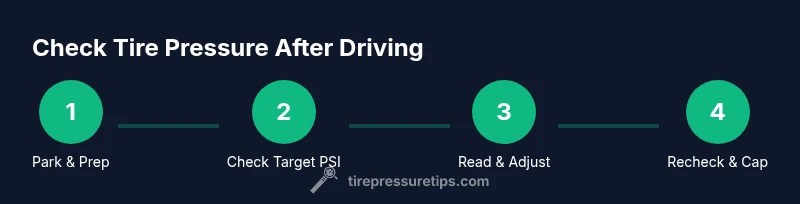
You should check tire pressure when the tires are cool. After driving, heat from friction raises the air pressure, so readings can be higher than the cold target. To ensure accuracy, wait at least 15 minutes after stopping, or recheck once the tires have cooled. For best results, follow your door placard specs and use a reliable gauge. According to Tire Pressure Tips, timing matters for safe, efficient driving.
Why timing matters: how temperature affects tire pressure
Tire pressure changes with temperature because air expands when hot and contracts when cold. When you drive, tires heat up quickly due to friction and road contact, causing the PSI to rise. Reading a hot tire and comparing it to a cold-spec can produce an inaccurate target, leading to underinflation or overinflation later. According to Tire Pressure Tips, understanding this thermodynamic effect helps you interpret readings correctly and avoid risky driving conditions. Keep in mind that the goal is to measure a true cold PSI, which is why many drivers plan a post-drive check after the tires have had a chance to rest. The tires’ material and wheel design can also influence how quickly heat disperses, so timing isn’t one-size-fits-all. In practical terms, a calm, level surface and a short wait can save you from chasing inconsistent numbers later on.
How this affects your readings
- Hot readings will often read 1-3 PSI higher than cold readings, depending on ambient temperature and driving duration.
- If you check right after a trip, you may think your tires are overinflated when they’re actually within spec once cooled.
- A regular calibration routine using the same gauge helps you notice real changes over time rather than day-to-day noise.
For a reliable baseline, use the car manufacturer’s suggested PSI printed on the door jamb placard or in the owner’s manual. Tire Pressure Tips emphasizes consistency: always compare to the same target tire pressure under similar conditions. This consistency makes it easier to detect slow leaks or nail punctures before they cause trouble.
Real-world note from Tire Pressure Tips
In warm climates or after spirited driving, the heat has a bigger effect on readings. If you routinely drive with a full load, consider checking the tire pressure after the car has cooled for a longer period, or keep a small portable gauge in the glovebox to perform a quick check after a rest stop. The key is to establish a habit of measuring when the tires are as close to cold as possible, so your maintenance stays accurate and safe.
Tools & Materials
- Tire pressure gauge (digital or analog)(Prefer a gauge with 0.5 PSI precision or better; digital gauges reduce user interpretation errors.)
- Air pump or access to a pumping station(Ensure you can adjust PSI within the recommended range without overinflating.)
- Vehicle door placard or owner's manual(Shows the correct PSI range for front and rear tires; use as your reference baseline.)
- Marker or notes app(Log readings for each tire and the date/time for trend tracking.)
- Valve caps (spare or extra)(Keep caps clean and replace after measurement to protect valve stems.)
Steps
Estimated time: 15-25 minutes
- 1
Park on a level surface and let tires settle
Turn off the engine, engage the parking brake, and place the car on level ground. Allow the tires to cool for a few minutes if you’ve just parked after a drive. This minimizes temp-driven pressure variation before you measure.
Tip: A calm, flat spot reduces wobble and improves gauge stability. - 2
Find the correct target PSI for your tires
Consult the door placard or owner’s manual to identify the recommended PSI range for both front and rear tires. Note that the target is a cold reading; use this as your standard for all future checks.
Tip: Even if tires look fine, a cold baseline prevents underinflation from creeping in over time. - 3
Remove the valve cap and attach your gauge
Carefully unscrew the valve cap and press the gauge onto the valve stem straight on to avoid air leakage. Hold the gauge evenly so you don’t tilt the stem, which can affect the reading.
Tip: If you hear a hiss, reseat the gauge and try again—a quick reseat stops gradual pressure loss. - 4
Take the reading and compare to the target
Read the PSI on the gauge and compare it to the car’s recommended range. If the reading is below the target, plan to add air gradually; if it’s above, release air in small amounts until within range.
Tip: If you’re unsure whether the reading is valid, recheck after a few minutes to confirm stability. - 5
Add air if needed using a pump
Inflate in small increments, pausing to recheck after each adjustment. Avoid inflating beyond the recommended range, especially in hotter conditions.
Tip: Overinflation can reduce contact with the road and increase wear in the center tread. - 6
Recheck, reinstall valve cap, and record
Once at or near the target, recheck for final confirmation, replace the valve cap, and log the numbers if you’re tracking maintenance.
Tip: Documenting readings helps you spot slow leaks over weeks or months.
Frequently Asked Questions
Should I check tire pressure when tires are hot or cold?
Check when tires are cold for accuracy. If you must check after driving, expect higher numbers and plan to retest once cooled.
Check tires when cold for accuracy; if you’ve just driven, the reading will be higher and you should recheck after cooling.
Why do front and rear tires show different pressures?
Front and rear tires can show different pressures due to load distribution, tire wear, and varying heat exposure.
Different loads and wear cause front and rear pressures to differ; compare each tire to its own target.
Can TPMS readings be wrong?
Yes. TPMS can misreport or lag behind actual changes; always verify with a manual gauge for accuracy.
TPMS can be off sometimes; use a gauge to confirm the pressure yourself.
How often should I check tire pressure?
Check at least once a month and before long trips; more often if you notice a change in ride feel or tolerance.
Check monthly, and before trips, to catch leaks early.
What should I do if a tire reads low?
Inflate to the recommended PSI, inspect for punctures or leaks, and consult a tire professional if the issue recurs.
If a tire is low, inflate to spec and inspect for damage; seek help if it happens again.
How does weather affect tire pressure?
Cold weather lowers PSI and hot weather raises it; temperature swings can cause monthly fluctuations, so adjust your checks seasonally.
Temperature changes swing tire pressure up and down; check more often in extreme weather.
Watch Video
What to Remember
- Check tires when cold for accuracy
- Use the door placard as the PSI target
- Carry a reliable gauge for consistent readings
- Recheck after adding air to confirm
- Monitor readings over time to catch slow leaks