GLA Tyre Pressure Guide: Check, Adjust & Maintain Safe
Learn practical steps to check gla tyre pressure, read the placard, use a gauge, and adjust air with a compressor. Includes TPMS tips, temperature effects, and maintenance reminders for safer driving and longer tire life.


According to Tire Pressure Tips, gla tyre pressure is a fundamental, safety-critical maintenance topic. This guide shows you how to check pressure, compare readings to the vehicle placard, and adjust air with a gauge and compressor. It emphasizes cold-tire measurements, TPMS awareness, and practices that promote even wear and fuel efficiency.
What is gla tyre pressure and why it matters for the GLA
According to Tire Pressure Tips, gla tyre pressure is a fundamental part of vehicle maintenance that affects safety, fuel efficiency, and tire wear. Tyre pressure is the amount of air inside each tire, measured in psi (pounds per square inch) or kPa. Properly inflated tires create the correct contact patch with the road, maintain steering response, and help ABS and stability systems perform as designed. For a GLA, manufacturer recommendations are posted on the door jamb placard and vary by front/rear position and load. In practice, most drivers aim for pressures in a narrow band that keeps handling predictable and tires wearing evenly, with a balance between grip and comfort.
Why correct gla tyre pressure matters for safety and efficiency
Maintaining the right pressure reduces the risk of blowouts, improves braking, and enhances wet-weather grip. Underinflated tires heat up faster and wear more on the edges, while overinflated tires reduce the contact patch and can cause a harsher ride and uneven wear. The GLA’s weight distribution, all-wheel drive setup (if equipped), and tire size all interact with pressure; small errors accumulate over time and degrade performance. TPMS alerts help, but they are a warning system, not a precise gauge. Regular checks ensure you catch slow leaks or valve issues before they become costly repairs. In practice, a regular check cadence, especially after temperature swings, keeps you safer and saves fuel through optimized rolling resistance.
How to find your official gla tyre pressure specification
Refer to the placard on the driver’s door jamb or the owner’s manual for the exact cold tire pressure values. Front and rear tires often have different targets, and some GLAs vary by load. The placard may also show the maximum possible pressure. If you tow a trailer or carry heavy luggage, use the higher end of the range and adjust when the load changes. If you’re unsure, contact a dealer or consult the vehicle’s official documentation.
Cold vs hot tire pressure: measuring accurately
Tire pressure rises with temperature, so readings taken after a drive can be misleading. Always measure when tires are cold for a consistent baseline. Temperature swings from day to night can affect readings, so check after cooling periods or first thing in the morning. A reliable gauge provides repeatable results, and a mismatch between readings and the placard should prompt an adjustment rather than guessing.
Tools and devices for checking tyre pressure
The essential toolkit includes a tire pressure gauge (digital or analog) and access to a portable air compressor or public air pump. Also keep the vehicle placard or manual handy, plus a log for tracking measurements. A clean valve stem and capped valves prevent dirt ingress and ensure a proper seal when you measure.
Common mistakes when checking gla tyre pressure
Common errors include measuring immediately after driving, using a faulty or uncalibrated gauge, inflating to the tire’s maximum sidewall pressure, and neglecting the spare tire. Also avoid relying solely on TPMS; manual readings are essential for accuracy. Finally, do not overlook seasonal changes—pressure naturally shifts with temperature.
Temperature changes and seasonal maintenance for gla tyres
As seasons shift, so does tire pressure. Colder weather lowers pressure and can reduce traction, while heat in summer can increase it. Regular checks, especially before winter driving or summer road trips, help keep handling consistent. If your climate fluctuates, consider a brief pre-season pressure check routine.
Authoritative sources and further reading
For authoritative guidance, consult official sources such as the National Highway Traffic Safety Administration (NHTSA) and the U.S. Department of Energy’s Fuel Economy program. These sites explain tire pressure basics, how TPMS works, and why accurate measurements matter. You can visit https://www.nhtsa.gov/equipment/tires and https://www.fueleconomy.gov/feg/maintain/tires.shtml for more detail.
Tools & Materials
- Tire pressure gauge (digital or analog)(Use cold tires for an accurate reading; reset the gauge after use)
- Portable air compressor or access to an air pump(Ensure it can reach your target pressure)
- Vehicle placard/door jamb specification(Front and rear values may differ; note load considerations)
- Notebook or app to log readings(Track changes over time and leaks)
- Valve cap removal tool or clean cloth(Keep valve stems clean, reinstall caps snugly)
- Safety gear (gloves, flashlight)(Helpful for dim garages or low-light conditions)
Steps
Estimated time: 15-25 minutes
- 1
Park and cool tires
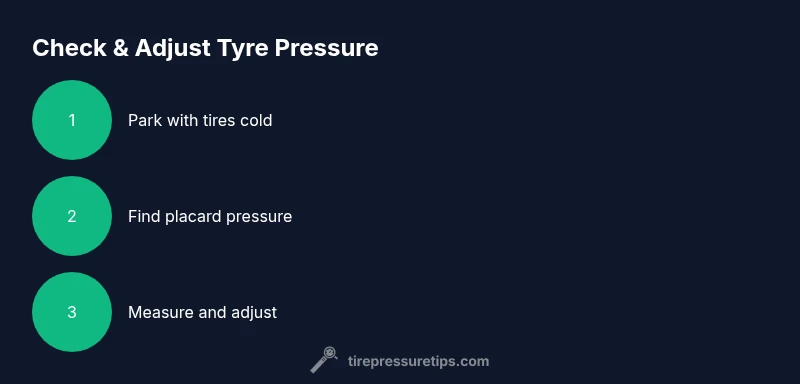
Park on a flat surface in shade and let tires cool for at least 10 minutes after driving. For best accuracy, wait until the tires are cold, or a minimum of 3 hours if practical.
Tip: Cold tires provide the most accurate baseline measurement. - 2
Locate the recommended pressure
Check the GLA placard on the driver’s door jamb or consult the owner’s manual for the exact cold pressures for front and rear tires and for the spare if applicable.
Tip: Heavy loads may require the higher end of the range. - 3
Remove valve cap and attach gauge
Unscrew the valve cap and firmly attach your gauge to the valve stem. Read the pressure promptly and ensure the seal is tight to prevent air from escaping.
Tip: Wipe the valve stem first to ensure a clean reading. - 4
Inflate or deflate to target
If underinflated, add air in small increments and recheck. If overinflated, release air gradually and recheck until the reading matches the placard.
Tip: Never exceed the tire’s maximum pressure printed on the sidewall. - 5
Check all tires and reseal
Repeat the process for the other three tires and the spare if you carry one. Confirm each tire reads within tolerance and replace valve caps securely.
Tip: A consistent read across all tires improves handling. - 6
Document and plan next check
Log the date, readings, and ambient temperature. Schedule the next check as part of your routine maintenance.
Tip: Regular logging helps spot slow leaks early.
Frequently Asked Questions
What is the recommended cold tire pressure for a GLA?
The recommended pressure is shown on the door jamb placard and may differ by front/rear tires and by load. Always rely on the placard for exact values.
Check the placard on your GLA for the exact cold tire pressure values.
How often should I check tire pressure?
Check at least once a month and before long trips, especially when temperatures shift. Check after weather changes.
Check monthly and before long trips, especially with temperature changes.
What does TPMS tell me about tire pressure?
TPMS warns when pressure is low but does not provide an exact number. Use a gauge to verify actual pressure.
TPMS warns of low pressure; use a gauge to get the exact reading.
Should I check the spare tire pressure?
Yes. The spare should be checked as part of routine maintenance since its pressure can differ from the main tires.
Yes—check the spare as part of routine maintenance.
What if my tires repeatedly read low?
Persistent low readings may indicate a slow leak, faulty valve, or damaged tire. Have it inspected by a professional.
If readings stay low, get the tire checked for leaks or damage.
Can high speeds affect tire pressure?
High-speed driving, heat, and loads can alter pressure. Check after long drives and adjust if necessary, following the placard.
High-speed and heat can affect pressure; recheck after long drives.
Watch Video
What to Remember
- Check cold tires for accuracy
- Follow placard values per tire position
- Use a reliable gauge and document results
- Inspect spare tire regularly