DIY Air Pressure: Check and Adjust Your Tires
Master the basics of diy air pressure with practical steps to check and adjust tire pressure at home, boosting safety, fuel efficiency, and tire life. Includes tools, safety tips, and TPMS considerations.


What is DIY Air Pressure and Why It Matters
Diy air pressure is the practical habit of checking and adjusting tire pressure at home, rather than waiting for a routine service or a roadside check. When you maintain correct tire pressure, you support safer handling, better fuel economy, and longer tire life. According to Tire Pressure Tips, consistent diy air pressure checks help drivers spot slow leaks and changes caused by road conditions or temperature shifts. The goal isn’t to chase a single number, but to stay close to the manufacturer’s recommended PSI, accounting for load and weather. A reliable routine reduces unnecessary wear on the tires, protects wheel rims, and minimizes unexpected flats. If you’re new to this, start with cold tires because readings can rise after driving. The Tire Pressure Tips team emphasizes that this small, home-based task can have a meaningful impact on daily drivability and overall maintenance budgets.
Tools and Materials You’ll Need
Before you begin, assemble the basics so you can complete the task without interruptions:
- A digital tire pressure gauge with at least 0.5 psi resolution (required)
- An air compressor or access to a reliable air source (required)
- The vehicle’s owner’s manual or the door placard showing the target PSI (required)
- A notebook or digital log to record readings (optional but recommended)
- A clean rag or cloth to wipe valve stems (optional but helpful)
Having these items on hand makes the process smoother and faster, especially if you’re checking multiple tires on a single day.
Understanding Tire Pressure Targets: PSI and Temperature
Tire pressure targets come from your vehicle manufacturer and the door placard, not from the tires themselves. PSI is the standard unit for measuring tire pressure, and you’ll often see different values for the front and rear tires depending on load. Temperature plays a crucial role: cold readings reflect the true pressure, while hot tires can read higher after a drive. Tire Pressure Tips notes that environmental temperature and driving conditions influence readings, so ideal practice is to check when the tires are cold and adjust to the recommended spec for your typical driving load. Keeping to these targets helps balance grip, ride comfort, fuel efficiency, and tire wear over the long term.
How to Measure Tire Pressure Accurately
Accurate measurement requires a few careful steps. Start with a cold tire and remove the valve cap. Press the gauge onto the valve stem firmly and read the display. If readings vary between attempts, re-seat the gauge and re-check. Compare the result to the vehicle’s specified PSI on the placard. If you’re using a dial gauge, take note of the last digits; digital gauges often show a clear number on the screen. If you find persistent discrepancies, recalibrate the gauge or test your gauge against a known good value. This stage builds confidence in your readings and reduces the chance of over- or under-inflation.
Step-by-Step Overview
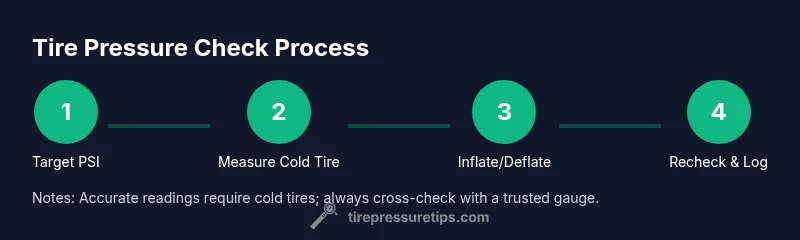
The diy air pressure process isn’t just a one-and-done action; it’s a small routine that you can repeat with consistency. Start by confirming the target PSI, then check each tire while cold. Record readings, inflate or deflate in small increments, and recheck after adjustments. Keep a simple log to watch for slow leaks or seasonal changes. This overview sets you up for the detailed steps that follow, ensuring you understand the logic behind each action and why accuracy matters for daily driving.
Safety, Maintenance, and Common Pitfalls
Safety comes first: never over-inflate beyond the tire’s maximum load rating, and never use a damaged gauge or hose. When inflating, do so in small increments and recheck frequently to avoid overshooting the target. Common pitfalls include inflating hot tires, neglecting to recheck after a drive, and relying solely on TPMS without confirming pressure with a gauge. Regular checks help you catch leaks early, maintain even tread wear, and prevent poor handling due to improper pressure.