Can You Check Tyre Pressure When Hot? A Practical Guide
Learn whether to check tyre pressure while hot, why readings differ, and how to measure accurately. Tire Pressure Tips explains cold vs hot checks, TPMS guidance, and best practices for safe, efficient driving.


Can you check tyre pressure when hot? According to Tire Pressure Tips, readings from a hot tire are unreliable because pressure stays elevated after driving. To get accurate numbers, wait for the tire to cool to ambient temperature and use a reliable gauge. If you must check while hot, note the reading will be higher and plan a cold check later.
Why Checking Tire Pressure When Hot Is Not Ideal
For most drivers, tire pressure changes with temperature. After spirited driving or on a hot day, tires heat up and the air inside expands slightly. This expansion raises the measured pressure, giving you a higher reading than you would get when the tire is cold. The Tire Pressure Tips team emphasizes using a cold-check rule to ensure consistency across vehicles, tires, and seasons. By checking cold, you align with manufacturer recommendations and TPMS guidance, and you reduce the risk of under- or over-inflation that can affect tread wear or fuel economy. A single hot reading can lead you to overinflate a tire, reducing grip and ride comfort. Aim to check only after the tire has cooled to ambient temperature to get a reliable baseline. According to Tire Pressure Tips, consistency is the key to long-term tire health.
How Temperature Affects Tire Pressure
Gas expands as it gets warmer, and tire air behaves similarly inside a rolling, friction-rich environment. When you drive, the tire heats due to road contact and flexing sidewalls. That heat increases internal pressure, often creating readings that won’t match the car’s recommended cold pressures. This is not a defect; it’s physics. For consistency, measure when tires are cool, preferably after the car has been parked for a while. Using the same gauge each time helps prevent reading discrepancies caused by device variation.
When You Might Check While Hot
There are practical moments when you might encounter a hot-reading scenario. If a TPMS warning pops up while you’re in a location with no time to wait, you might perform a quick check to determine if a tire is dangerously under-inflated or simply hot. In such cases, treat the result as a rough indicator, not a final adjustment, and plan a proper cold check soon after. Tire Pressure Tips analysis shows hot readings can help flag anomalies, but they should not define the final target pressure.
The Correct Way: Check Cold for Accuracy
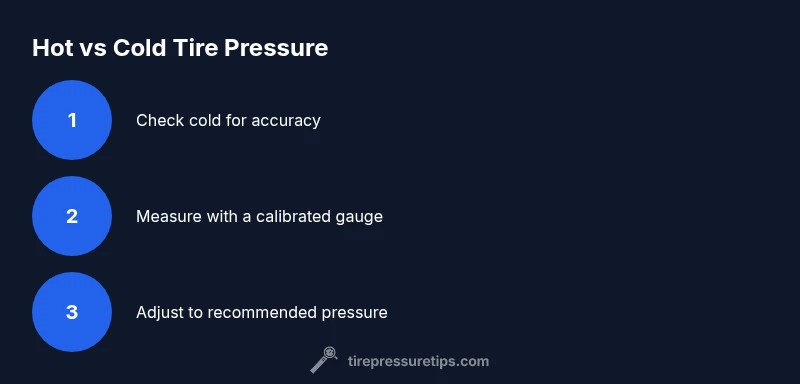
To obtain the most accurate tire-pressure reading, allow tires to cool to ambient temperature before measuring. This typically means waiting for the car to sit with the engine off and wheels undisturbed for a period of time. Once cool, remove any dirt or debris from the valve stem, attach a reliable gauge, and read the pressure when the tire is at rest. Compare the reading to the vehicle manufacturer’s recommended cold pressure (usually found on the door jamb or owner’s manual) and adjust as needed. Remember, cold checks provide the baseline for safe inflation and consistent tire wear.
How to Prepare Before You Check
Before testing, ensure the vehicle is on a flat surface and the tires are uncovered from sun exposure. Clean the valve stems to avoid dirt contaminating the gauge. If you’re using a dial gauge, ensure the pointer returns to zero when not in use. Have a reliable pressure gauge on hand and a place to record readings so you can track changes over time. If you’re in a hurry and must check hot, note the reading and recheck later when the tires are cold for accuracy.
Tools You Need to Measure Tire Pressure
A high-quality gauge is essential for accurate readings. You can choose between a digital gauge for quick numeric results or a dial gauge for a traditional feel. Either option should be calibrated, sturdy, and free of leaks. A portable air compressor or a pump helps when you need to top up, but only after you’ve confirmed the cold-pressure target. Keep a notebook or smartphone note to track each tire’s pressure over time.
Common Myths About Hot vs Cold Measurements
Myth: Hot readings are as accurate as cold readings. Reality: Heat elevates pressure, making hot readings unreliable for final inflation decisions. Myth: You should always inflate tires while hot to the target pressure. Reality: Inflating to a ‘hot-target’ can overinflate once tires cool. Myth: TPMS is enough to gauge tire health. Reality: TPMS warns about underinflation or overinflation but does not replace proper cold-pressure checks.
Tips for Maintaining Accurate Tire Pressure
- Check cold regularly and record your baseline pressures. - Use the same gauge for consistency. - Inspect tires for leaks, missing caps, or damaged valves during checks. - Recheck after driving long distances or on extreme temperatures to understand how readings shift with weather. - If you notice persistent pressure changes, consult a professional for a TPMS inspection.
How to Use TPMS as a Reference
TPMS provides a helpful alert when inflation deviates from the recommended range, but it is not a substitute for periodic cold-pressure checks. Use TPMS in conjunction with regular manual measurements to verify that pressures align with the manufacturer’s specs. If a TPMS warning appears, perform a cold check as soon as feasible.
Safety Considerations When Checking on the Road
Never attempt to inflate or measure tires on a busy road or a slope. If you must check while away from a garage, move to a safe, level place and turn on hazard lights. Avoid using heat sources or tools in unsafe locations. Always ensure the vehicle is stationary and the parking brake is engaged before touching the wheels or valve stems.
Real-World Scenarios and Solutions
Consider a road trip where ambient temperatures vary along the route. Start with a cold check at the first stop, then adjust as necessary after the tires cool at your destination. If you experience a noticeable, persistent drop in pressure on a single tire, investigate for leaks or damage rather than inflating to compensate on the road. Tire Pressure Tips recommends a routine, consistent cold-check routine for best results.
Practical Checklist for Regular Tire Pressure Maintenance
- Inspect tires and caps monthly for signs of wear or damage. - Check pressures when tires are cold at least once every 2–4 weeks. - Use the same gauge each time and record results. - Replace worn or damaged gauges and plugs promptly. - Schedule professional TPMS diagnostics if you notice irregular readings or warning lights.
Tools & Materials
- Tire pressure gauge (digital or analog/dial)(Choose a gauge you trust; ensure it's calibrated and easy to read.)
- Air compressor or portable pump(Optional for topping off after a cold check.)
- Owner’s manual or door placard with recommended pressures(Use as the target baseline when inflating.)
- Marker and notebook or notes app(Record readings for trend tracking.)
- Clean cloth or brush(Remove dust from valve stems before checking.)
Steps
Estimated time: 25-40 minutes
- 1
Prepare the vehicle and gauge
Park on a level surface and turn off the engine. Gather your gauge, air source if needed, and a way to record results. Inspect the valve stems for damage or debris that could affect readings.
Tip: Use a clean, dry gauge for accurate contact with the valve stem. - 2
Find the target cold pressure
Locate the manufacturer’s recommended cold pressure on the door placard or owner’s manual. This value is your inflation target when tires are cold and at ambient temperature.
Tip: Record the target pressure for each tire as a reference. - 3
Check pressures after tires have cooled
Attach the gauge to each valve stem and read the pressure when the tire is cold. If the tire was recently driven, wait until it’s back to ambient temperature before checking.
Tip: Take reading from all four tires to ensure even inflation. - 4
Adjust as needed
If a tire is below target, add air in small increments and recheck. If it’s above target, release air until you reach the specified pressure. Always recheck after adjustments.
Tip: Use the same gauge for consistency and don’t overinflate by rushing. - 5
Verify and record
Once all tires are within range, recheck to confirm accuracy. Record the final pressures for future reference and monitor any drift over time.
Tip: Recheck after 10–15 miles of driving the next day to confirm stability. - 6
Store and maintain equipment
Keep gauges and pumps clean and stored in a cool, dry place. Replace worn parts as needed to maintain accuracy.
Tip: Inspect gauges annually and recalibrate as recommended by the manufacturer.
Frequently Asked Questions
Can you check tyre pressure when hot?
Hot readings can indicate a problem but are not reliable for final inflation. Check again when cold to confirm the correct pressure for safe driving.
Hot checks can hint at issues, but you should verify the pressure again when cold for accuracy.
Why is cold tire pressure important?
Cold pressure reflects the tire’s baseline inflation recommended by the vehicle manufacturer. It ensures optimal fuel efficiency, grip, and tread wear.
Cold tire pressure shows the true inflation level recommended for safe and efficient driving.
Does TPMS replace manual checks?
TPMS provides warning if pressures fall outside the safe range, but it does not replace periodic manual checks to confirm exact pressure.
TPMS warns you, but you still should check with a gauge for precise numbers.
How often should I check tire pressure?
Check at least monthly and before long trips. Always verify according to the manufacturer’s cold-pressure spec.
Check monthly and before trips to stay safe.
What tools do I need for accurate readings?
Use a reliable gauge (digital or dial) and know your target pressures from the owner’s manual or door placard.
A good gauge and knowing your target pressure keep readings accurate.
Watch Video
What to Remember
- Check tire pressure when cold for accuracy
- Hot readings are higher and not reliable for inflation decisions
- Use TPMS readings as a supplemental cue, not a rule
- Consistency with gauges minimizes measurement error
- Record and monitor pressures regularly