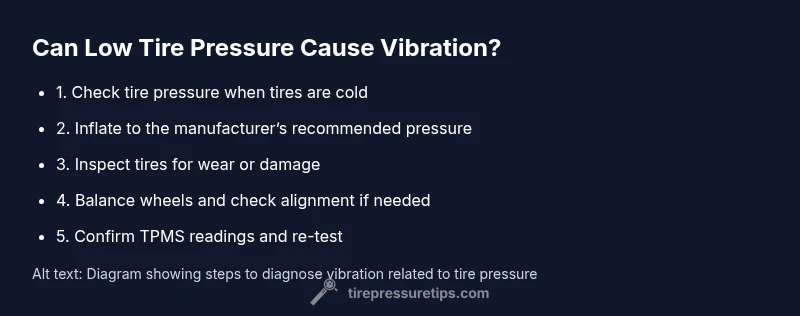
Can Low Tire Pressure Cause Vibration? A Troubleshooting Guide
Discover whether can low tire pressure cause vibration and learn practical steps to diagnose, inflate, balance, and protect your tires for safe driving.


Yes. Can low tire pressure cause vibration? Generally, underinflated tires increase sidewall flex and uneven contact, producing a wiggle felt in the steering wheel or floor. Start by inflating to the manufacturer's recommended pressure and rechecking cold tires. If vibration persists, inspect wheel balance, alignment, and tire condition. According to Tire Pressure Tips, begin with a precise pressure check and re-test.
Can low tire pressure cause vibration?
Yes, can low tire pressure cause vibration in many common driving scenarios. When tires run low, the sidewalls flex more than intended, and the tire’s contact patch with the road becomes uneven. This can translate into a noticeable buzz or shake in the steering wheel, seat, or floorboard, especially as road texture changes or speeds rise. The Tire Pressure Tips team notes that most vibration complaints start with insufficient pressure, making a quick, cold-tire pressure check a logical first step. Always compare actual readings to your vehicle’s recommended pressure on the door jamb sticker or owner’s manual. Keep in mind that other factors, like tire wear, wheel balance, and alignment, can amplify or mimic vibration. This is a practical starting point that prioritizes simple fixes before moving to more complex diagnostics.
How underinflation changes tire behavior at speed
Underinflation alters the tire’s footprint and flex, which changes how the tire absorbs road irregularities. The result can be a sent-forward feel through the steering wheel or a taunt sensation in the seat. Unlike flat spots or punctures, the problem is usually identifiable by a drop in tire pressure rather than a visible tire defect. Regular checks help catch gradual pressure loss before it leads to vibration or uneven wear. For many drivers, the most immediate action is a cold-tire pressure check and inflation to the recommended level.
Other common causes of vibration beyond tire pressure
While low tire pressure is a frequent culprit, vibration can also originate from wheel balance issues, misalignment, worn suspension components, or damaged tires (such as sidewall bulges or internal belt damage). A wheel that has run out of true balance can create a recurring shake at certain speeds, independent of pressure. Tire wear patterns, cupping, or puncture repairs can also contribute. In short, a vibration diagnosis should start with pressure but must include a broader inspection if readings don’t resolve the symptoms. This multi-faceted approach reduces guesswork and speeds up safe resolution.
How to test and verify your tire pressure quickly
First, ensure tires are cold and the vehicle hasn’t been driven for at least three hours. Use a reliable gauge and measure each tire’s pressure, comparing to the vehicle’s spec. Inflate to spec on all tires, including the spare if applicable. Re-test to see if the vibration diminishes. If the issue persists, inspect for uneven tread wear, signs of rim damage, or wheel runout. This method keeps you safe while you confirm whether the root cause is tire pressure or another component.
When to seek professional help
If inflation fixes the vibration only temporarily or the shake returns after a short drive, professional inspection is warranted. Pro mechanics will inspect wheel balance, alignment, and TPMS sensors, and may perform a road-force balance test to evaluate the entire wheel assembly. Persistent vibration can indicate structural tire damage or a worn suspension component that requires repair. Don’t delay if the vehicle feels unstable—safety and control could be compromised.
Practical steps to prevent vibration issues
Prevention starts with consistent maintenance: check tire pressure monthly and before long trips, inspect for uneven wear or damage, rotate tires as recommended, and ensure wheel alignment is checked during scheduled service. Use a high-quality gauge and verify cold readings against the label. Consistent maintenance reduces the chance of vibration and extends tire life, contributing to safer, smoother driving.
Steps
Estimated time: 60 minutes
- 1
Check tire pressures when cold
Park on a level surface and wait for at least three hours. Use a reliable gauge to measure each tire, including the spare. Compare readings to the label on the door jamb or owner’s manual. If pressure is low, proceed to Step 2.
Tip: Always check cold tires for accuracy; driving heats up tires and skews results. - 2
Inflate to the recommended pressure
Inflate all tires to the vehicle manufacturer’s spec, typically listed on the door jamb or in the owner’s manual. Recheck all tires after inflation to confirm even pressure across the set.
Tip: Do not exceed the max pressure printed on the tire sidewall. - 3
Inspect for obvious tire issues
Look for bulges, cuts, or irregular wear. Uneven wear can mimic vibration even after inflation. If you find damage, replace or repair the tire as needed.
Tip: Use a flashlight to inspect the sidewalls and tread edges closely. - 4
Check wheel balance and runout
If vibration persists after inflation, have a shop balance the wheels and check for rim runout that can cause shaking at speed.
Tip: Ask for a road-force balance if you notice vibration at highway speeds. - 5
Evaluate alignment and suspension
Misalignment can cause pulling and vibration that feels consistent. A technician can diagnose alignment and suspension wear with specialized tools.
Tip: If the steering pulls or drifts, schedule alignment service promptly. - 6
Re-test and monitor
After any repair or adjustment, take a short spin to confirm vibration has reduced. Re-check tire pressures again after a drive to ensure stability.
Tip: Keep notes of readings and services for future reference.
Diagnosis: Vibration while driving, especially at speed
Possible Causes
- highUnderinflated tire causing excessive sidewall flex
- highWheel balance out of sync or damaged rim
- mediumAlignment issues or worn suspension components
- mediumTire wear patterns or internal tire damage
- lowTPMS misreading or sensor issues
Fixes
- easyInflate tires to the recommended pressure when cold and recheck
- mediumHave wheels balanced and inspected for runout or rim damage
- mediumInspect for misalignment, worn suspension parts, or tire wear and replace as needed
- easyCheck TPMS sensors and tire sidewall for damage; replace if necessary
Frequently Asked Questions
Can low tire pressure really cause vibration, or is it just the road?
Yes. Underinflation can cause vibration by increasing sidewall flex and uneven tire contact, especially at higher speeds. Always start with a cold-pressure check to rule this out.
Yes. Low tire pressure can cause vibration due to extra flex in the sidewall. Start by checking pressure when cold.
How do I check if my tires are underinflated?
Use a reliable gauge and compare tire readings with the manufacturer’s recommended pressure. Repeat for all tires and adjust to spec.
Use a gauge and compare to the manufacturer’s spec for all tires.
Will TPMS warn me of dangerous underinflation or misreads?
TPMS alerts you to significant pressure loss, but it may not detect slow leaks or immediate misreads. Regular manual checks are still important.
TPMS alerts you to big pressure changes, but manual checks are still needed for accuracy.
What if inflating the tires doesn’t fix the vibration?
Then other causes are likely at play, such as wheel balance, misalignment, or tire damage. A professional inspection can pinpoint the issue.
If inflation doesn’t fix it, get a professional check for balance, alignment, or tire damage.
Can overinflation cause vibration as well?
Overinflation changes contact patch and can cause a different vibration pattern or harsh ride. Balance inflation with manufacturer specs.
Overinflation can also cause vibration, so stick to the recommended pressure.
Watch Video
What to Remember
- Check tire pressure first when vibration appears.
- Underinflation changes tire behavior and can cause vibration.
- Balance, alignment, and tire wear are common other causes.
- Use a reliable gauge and measure tires cold.
- Regular maintenance prevents vibration issues.