Can Tire Pressure Make Your Car Shake? Troubleshooting Guide
Discover whether tire pressure can cause a car shake, how TPMS and wheel balance contribute, and a practical, step-by-step troubleshooting guide to fix vibrations safely.


Yes—improper tire pressure can cause a noticeable shake, especially at highway speeds. Start by checking PSI on all four tires to the vehicle’s recommended range, then inspect for uneven wear, wheel imbalance, or TPMS alerts. Adjust pressures, rotate if needed, and recheck; if vibrations persist, seek a professional inspection for balancing or alignment.
Can Tire Pressure Cause a Car Shake? Understanding the Link
If you’re feeling a shake when you drive, you’re not alone. The question can tire pressure make your car shake? In many cases, the answer is yes, especially when pressures are noticeably off from the vehicle manufacturer’s spec. Proper tire pressure shapes the tire’s footprint, influences load distribution, and affects how the wheel interacts with the road. According to Tire Pressure Tips, even small deviations from the recommended PSI can translate into noticeable vibrations at certain speeds, depending on load, speed, and tire type.
When tires run too low, the sidewalls flex more, generating heat and uneven contact with the road; when tires run too high, the tread becomes stiffer and the contact patch narrows, increasing ride harshness and the chance of vibration. The goal is to keep the tire pressure within the manufacturer’s specified range, usually found on a sticker inside the door jamb or in the owner’s manual. This article walks you through a practical, step-by-step approach to diagnose whether pressure is the culprit and how to fix it safely. Remember: consistent, correct inflation helps your tires wear evenly and keeps your ride smooth.
How Tire Pressure Impacts Ride Quality and Handling
The tire pressure you maintain directly affects the contact patch—the portion of the tire in contact with the road. When pressure is at the recommended level, the footprint is balanced, and steering feels predictable, braking is confident, and tire wear is even. If pressure is too low, the sidewalls flex more, overheats, and the tire can develop cupping or shoulder wear that translates to vibrations or a shimmy, especially at highway speeds. If pressure is too high, the center of the tread bears more load, reducing the footprint and grip, which can produce a harsh ride and uneven contact with road imperfections. Both extremes can create the sensation of shaking or wobble. The Tire Pressure Tips approach emphasizes checking pressure with a reliable gauge, using the cold-tire method, and always aligning with the vehicle’s PSI specification to prevent misdiagnosed shakes. Temperature changes also matter: cold mornings can drop PSI, shifting load distribution and triggering a transient shake until tires warm up. For the most accurate readings, measure pressure when tires are cold and cross-check all four tires to ensure consistency across the set.
Most Common Causes Behind a Shaky Ride
- Underinflated tires: The most frequent cause of shake, because flexible sidewalls distort the contact patch and heat unevenly.
- Overinflated tires: A smaller contact patch can produce a stiff, bumpy ride and vibrations from road irregularities.
- Wheel imbalance: If weights are missing or misapplied, vibrations can appear at speed even with correct PSI.
- Damaged tires: Bulges, separated treads, or sidewall cuts alter symmetry and can shake the steering.
- Bent rims or loose lug nuts: Structural issues disrupt wheel alignment and create wobble.
- Worn suspension components: Bad shocks or worn bushings transfer road texture into the cabin.
- TPMS faults or sensor leaks: A misreading can lead you to inflate incorrectly or miss a real pressure issue.
How to Check and Adjust Tire Pressure Like a Pro
- Use a reliable gauge and verify PSI when tires are cold, ideally after sitting overnight.
- Find your vehicle’s recommended PSI on the door jamb sticker or in the owner’s manual.
- Check all four tires. If one is low or high, there’s a greater chance it’s contributing to shake.
- Adjust each tire to the recommended PSI, then recheck after 5–10 minutes of driving (or when tires cool).
- Inspect the tire surface for wear, bulges, or sidewall damage that could mimic pressure-driven vibrations.
- If any tire shows abnormal wear or damage, replace it before proceeding.
- If the shake persists after equalizing pressure, move to wheel balancing and TPMS inspection.
Tip: Always inflate with air from a quality source and avoid topping up with nitrogen unless you’re following a professional program.
Beyond Pressure: When to Inspect Balancing, Alignment, and TPMS
If your tires are inflated correctly but you still feel vibrations, the problem may be mechanical rather than purely pressurization. Wheel balancing ensures even rotation; unbalanced wheels create harmonic vibrations at certain speeds. A misalignment—front toe or camber issues—can cause the steering wheel to tug and shake. Worn or damaged tires can also be the culprit, especially if one section wears more than another. TPMS sensors can fail or leak, giving a false pressure reading. In this section, you’ll learn how a professional uses a wheel balancer, alignment rack, and TPMS diagnostic tool to pinpoint the issue and restore smooth handling. Remember that a persistent shake can escalate into suspension or steering damage if neglected, so do not ignore it.
Safety First: Prevention and Safe Driving Practices
- Regularly check tire pressure, especially with seasonal temperature changes, and before long trips.
- Keep a consistent inflation schedule, inspect tires for wear, and rotate per manufacturer guidelines.
- If your TPMS warns of a low pressure, address it promptly; a faulty sensor should be serviced.
- Never drive long distances with a known tire issue; stop and inspect or seek roadside assistance if you notice rapid deflation or loss of control risks.
The Tire Pressure Tips team emphasizes that safe driving starts with consistent inflation and proactive maintenance.
Quick Troubleshooting Checklist
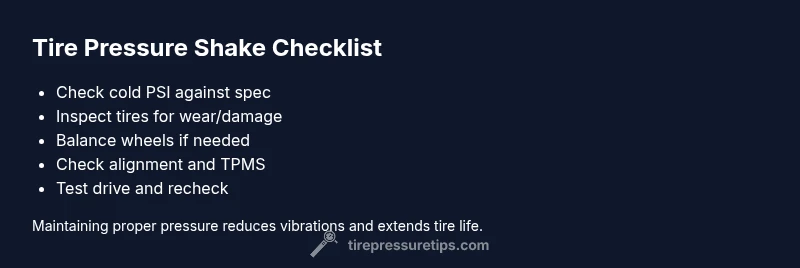
- Start by verifying cold PSI for all tires against the spec.
- Check for obvious tire damage and rim issues.
- Inspect wheel balance and TPMS readings.
- Test drive after adjustments to confirm shake is resolved.
- If unresolved, consult a technician for a comprehensive inspection.
Steps
Estimated time: Estimated total time: 45-60 minutes
- 1
Gather tools and locate the PSI spec
Collect a reliable gauge and locate the recommended PSI on the door jamb sticker or owner’s manual. This ensures you’re inflating to the correct baseline for your vehicle and tire size. Note any seasonal adjustments that may apply.
Tip: Use a quality digital gauge for accuracy. - 2
Check tire pressures when cold
Measure all four tires when they are cold, ideally after the car has sat for a few hours. Don’t rely on numbers from a warm day or after a drive, as heat increases the reading.
Tip: Take readings before driving for the most accurate results. - 3
Adjust to the recommended PSI
Inflate or deflate each tire to match the recommended PSI, ensuring all four tires are within a small margin of error. Recheck after pressure stabilizes and re-drive to confirm changes.
Tip: Avoid guessing; small deviations can still affect handling. - 4
Inspect tires for wear and damage
Visually inspect tread wear, bulges, or sidewall damage. If you see irregular wear or damage, replace the tire before continuing the test drive.
Tip: Even new-looking tires can hide internal damage. - 5
Test drive after inflation
Take a short test drive to see if the vibration changes with speed. If the shake persists, proceed to wheel balancing and TPMS checks.
Tip: Note the speed range where the shake is most noticeable. - 6
Check for balancing/alignment needs
If vibrations remain after inflation, have a professional balance the wheels and check alignment and TPMS sensors. Address any bent rims or lug-nut issues immediately.
Tip: Don’t keep driving with a suspected bent rim.
Diagnosis: Car shakes or vibrates while driving, especially at certain speeds
Possible Causes
- highUnderinflated tires
- lowOverinflated tires
- highWheel imbalance
- mediumDamaged tires or uneven wear
- mediumBent rim or loose lug nuts
Fixes
- easyCheck all tires for correct PSI when cold and adjust to the recommended level
- easyBalance the wheels if vibration remains after inflation
- easyInspect tires for wear or damage and replace if needed
- mediumCheck for bent rims or loose lug nuts and tighten/repair as needed
Frequently Asked Questions
Can underinflated tires cause shaking?
Yes. Underinflated tires can distort the sidewalls and create vibrations, especially at speed. Reinflating to the correct PSI usually reduces or eliminates the shake, assuming no other issues are present.
Underinflated tires can cause shaking and will often improve once you inflate to the correct pressure.
What if tires are balanced but still shaking?
If shaking persists after balancing, the issue may be alignment, suspension wear, or tire damage. A professional inspection is recommended to identify the exact cause.
If balancing doesn’t fix it, an alignment or tire condition check is likely needed.
Does TPMS affect ride quality?
A faulty TPMS can give incorrect pressure readings, leading to improper inflation. Have TPMS sensors inspected if readings don’t match manual checks.
A bad TPMS sensor can misread pressure and cause incorrect inflation.
Can cold weather cause tire pressure and shakes?
Yes. Cold temperatures lower tire pressure, which can create or worsen vibrations until tires warm up. Recheck pressures when temperatures fluctuate.
Cold weather lowers pressure and can make vibrations appear.
When should I replace tires due to shaking?
If tread wear is uneven, bulges appear, or the tire shows sidewall damage, replacement is usually required. Driving on compromised tires increases risk.
Replace tires if you see uneven wear, bulges, or sidewall damage.
Watch Video
What to Remember
- Check all tires to the correct PSI when cold.
- Imbalance and damage often cause shakes beyond pressure issues.
- Balance, alignment, and TPMS are common next steps.
- Prevent future shakes with regular maintenance.