Air Pressure Not Working: Troubleshooting Guide
Learn how to diagnose and fix air pressure not working issues, including TPMS sensor resets, gauge checks, and safe inflation practices. Practical steps from Tire Pressure Tips.


Most likely, air pressure not working is tied to a faulty TPMS sensor, a misread from the tire gauge, or a mismatch between actual pressure and the dashboard reading. Start by verifying pressures with a reliable gauge, inflating to the vehicle's recommended spec, and then resetting the TPMS if your system supports relearning. If warnings persist, seek professional diagnosis for sensors or valve stems.
Understanding the symptom: air pressure not working
When the dashboard shows a warning or the readout seems unreliable, it’s natural to panic. The term air pressure not working usually means the system cannot reconcile the tire’s actual pressure with its reading, but it can also indicate a weak sensor. According to Tire Pressure Tips, this is a safety issue that warrants a calm, methodical approach. Begin in a safe, well-lit area: check the tires for visible defects, then pull out a trusted tire pressure gauge and measure each tire’s current pressure. Compare these numbers to the vehicle’s door placard or owner’s manual. If the readings disagree with what the TPMS shows, you may have a sensor or valve problem rather than a tire leak. Document the numbers, keep notes of any patterns (such as readings drifting after a drive), and avoid driving long distances if inflation is too low or too high. The goal is to establish a verified baseline before moving to resets or professional diagnostics.
Common causes behind inaccurate readings
A mismatch between actual tire pressure and the display is often caused by one of several common issues. The most frequent culprits are a failed or weak TPMS sensor battery, a damaged valve stem, or a sensor that has lost its relearn calibration. Environmental factors, such as temperature changes, can also cause rapid shifts in readings, especially if you drive short distances after inflating. Another frequent cause is simply inflating tires to the wrong spec or not resetting the TPMS after adjusting pressures. In some vehicles, a moisture or corrosion issue in the sensor housing or a worn seal can create intermittent readings. Understanding these possibilities helps you prioritize checks without replacing parts prematurely.
How to verify tire pressures accurately
Start with a cold tire check to reduce the influence of driving heat on the readings. Use a high-quality gauge and compare the result to the placard on the door jamb or owner’s manual. If a tire shows a significant deviation from the expected value, retake the measurement after inflating, then recheck to confirm consistency. For vehicles with digital readouts, use a manual gauge to cross-verify the data. Document any discrepancies and note how readings change with ambient temperature or after a long drive. Remember that small variances are common, but large or persistent differences point to a sensor, valve, or leak issue that needs attention.
Diagnostic flow overview for TPMS and gauges
Diagnosing air pressure not working begins with confirming the symptom in the real world, then ruling out simple causes. Start with basic inflation checks, then verify sensor status and battery health if available. If the TPMS light remains on after inflation, proceed to a relearn or reset procedure if your vehicle supports it. When readings continue to drift or show zero, suspect sensor failure or valve stem damage. A systematic approach helps you distinguish between a tire-related issue and a faulty sensing system.
Step-by-step fixes for the most common causes
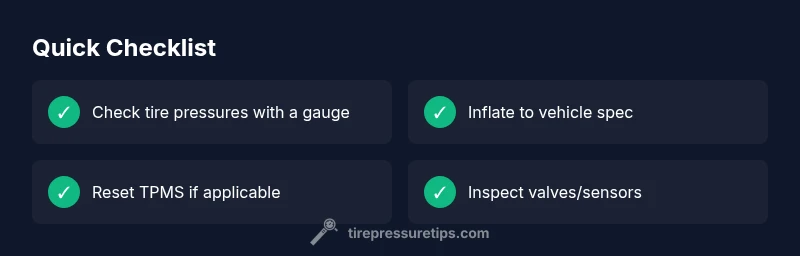
- Check the basics: ensure the vehicle battery, sensors, and display are functioning. 2) Measure tire pressures with a reliable gauge and compare to the placard. 3) Inflate to spec and reset or relearn the TPMS if possible. 4) Inspect valve stems and sensors for damage or corrosion. 5) If the problem persists, consult a professional for sensor replacement or calibration. If this doesn’t work, try a full sensor relearn or diagnostic scan using manufacturer tools. 6) Keep the tires evenly inflated and monitor the readings over a few days to ensure stability.
Safety considerations and when to call a professional
Dealing with tire pressure and TPMS involves high-safety stakes. If you notice a rapidly losing tire, a hissing sound, or heat from the tire, pull over safely and do not continue driving. Do not attempt to fix a TPMS sensor while the vehicle is on, as dangerous high-pressure situations can occur. If you’re unsure about the readings or cannot perform a reliable reset, contact a tire service professional. They can diagnose sensor power, battery health, and calibration with the right tools.
Prevention: keeping tire pressure reliable all year
Regular checks—at least monthly and before long trips—minimize surprises. Temperature changes, seasonal tires, and wheel repositioning can affect readings, so recheck after weather shifts and after any air top-offs. Use a quality gauge and store it properly to avoid inaccurate readings. Consider a TPMS scan during routine maintenance to catch battery or sensor issues before they trigger a warning light.
When readings still misbehave: next steps
If you continue to see inconsistent air pressure readings, the issue is more likely to be sensor or wiring related rather than a simple leak. Schedule a professional TPMS diagnostic to check sensor power, battery health, and relearn status. In parallel, inspect wheels for damaged valve stems and ensure correct wheel fitment and tire size. Document all readings and the conditions under which they occur to aid the technician.
Steps
Estimated time: 60-90 minutes
- 1
Check basics and safety
Park on a level surface, apply the parking brake, and gather your tools. Verify the vehicle battery and dashboard power are stable before you begin. Safety first ensures you can work calmly and avoid mistakes that could complicate the issue.
Tip: Use a dedicated flashlight and a clean gauge for accurate readings. - 2
Measure actual tire pressures
Use a reliable hand-held gauge to measure each tire when cold. Record the numbers and compare them to the vehicle placard. If a tire is far from spec, set it aside for inflation.
Tip: Take readings on all four tires; do not rely on a single tire. - 3
Inflate to recommended spec
Inflate each tire to the recommended value shown on the placard. Avoid over-inflation, which can reduce traction and ride comfort. After inflating, re-check to confirm accuracy.
Tip: Use a gauge with a digital readout for precise inflation. - 4
Reset or relearn TPMS
If your vehicle supports TPMS relearn, follow the owner’s manual procedure to reinitialize the sensor data after inflation. Some cars require a specific sequence or a scan tool.
Tip: If you’re unsure, ask a technician to perform the relearn safely. - 5
Inspect for damage
Check valve stems for cracks or leaks and inspect sensor housings for corrosion. Any visible damage warrants professional service to prevent a slow leak or sensor failure.
Tip: Do not attempt to repair a sensor housing yourself if you’re not trained. - 6
Monitor and document
Drive short distances, then recheck tire pressures. Note any drift or fluctuations in readings over several days. Documentation helps identify intermittent issues that require service.
Tip: Take photos of tire stickers and sensor labels for reference.
Diagnosis: Dashboard warning or inconsistent air pressure readings (air pressure not working)
Possible Causes
- highFaulty TPMS sensor or dead battery
- mediumDamaged valve stem or sensor housing
- lowPressure mismatch due to temperature changes or incorrect inflation
Fixes
- easyVerify tire pressures with a reliable gauge and compare to placard
- easyInflate tires to spec and perform TPMS relearn/reset if available
- mediumInspect valve stems and TPMS sensors for damage or corrosion
- hardIf warnings persist, schedule professional TPMS diagnostic and sensor replacement
Frequently Asked Questions
What does a TPMS warning mean if air pressure readings seem off?
A TPMS warning means the system detected a pressure issue or sensor problem. It doesn’t always mean a tire is flat, but it does require checking all tires and TPMS components. If the warning persists after inflating to spec, pursue a diagnostic.
A TPMS warning means there’s a pressure or sensor issue. Check all tires, then consider a professional diagnostic if the warning continues.
Can ambient temperature affect tire pressure readings?
Yes. Temperature changes can cause pressure readings to drift. Check tires when cold and recheck after driving briefly to see if the readings stabilize.
Temperature can make readings drift. Check cold, then recheck after a short drive to confirm stability.
Is it safe to drive with misreadings or a TPMS warning?
If tires appear underinflated, limit driving and inflate to spec before continuing. Do not ignore persistent warnings; they indicate a potential sensor or leak issue that needs attention.
Don’t ignore the warning. Inflate to spec if safe, or seek help for sensor or leak issues.
Do TPMS sensors require professional service?
Some TPMS repairs require professional tools and calibration. A technician can replace batteries, sensors, or relearn data accurately to restore reliable readings.
A professional can replace or recalibrate TPMS sensors for reliable readings.
How often should I check tire pressure?
Check tires at least monthly and before long trips, especially after seasonal changes or tire replacements. Regular checks help prevent unexpected warnings and ensure safe driving.
Check monthly and before trips to keep tire pressure reliable.
What should I do if the gauge shows 0 psi?
A reading of 0 psi means an immediate stop and safe inspection. Inflate only if you can do so safely, then look for punctures or leaks or seek roadside assistance if needed.
If you see 0 psi, stop safely and inspect for punctures or leaks or call for help.
What to Remember
- Check gauges against the placard to confirm accuracy
- Reset TPMS after any inflation changes
- Inspect sensors and valves for damage during persistent issues
- Document readings and monitor changes over time
- Consult a professional when TPMS still misbehaves