Tyre Pressure Not Working? Quick Troubleshooting Guide
Facing tyre pressure not working? This Tire Pressure Tips guide helps diagnose TPMS and gauge issues, explains causes, and provides fixes for readings.


Most tyre pressure not working is usually caused by a faulty TPMS sensor or a sensor battery, or a miscalibration. Start by verifying actual tire pressures with a known-good gauge, then recalibrate or reset the TPMS if your car supports it. If readings remain inconsistent, replace any failing sensor and consult a professional.
Why tyre pressure readings can be unreliable
According to Tire Pressure Tips, readings can be unreliable for several reasons beyond an obvious air leak. A worn or failing TPMS sensor may show warnings or not register at all, sensor batteries die, or the system becomes miscalibrated after a tire rotation. Temperature shifts can temporarily alter pressure readings, while a slow leak at a valve stem can fool both gauges and dashboards. In practice, start by confirming the actual pressure with a quality gauge and compare it to the dashboard readout. If readings disagree often, you likely need to recalibrate or replace components. For many drivers, solving tyre pressure not working begins with a simple accuracy check rather than immediately replacing parts. A systematic approach minimizes downtime and keeps you safe on the road.
What you should check first
Before digging into advanced diagnostics, perform a few quick checks that often solve tyre pressure not working problems. Use a trusted digital or dial gauge to measure each tire's pressure when the tires are cold. Check all four tires and the spare if equipped. Inspect tire sidewalls for damage, nails, or punctures and look at valve stems for cracks or loose cores. Confirm the vehicle's recommended pressure from the door jamb label or owner's manual and compare with your gauge reading. A small discrepancy may be normal due to temperature or gauge tolerance, but a large gap usually points to a leak or sensor issue.
Common causes of tyre pressure not working and quick fixes
The most frequent culprits are slow leaks at valve stems, punctures, or damaged tires that skew readings; a failing or dead TPMS sensor can warn or misreport; calibration drift after service or rotation can throw off the system; and extreme temperature changes can temporarily alter readings. Quick fixes include tightening valve cores if loose, repairing punctures or replacing a damaged tire, performing a TPMS reset or relearn if your vehicle supports it, and rechecking pressures with a reliable gauge. If the dashboard warning persists after these steps, it’s a strong sign you should test the TPMS battery and sensor power supply.
TPMS vs manual pressure: understanding readings
Manual tire pressure measurements use an external gauge and reflect the true air in each tire, independent of vehicle sensors. TPMS provides dashboard alerts and sensor data but can misreport if a battery is dying, a sensor is failing, or the relearn process hasn’t completed after tire changes. Understanding the difference helps you decide when to trust your gauge, when to reset the system, and when to replace components. In many cases, the right move is to verify with a gauge first, then address TPMS hardware.
Diagnostic flow at a glance
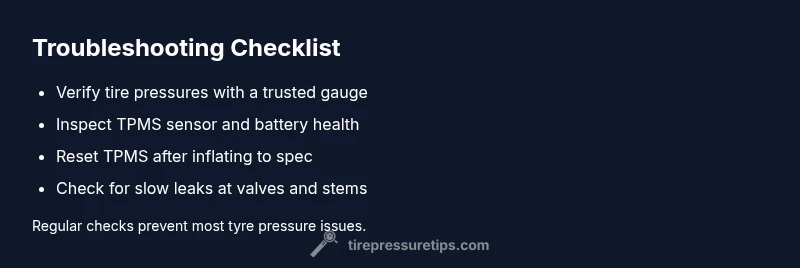
Start with a cold, physical pressure check using a dial or digital gauge. Compare results with the vehicle’s recommended pressures and the TPMS display. If the gauge reads correctly but the TPMS warns, suspect sensor or battery issues. If both readings diverge from the label, there may be a slow leak or a puncture. Relearn or reset the TPMS after inflating to the correct level. If readings remain inconsistent, inspect valves, stems, and tires for damage and consider sensor replacement.
Practical troubleshooting scenarios
Scenario 1: Dashboard shows low pressure, but your gauge reads correct pressures. Check valve stems for leaks, inspect the rim area for damage, and reset the TPMS to see if the warning clears. Scenario 2: Gauge reads low, TPMS shows normal. Inflate to the recommended pressure, recheck, and perform a TPMS relearn if available. Scenario 3: Readings drift after a tire rotation. Relearn TPMS and verify that the wheel sensor IDs match each tire.
Safety, warnings, and when to seek professional help
Always perform tire inspections on a cool tire to avoid heat-driven inaccuracies. Do not ignore sustained low readings; driving with underinflated tires can cause heat buildup, rapid wear, and blowouts. If you detect a nail, cut, or obvious tire damage, replace the tire promptly and have the TPMS checked by a professional. If you’re uncomfortable performing TPMS relearns or sensor replacement, contact a qualified technician.
Steps
Estimated time: 60-90 minutes
- 1
Grab a trusted tire gauge
Use a digital or dial gauge and verify straight-on readings on all four tires when cold. Note differences between tires and compare to the manufacturer’s spec on the door jamb label.
Tip: Record readings for each tire to track changes over time. - 2
Check all tires for visible issues
Look for nails, cuts, bulges, or uneven wear that could corrupt readings or indicate a slow leak. Inspect the valve stems for cracks or loose cores.
Tip: Do not rely on one reading if you see any obvious tire damage. - 3
Inflate to the recommended pressure
If a tire is low, inflate to the vehicle’s recommended value, then recheck with the gauge to confirm accuracy.
Tip: Always inflate when tires are cold for consistency. - 4
Reset/relearn TPMS (if available)
Follow your car’s manual to relearn TPMS after inflating to spec. A successful relearn clears false warnings.
Tip: Some cars require a specific key sequence or button hold. - 5
Check for slow leaks
After inflating, monitor tires over 24 hours to see if pressure drops. Slow leaks often come from valve stems, punctures, or rim damage.
Tip: Use soapy water to locate a leak if you’re unsure. - 6
Inspect TPMS sensors and batteries
If readings continue to drift, a faulty sensor or dying battery is likely. Consider sensor power checks or professional testing.
Tip: Battery life varies by vehicle and sensor type. - 7
Test after component replacement
Inflate to spec, recheck with gauge, and perform a TPMS relearn again if you replaced sensors.
Tip: Document changes and dates for future reference. - 8
Seek professional help when needed
If you can’t identify the issue or safety is a concern, consult a certified technician.
Tip: Professional TPMS tools can detect sensor faults beyond basic checks. - 9
Verify results and maintain
Keep a regular schedule of tire pressure checks, calibration after service, and sensor maintenance to prevent reoccurrence.
Tip: Check tires monthly and before long trips.
Diagnosis: TPMS warning or tyre pressure readings inconsistent with actual measurements
Possible Causes
- highFaulty TPMS sensor or dead battery
- mediumCalibration drift after tire rotation or service
- mediumValve stem leak or damaged tire
- lowTemperature effects causing temporary reading changes
Fixes
- easyTest actual pressures with a known-good gauge and compare with TPMS and label values
- easyReset or relearn TPMS if the vehicle supports it
- hardInspect/replace faulty TPMS sensors or batteries
- easyInspect valve stems and tires for leaks or damage; repair or replace as needed
Frequently Asked Questions
Why is tyre pressure not displaying correctly on my dashboard?
Dashboard alerts can be caused by a dying TPMS sensor, sensor battery failure, or calibration drift. Start with a physical pressure check and then test the TPMS relearn process. If warnings persist, inspect the sensor hardware or seek professional help.
Dashboard warnings often come from sensor issues or calibration drift; check the actual pressure with a gauge and try relearning TPMS.
How can I reset TPMS after inflating tires to the correct pressure?
Many vehicles allow a TPMS relearn via a button or menu option. Inflate tires to the recommended level, then follow the owner’s manual steps to relearn each sensor. If the system doesn’t recognize sensors, the issue may be a dead battery or faulty sensor.
Inflate to spec, then use your car’s relearn process as described in the manual.
Does temperature affect tyre pressure readings?
Yes. Temperature changes can temporarily raise or lower tire pressure. Expect slight variations between cold and hot days, and confirm readings after tires have cooled down.
Temperature changes can alter readings; verify when tires are cold for consistent results.
Should I replace TPMS sensors if readings are inconsistent?
Inconsistent readings often point to a faulty sensor or battery. If readings don’t stabilize after relearn attempts, testing or replacing the sensor may be necessary.
If readings stay inconsistent after resets, sensor replacement is likely needed.
Is it safe to drive with low tyre pressure?
Driving with low pressure increases heat buildup, reduces handling, and can cause tire failure. Inflate to the recommended pressure before driving or before a long trip.
No—driving on low pressure is unsafe. Refill to the recommended level before driving.
What to Remember
- Test tire pressures with a trusted gauge
- Reset or relearn TPMS after inflation
- Inspect for leaks and valve stem damage
- Calibrate TPMS if readings drift
- Replace faulty TPMS sensors when needed