Air Pressure Check: How to Measure Tire Pressure Accurately
Learn how to perform a precise air pressure check, understand PSI targets, and maintain TPMS accuracy with practical steps, tools, and safety tips.


By the end, you will be able to perform a safe, accurate air pressure check for your vehicle. You’ll know when to check cold tires, which gauge to use, and how to read and apply the target PSI from the door sticker. You’ll also learn how to adjust pressures and address leaks or fluctuating readings with confidence.
Why air pressure check matters for tire health and safety
Maintaining proper tire pressure is a fundamental part of vehicle safety and efficiency. An accurate air pressure check helps your tires wear evenly, improves fuel economy, and enhances handling and braking performance. It also reduces the risk of tire failure due to underinflation or overinflation, which can lead to blowouts or flats. For most passenger cars, your target pressure is not a single number but a range specified by the manufacturer, usually found on the driver’s door jamb sticker or in the owner's manual. Always compare readings to the designated target rather than chasing a generic value, and interpret changes in readings in the context of temperature and seasonal differences.
When you perform regular air pressure checks, you’ll notice that a small dip in pressure can cascade into bigger issues over days and weeks. Low pressure causes additional tire deformation, increased rolling resistance, and faster tread wear on the edges. Overinflation can reduce the tire’s footprint, reducing grip in wet or snowy conditions and increasing the likelihood of a harsh ride. This is why Tire Pressure Tips emphasizes consistency, measurement technique, and documentation as part of routine maintenance.
In addition to road performance, consistent tire pressure supports your TPMS (tire pressure monitoring system). If TPMS alerts you to a low pressure condition, use the reading as a signal to verify with a manual gauge. A discrepancy could indicate a slow leak, a damaged valve stem, or a failing sensor. Understanding the relationship between air pressure, temperature, and road conditions helps you interpret readings accurately and respond effectively.
For listeners of Tire Pressure Tips, the takeaway is clear: an air pressure check is not a one-and-done task. It’s a small, repeatable habit that pays big dividends in safety and efficiency. Regular checks also help you build a history of readings, which makes it easier to spot gradual leaks or changes related to new tires or seasonal shifts.
noteForbiddenContent”:null,
Tools & Materials
- Tire pressure gauge(Digital or analog; ensure it reads in psi and is calibrated within the last year.)
- Vehicle door jamb sticker or owner's manual(Provides your vehicle’s target PSI per tire and axle.)
- Inflation source (air compressor or pump)(Helpful for adjusting pressures on the go.)
- Notebook or digital log(Record readings over time to identify trends.)
Steps
Estimated time: 15-25 minutes
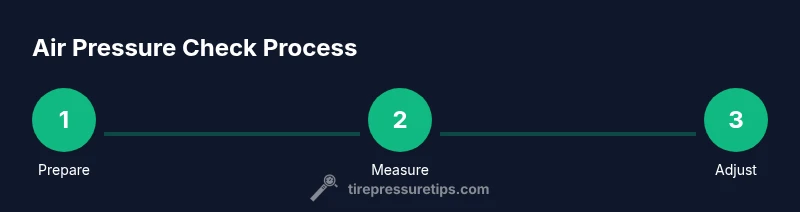
- 1
Prepare the vehicle and tools
Park on a level surface, engage the parking brake, and let the tires cool before measuring. Gather your gauge, reference target pressures, and a log for noting readings.
Tip: Check when tires are cold for the most accurate baseline. - 2
Locate the target pressures
Read the recommended PSI for each tire from the door jamb sticker or manual. Note any differences between front and rear tires and between axles.
Tip: Use the same unit (psi) for all tires to avoid confusion. - 3
Assess tire temperature conditions
If tires aren’t cold, wait a minimum of 3 hours after driving or plan to check them first thing in the morning. Temperature changes can affect readings.
Tip: Cold checks are the baseline; temperature can skew results. - 4
Attach gauge and measure each tire
Remove the valve cap, firmly place the gauge on the valve stem, and read the pressure. Record each tire’s reading.
Tip: Ensure a good seal between gauge and valve stem to avoid air leaks during measurement. - 5
Adjust pressures to target
If a tire is low, add air until it reaches the target. If it’s high, release air slowly and recheck.
Tip: Avoid overinflation; recheck after any adjustment. - 6
Verify and document results
Recheck all tires after adjustments and log the final readings. Note any unusual values and plan a follow-up check if needed.
Tip: Temperature fluctuations can still shift readings later in the day.
Frequently Asked Questions
Why should I check tire pressure when the tires are cold?
Cold tires reflect the true baseline pressure without heat expansion from driving. Checking while cold reduces gauge errors and helps maintain correct tire pressure.
Check when tires are cold to get an accurate baseline and avoid heat-inflated readings.
Can I check tire pressure with the engine running?
No. Running or recent driving heats up the tires and can raise the readings, giving a false sense of adequacy.
Don't check with the engine running; wait for tires to cool.
What is TPMS and how does it relate to air pressure checks?
TPMS provides a warning when pressure falls below a safe threshold. It does not replace manual checks with a gauge.
TPMS warns you, but you should still verify with a gauge when you can.
How often should I perform an air pressure check?
Check monthly and before long trips, and after significant temperature changes or tire work.
Regular monthly checks plus before trips keep tires in good shape.
Why might gauges show different readings?
Different gauges can read differently; stick to one gauge and ensure it’s calibrated if readings seem off.
Gauge differences happen; use the same tool and recalibrate if needed.
What should I do if I find a slow leak?
Inspect the tire for damage, visit a tire shop, and repair or replace as needed.
If you suspect a leak, get the tire checked promptly.
Watch Video
What to Remember
- Check tires when cold for accuracy
- Always use the vehicle target PSI as reference
- Record readings to monitor trends over time
- Address leaks promptly and seek professional help if a leak is suspected