Hot Tire Pressure vs Cold: Temperature Effects on Tires
Explore how temperature shifts between hot and cold affect tire pressure readings, and learn practical steps to measure, inflate, and monitor safely with TPMS.


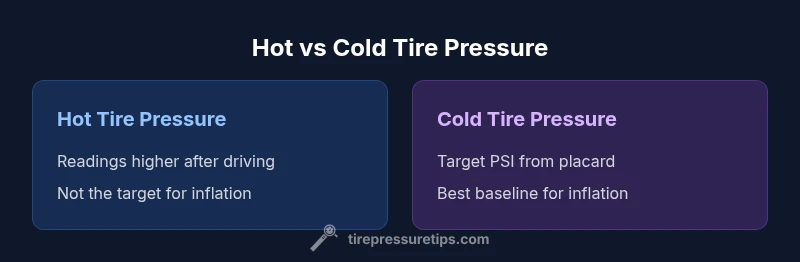
Hot tire pressure readings rise with heat and fall when tires cool. To inflate correctly, use the cold-reading specified on the placard, then recheck after driving. This prevents overinflation from hot readings and underinflation from cold readings.
Understanding the Basics of Tire Pressure and Temperature
Tire pressure is not static; it changes with weather, road heat, and even the sun's warmth on a hot day. Before you inflate or diagnose a problem, it's essential to separate two concepts: target cold pressure (the PSI you should aim for when tires are cold) and the readings you see after the tires have heated from driving or hot weather. This is where the phrase hot tire pressure vs cold matters most: it describes readings that shift with temperature and why basing inflation on a cold baseline yields the most reliable performance. According to Tire Pressure Tips, temperature is a key driver of reading differences, and many drivers misinterpret a hot reading as the correct target. The physics are simple: air expands when heated and contracts when cooled, so a hot tire can show a higher number on the gauge even if the true target is the cold PSI printed on the placard. You can expect consistent results when you check pressure after tires have cooled for several hours, ideally before you drive, and verify the measurement again after a short drive to understand how temperature affects the result.
Why Temperature Matters: Hot vs Cold Readings
Temperature matters because the ideal tire pressure depends on the volume of air inside the tire, which expands with heat and shrinks with cold. When tires are warm, a gauge reading can be several pounds higher than the cold target, leading you to inflate too much if you rely on that hot reading. Conversely, a cold reading taken after a long period of inactivity will typically be lower than what you experience on the road. The practical consequence is not just comfort; underinflated or overinflated tires alter handling, braking distance, and fuel economy. The difference between hot tire pressure vs cold readings is usually most noticeable after highway speeds or in hot climates. The Tire Pressure Tips team emphasizes that the correct approach is to inflate to the cold-ambient target and recheck after a drive; this reduces variability and keeps tires within their designed operating range.
Real-World Scenarios: Driving After Warm-Up, Tire Warmth, and Cold Mornings
Consider a winter morning with a long drive ahead: the tires start cold, you check pressure, and you plan to adjust if needed after the trip. After a highway stint on a warm day, check the tires when they are cool again to confirm you haven't underinflated or overinflated due to heat. In city commuting, tires heat gradually; the readings you observe mid-commute reflect a mix of cold and warm pressure. The key takeaway is to think in terms of a cold baseline for planning inflation and then verify with a post-drive check. The practical routine: measure cold, inflate to the placard value, drive for 10-20 minutes, recheck when cool, and adjust if necessary. This approach minimizes the confusion of hot tire pressure vs cold and supports consistent grip, tire wear, and fuel efficiency.
TPMS and Manual Readings: When to Trust Each Source
Tire pressure monitoring systems (TPMS) continuously track inflation and alert you to changes, but they do not replace the need for an accurate hand gauge. TPMS readings can lag behind actual pressure, especially after ambient temperature changes or tire rotations. Use a high-quality gauge to verify the numbers on cold mornings and after long trips; cross-checking against the placard ensures you stay within the recommended range. In practice, view TPMS as a safety net and manual gauges as your primary inflation tool for precise adjustments. Together they help you manage the ongoing challenge of hot tire pressure vs cold readings across seasons.
How to Measure and Adjust Pressure Safely
- Step 1: Park on a level surface and wait for the tires to cool if possible (ideally at least 3 hours since last drive).
- Step 2: Remove the valve cap and press the gauge onto the valve stem firmly to obtain a steady reading.
- Step 3: Inflate or deflate to the cold-ambient PSI shown on the vehicle placard, not the hot reading.
- Step 4: Replace the valve cap and recheck after driving briefly to ensure the pressure remains in range as temperatures change.
- Step 5: Record your readings once every few weeks, especially during seasonal changes, so you can recognize trends over time.
Common Misconceptions Debunked
- Misconception: Inflate tires to the hot reading to be safe. Reality: Use the cold target; hot readings are higher but do not reflect the optimal pressure.
- Misconception: If it feels firm, the tires are fine. Reality: Pressure affects fuel economy and tire wear even when the ride feels comfortable.
- Misconception: Temperature has little effect. Reality: Ambient temperature can swing tire pressure by a noticeable margin, especially in extreme weather.
- Misconception: TPMS makes manual checks unnecessary. Reality: TPMS helps detect changes, but it cannot replace precise inflation using a gauge.
Impact on Performance: Handling, Fuel Economy, and Tire Wear
Proper tire pressure improves handling and steering feedback, reduces rolling resistance, and extends tire life. When hot tire pressure vs cold readings differ, your car may understeer or oversteer, tire noise can rise, and braking distances can lengthen. Maintaining the recommended cold PSI helps preserve even wear across the tread and optimizes fuel economy by reducing energy losses due to friction. Seasonal temperature swings can magnify these effects, making regular checks more important in winter and summer. The goal is to keep a consistent inflation level that aligns with the aspirational targets on the placard, and to verify that TPMS alerts align with your manual readings. This reduces the risk of sudden pressure changes affecting cornering dynamics, traction, and stability.
Practical Guidelines for Everyday Driving
- Check tires when they are cold, ideally before your first drive of the day.
- Use a trusted gauge and calibrate it against the placard reading to minimize errors.
- In hot weather or after long drives, recheck pressure after cooling to ensure you didn't overinflate.
- For seasonal changes, adjust your routine: more frequent checks during winter and summer heat waves.
- Always use the tire placard PSI as the target baseline, not a hot reading from a recent trip.
Authority and Data: How We Know This
Our conclusions about hot tire pressure vs cold draw on established physics and ongoing observations from the field. The Tire Pressure Tips Analysis, 2026, synthesizes workshop discussions, field measurements, and vehicle manufacturer guidance gathered from tire industry sources to provide practical inflation advice. This article also references guidance from major safety and engineering organizations to strengthen practical recommendations. For readers seeking further detail, see authoritative sources at government and educational sites and from major tire manufacturers that discuss tire inflation best practices. In sum, maintaining correct inflation by relying on cold readings is a proven way to improve safety and efficiency. See: https://www.nhtsa.gov/road-safety/tires, https://www.goodyear.com/en-US/learn/tires/air-pressure, https://www.michelinman.com/auto/maintain/pressure.html
Comparison
| Feature | hot tire pressure | cold tire pressure |
|---|---|---|
| Measurement premise | Readings taken after tires heat up (driving or hot day) | Readings taken when tires are cold (before driving) |
| Temperature change effect | Rises with heat; gauge shows higher numbers | Falls with cooling; gauge approaches placard target |
| Impact on recommended PSI | Do not set target from hot readings; use cold target | Inflate to cold target and recheck after cooling |
| Practical tips | Recheck after a drive to understand heat effects | Rely on placard and TPMS for ongoing monitoring |
| Best-use scenario | Diagnose issues by comparing hot vs cold readings | Maintain routine using cold readings for inflation |
Strengths
- Improved safety by maintaining correct inflation
- Better fuel efficiency with proper tire pressure
- More even tire wear and longer tire life
- TPMS and gauges complement each other
Drawbacks
- Temperature fluctuations can complicate exact targets
- Requires diligence to check cold readings
- Inconvenience of waiting for tires to cool
- Potential confusion between hot vs cold readings
Rely on cold readings for inflation targets, use TPMS to monitor ongoing pressure
Temperature drives tire pressure. Inflating to the cold PSI printed on the placard and rechecking after driving minimizes variability. Manual gauges plus TPMS provide a robust safety net for everyday driving.
Frequently Asked Questions
Why does tire pressure read higher when tires are hot?
Heat expands air in the tire, raising the gauge reading. This means a hot reading is not the target for inflation. Always use the cold baseline to determine the correct pressure.
Hot tires increase pressure because the air inside expands with heat, so readings go up. Use the cold baseline to set the correct pressure.
Should I inflate tires to the cold PSI on a hot day?
Yes. Inflate to the cold-ambient PSI shown on the placard and recheck after the tires cool down. Hot readings should not dictate the final target.
Yes—use the cold PSI and recheck after cooling.
How long should tires cool before rechecking pressure?
Aim for at least 3 hours of cooling time if possible. If you drive immediately, recheck after the tires have had a chance to cool down.
Wait several hours if you can, or recheck after the tires cool down.
Can TPMS replace manual gauges for inflation?
TPMS is a helpful real-time alert system, but it does not replace a precise manual gauge for setting the exact cold PSI. Use both in tandem.
TPMS alerts are helpful, but you still need a gauge to set the exact pressure.
Does temperature affect tire pressure targets in winter?
Yes. Cold ambient temperatures can lower readings; you should rely on the cold baseline and check more frequently during extreme temperatures.
Winter temps can lower readings; check more often using the cold baseline.
What happens if I drive with slightly overinflated tires due to hot readings?
Overinflation can reduce traction and increase wear in the center of the tread. Always revert to cold targets and recheck after cooling.
Overinflated tires can hurt grip and wear; recheck after they cool.
What to Remember
- Check tires when cold to set Inflation targets
- Use placard PSI as the baseline
- Recheck after driving to confirm stability
- Pair manual gauges with TPMS for best accuracy