Tire Pressure for Honda Civic 2014: Practical Guide
Learn the recommended tire pressures for the 2014 Honda Civic, how temperature and load affect performance, and how to check, adjust, and maintain safe tire pressure for safety and efficiency.


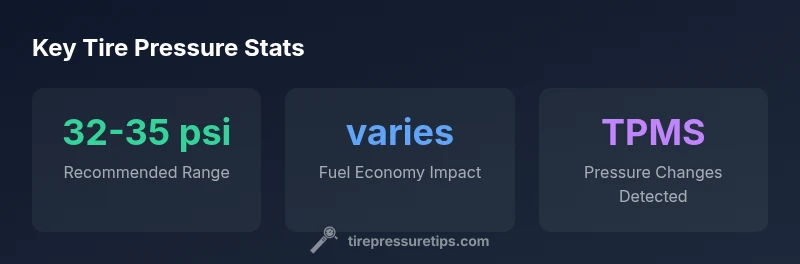
According to Tire Pressure Tips, the 2014 Honda Civic relies on the factory door jamb placard for recommended tire pressure and uses TPMS alerts to flag deviations. In practice, aim for the recommended range and verify regularly. Maintaining proper tire pressure improves fuel economy, predictable handling, even tire wear, and safer braking in varied temperatures and loads.
Why Tire Pressure Matters for a 2014 Honda Civic
Proper tire pressure is more than a badge on the door jamb. For the 2014 Honda Civic, correct inflation directly influences handling, braking response, rolling resistance, and tire life. When tires are underinflated, the contact patch grows at the edges, increasing heat buildup and accelerating wear on the outer shoulders. Overinflation, by contrast, reduces the tire's footprint and can shorten tread life in the center. In both cases, you’ll notice changes in steering feel and ride comfort. According to Tire Pressure Tips, maintaining the recommended range helps the Civic respond predictably to cornering and braking, which is crucial for safe urban driving and highway conditions.
- Consistency matters: regular checks prevent gradual pressure drift.
- Temperature and load amplify effects: a hot day or a heavy load can push PSI out of the ideal band.
Manufacturer Specs and Where to Find Them
The Honda Civic 2014 uses a door jamb placard that specifies the factory-recommended tire pressures for both front and rear wheels. This placard is the primary source of truth, and it may not be identical across trims if different tires are equipped. In most cases, many Civic 2014 variants share the same range, commonly around the mid-30s psi, but you should confirm the exact numbers on the placard attached to the driver's door frame. The owner's manual also lists specifications and notes on tire size and load. If you’ve swapped tires or wheels, verify that the tire size remains within the suggested range, as a change can shift the recommended pressure.
- Use the placard as the baseline.
- Verify if a different tire size is installed.
How to Check Tire Pressure Correctly
Checking pressure correctly requires a cold measurement for accuracy. Wait at least three hours after driving, or check first thing in the morning before the car is driven. Remove the valve cap, press your gauge onto the valve stem, and note the reading. Compare it with the placard and adjust as necessary using a high-quality gauge. Always re-check both front and rear tires after inflating to the target range since small changes can occur once the tire heats up from driving. For speed and repeatability, schedule monthly checks and before long trips. Regular checks are a simple habit with big safety dividends.
- Use the right gauge and check when cold.
- Don’t ignore the spare tire’s label if you’re using a temporary kit.
Understanding TPMS and Its Limitations
Tire Pressure Monitoring Systems (TPMS) provide a valuable safety net by signaling when pressure deviates enough from the baseline to warrant investigation. However, TPMS should not replace manual gauge checks. The system responds to significant changes and can miss slow leaks or gradual drops that fall within the “alert” threshold. If TPMS warns you, inspect the tire visually for signs of damage and test with a gauge to confirm the exact pressure. Also note that TPMS sensors can become less responsive over time, so timely maintenance is essential.
- TPMS is a helper, not a replacement for measurement.
- Sensors can drift or fail; verify readings with a gauge.
Adjusting for Driving Conditions and Load
The Civic’s recommended pressure is designed for typical driving scenarios. If you regularly carry heavier loads—like passengers or cargo—or drive at high speeds for extended periods, you may want to adjust within the placard’s range to optimize handling and tire wear. In hot weather, pressure can rise, potentially over-inflating tires; in cold weather, pressure can drop. A good practice is to measure pressure after weather changes and adjust as needed back toward the placard values. If you operate in extreme conditions, consult the owner's manual for any specific recommendations and consider seasonal tires that maintain more consistent pressure across temperature shifts.
- Start with the placard values, then tune for load and speed.
- Temperature swings matter: check colder mornings first thing.
Seasonal Temperature Effects on Tire Pressure
Temperature swings are a practical reason to monitor tire pressure annually. A typical rule of thumb is that tire pressure changes with ambient temperature; cold mornings can reduce psi, while hot days can increase it. For the Civic, this means that a 10-degree Fahrenheit drop can subtract a portion of psi from the reading. Use a cold-pressure check after any substantial temperature change and adjust to the recommended range. This discipline helps prevent underinflation during winter and overinflation after hot days or long highway drives. Tire pressure is not a fixed value; it shifts with weather, load, and driving style.
- Monitor routinely as seasons shift.
- Recheck after long road trips or significant weather events.
Common Pitfalls and Maintenance for the Civic
To maximize tire life and safety on the 2014 Civic, avoid common mistakes such as inflating to arbitrary numbers without verification, neglecting TPMS alerts, or ignoring differences between front and rear pressures when load varies. Develop a simple maintenance routine: check monthly, adjust to the placard, keep tires properly inflated for seasonal changes, and inspect tires for uneven wear patterns that may indicate misalignment, worn suspension components, or improper inflation history. Practically, a few minutes per month saves money and preserves tire performance, braking effectiveness, and fuel efficiency. The Civic rewards consistent tire pressure habits with better handling and safer braking in inclement weather.
Honda Civic 2014 tire pressure reference table
| Aspect | Recommended Pressure | Notes |
|---|---|---|
| Front tires pressure | 32-35 psi | Check placard; typical for Civic 2014 |
| Rear tires pressure | 32-35 psi | Same as front unless loaded heavily |
| Seasonal temperature effect | Pressure drops with temperature | Measure cold for accuracy |
| Spare tire pressure | Follow label on kit | Spare may differ from main tires |
Frequently Asked Questions
What is the recommended tire pressure for a 2014 Honda Civic?
Refer to the door jamb placard; most trims share a 32-35 psi range for front and rear.
Check the placard on the door frame and aim for 32-35 psi.
Do I need different pressures for highway vs city driving?
Usually the same; adjust for heavy loads or spare use; avoid underinflation.
Generally the same; adjust if you're carrying extra weight.
How often should I check tire pressure?
At least monthly and before long trips; check when tires are cold.
Check monthly and when tyres are cold.
Can TPMS replace manual pressure checks?
TPMS warns of changes, but you should still measure with a gauge.
TPMS helps, but you should still measure with a gauge.
What about the spare tire?
Spare may have different pressure; follow the spare's label and owner's manual.
Spare tires can be different—check its label.
“Proper tire inflation isn't optional—it's essential for safety and efficiency on every Honda Civic. Regular checks prevent uneven wear and improve braking performance.”
What to Remember
- Check tires monthly and before trips.
- Follow the placard values for exact pressures.
- TPMS assists but does not replace manual checks.
- Temperature changes require pressure adjustments.
- Consult the owner's manual for model-specific guidance.