Tire Pressure Corolla: A Practical Maintenance Guide
A thorough how-to on checking and maintaining tire pressure for the Toyota Corolla, including TPMS basics, seasonal changes, and practical maintenance tips to improve safety and fuel efficiency.


Goal: learn to check and adjust your Corolla’s tire pressure, understand TPMS alerts, and maintain proper inflation for safety and efficiency. According to Tire Pressure Tips, start with the vehicle’s cold tire placard, then verify with an accurate gauge. This guide previews the essential steps you’ll perform in the full tutorial.
Why Tire Pressure Matters for Corolla
According to Tire Pressure Tips, proper tire pressure is a foundational element of vehicle safety, fuel efficiency, and tire longevity. For a Corolla, wrong inflation can lead to uneven wear, reduced grip in wet conditions, and higher rolling resistance that saps gas mileage. The Tire Pressure Tips team found that maintaining correct cold pressure helps ensure even tread wear across all four tires and maintains the intended handling characteristics. In practice, your Corolla's tire pressure target is specified on the door placard and in the owner's manual. This section explores why staying within spec matters, how to recognize subtle pressure changes, and how seasonal temperatures can affect readings. Remember: tire pressure is not a one-time check; a quick weekly scan helps catch slow leaks or progressive loss that might otherwise go unnoticed until a flat or blowout. In the context of daily driving, keeping inflation within the recommended range reduces heat buildup in the rubber and improves cornering stability. This is especially important for Corolla owners who value predictable handling across city streets and highway merges.
Determining the Correct Pressure for Your Corolla
To ensure optimal performance, begin with the official specification for your specific Corolla model (trim and wheel size matter). The door jamb placard on the driver’s side lists front and rear pressures, and the owner’s manual provides tolerances for different tires. Typical passenger cars operate in the roughly 30–35 psi range when cold, but your Corolla may differ by load, tire type, or seasonal conditions. Always use the placard as the primary source of truth. If you use different tires or wheels after market changes, confirm the spec with the manufacturer or dealer. A quick check of both front and rear tires ensures even wear and balanced handling.
Tools and Safety Checks Before You Start
Gather a dependable tire pressure gauge (dial or digital) and a portable air source or access to an air pump at a gas station. Have the door placard or owner's manual handy, plus spare valve caps for each tire. Use level ground and perform checks when tires are cold, ideally before driving more than a mile. Remove the valve caps to expose the valve stem, then inspect each valve for cracking or leaks. If you notice any slow leaks or damaged valves, address them before inflating. Keep a small notebook or phone note to record readings and target pressures. These precautions help ensure accuracy and prevent overinflation or underinflation, which can affect tire wear and safety.
Understanding Cold vs. Hot Tires and When to Check
Tire pressure rises as tires heat up from driving, so readings taken right after a trip will be higher than cold readings. For accurate measurements, always check when tires are cold, ideally after the car has sat for at least three hours or before the first drive of the day. Temperature is a key factor; in hot weather, you may need to check more often, especially if you drive long distances or frequently carry heavy loads. This section explains how to plan your checks around weather and driving patterns, and how frequent checks can catch slow leaks early, preserving tire life and performance.
Step-by-Step Overview: Check and Adjust Tire Pressure (High-Level)
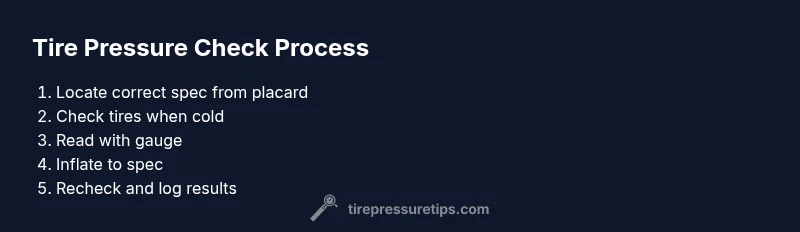
This overview maps the core actions you’ll perform in the detailed Step-by-Step section. Start with locating the placard, parking on level ground, and ensuring tires are cold. Then remove valve caps, attach the gauge, read the pressure, and compare with the recommended spec. If inflation is needed, use a proper air source, add air gradually, and recheck both the target tire and adjacent ones to keep balance. Finish by reinstalling valve caps and recording the readings for future reference.
Interpreting TPMS Alerts on a Corolla
Tire Pressure Monitoring System (TPMS) alerts you when a tire is significantly underinflated or, less commonly, overinflated. These sensors don’t tell you the exact pressure value; they indicate a discrepancy from the expected tire pressure. When TPMS warns, first verify with an external gauge on the indicated tire, then inspect for leaks, punctures, or temperature-related changes. If the pressure is within spec but the light remains on, a reset or recalibration may be required after adjusting tires or rotating wheels. Always consult the owner’s manual for the correct TPMS procedure for your Corolla model.
Seasonal Changes and Temperature Effects on Tire Pressure
Temperature shifts cause tire pressure to rise or fall. In colder weather, readings drop; in hot weather, readings rise. Plan checks accordingly: in winter, inspect more frequently as temps swing sharply, and in summer, verify pressures after long highway trips. Maintaining the correct pressure helps ensure optimal contact between the tire and road, improving fuel efficiency, grip, and tire wear. A consistent practice is to check pressure at the same time of day and under similar weather conditions.
Common Mistakes and How to Avoid Them
Common mistakes include inflating to a number found on a random source, ignoring the placard, and letting tires warm before measurement. Another frequent error is not checking all four tires and the spare, leading to uneven wear. Avoid overinflation, which reduces grip and increases risk of a blowout on rough roads, and underinflation, which heats tires and worsens fuel economy. Use the Corolla’s official spec as the baseline, check cold tires, and adjust in small increments while rechecking after a drive to see how readings settle.
Maintenance Plan and Long-Term Care
Create a monthly check routine and document readings, plus schedule seasonal adjustments around weather and tire wear. The Tire Pressure Tips team recommends keeping a small gauge in the glove compartment and a simple log, noting the date, tires checked, and pressures observed. Regular checks help detect slow leaks early, prevent uneven wear, and maintain optimal fuel efficiency. As temperatures shift or loads change, revisit your target pressures to stay within spec on your Corolla. The practice of mindful maintenance pays off in safety, performance, and cost savings over time.
Tools & Materials
- Tire pressure gauge (digital or dial)(Calibrated; use cold tires for accuracy)
- Portable air compressor or air pump access(Ensure it can deliver at least 40–60 psi for safe topping)
- Vehicle placard or owner's manual(Primary source for model-specific pressures)
- Valve caps for all tires(Keep spares handy; screws should seal tight)
- Notebook or mobile log(Record readings and dates for trend tracking)
Steps
Estimated time: Total time: 20-35 minutes
- 1
Locate the correct pressure spec
Find the door placard on the driver’s side and/or the owner's manual to identify the recommended cold tire pressures for the Corolla. This sets your target for all four tires.
Tip: Double-check trim and wheel size, as different configurations may vary. - 2
Park on a level surface
Position the vehicle on a flat, level surface away from direct sunlight. This minimizes reading errors caused by sloping ground or heat accumulation.
Tip: Turn off the engine and apply the parking brake before you start. - 3
Check tires when cold
Allow tires to cool for at least 3 hours or check before driving. Warm tires read higher due to heating, which can lead to over-inflation readings.
Tip: If you’ve just driven, wait and recheck later for accuracy. - 4
Remove valve caps
Carefully unscrew the valve caps from each tire to access the valve stem. Keep caps in a safe place so they don’t get lost.
Tip: Inspect caps for cracks; damaged caps can cause leaks. - 5
Attach the gauge and read
Firmly press the gauge onto the valve stem until all air escapes briefly and a stable reading appears. Record this reading for comparison with the spec.
Tip: Make sure the gauge seal is good to avoid fake readings. - 6
Compare to the spec
If any tire sits below or above the recommended cold pressure, plan to adjust on that tire first. Repeat until all four tires align with the placard.
Tip: Check all tires, including the spare, if available. - 7
Add air if needed
Use the air source to add air gradually, stopping to recheck after every 2–3 psi. Avoid overinflation.
Tip: Apply small increments and recheck to avoid overshooting. - 8
Recheck all tires
Once you’ve inflated to spec, recheck each tire to confirm readings are stable and uniform across the set.
Tip: Reinstall valve caps before finishing. - 9
Inspect the spare
If your Corolla has a full-size spare, check its pressure as well. Some spares use a different pressure and require separate verification.
Tip: Label your spare pressure targets in your log if they differ. - 10
Document and store tools
Record the final readings and date in your maintenance log, and put tools back in their storage spot.
Tip: Keeping a history helps spot leaks earlier. - 11
Close the loop
Close the maintenance loop by restarting the TPMS if needed and ensuring the lights behave normally after inflation.
Tip: If TPMS warning persists after inflation, consult the manual or a technician. - 12
Schedule next check
Set a reminder for your next check, ideally every 4–6 weeks or before long trips, weather permitting.
Tip: Consistency matters more than one-time accuracy.
Frequently Asked Questions
What is the correct tire pressure for a Corolla?
Check the door placard and owner's manual for your exact model. Most Corollas use a typical range around 30–35 psi cold, but always verify the official spec for your trim and tire size.
Check the placard on the driver’s door and your manual for your exact pressure. Most Corollas are in the ~30 to 35 psi range when cold.
How often should I check tire pressure?
Check at least once a month and before long trips. Temperature changes and loads can alter pressure, so regular checks help prevent under- or overinflation.
Check at least monthly and before long trips; temperature and load can affect pressure.
Can TPMS replace checking pressure with a gauge?
TPMS indicates a deviation but does not give exact numbers. Always confirm with a gauge to verify the actual tire pressure.
TPMS warns you of low pressure, but you still need a gauge to know the exact number.
What should I do if the TPMS light stays on after inflation?
If the light remains on after inflating to spec, consult the owner’s manual for the correct reset procedure or have the system checked by a technician. TPMS calibration may be required.
If the TPMS light stays on after inflation, check the reset procedure in your manual or have a tech inspect the system.
Should I check the spare tire pressure too?
Yes. If you have a full-size spare, check its pressure; if it’s a space saver, verify its different spec. Keep it properly inflated for emergencies.
Yes, check your spare if you have a full-size one, or know its different spec if it's a compact spare.
Does temperature affect tire pressure?
Yes. Cold temperatures lower pressure, while hot temperatures raise it. Check pressures during seasonal transitions and adjust accordingly.
Temperature changes affect tire pressure; check more often during season changes.
Watch Video
What to Remember
- Check cold pressures against the Corolla placard.
- Use a reliable gauge and adjust in small increments.
- Account for temperature and seasonal changes.
- Record readings to monitor trends.
- Regular checks improve safety and fuel efficiency.