Corolla Tire Pressure Guide
Learn how to check and maintain corolla tire pressure for Toyota Corolla. Practical steps, TPMS basics, and safety tips to optimize handling and fuel economy.


With corolla tire pressure, you’ll ensure safety, handling, and efficiency by keeping each tire within the vehicle’s recommended cold- PSI. For a Toyota Corolla, the exact pressure is shown on the driver’s door placard and in the owner’s manual and can vary by model year and trim. Use a reliable gauge, measure when tires are cold, and adjust as needed.
Why corolla tire pressure matters
Maintaining correct tire pressure for your Corolla is more than a number on a placard. It directly affects safety, stability, steering response, braking performance, and fuel economy. When tires run close to the recommended cold PSI, the contact patch with the road stays optimal, distributing weight evenly and avoiding hotspots that cause uneven wear. The Tire Pressure Tips team emphasizes that consistent tire pressure reduces rolling resistance and lowers the risk of a blowout on highways. For Toyota Corolla owners, the value can vary by trim and year; always start with the door placard and the owner's manual. If you frequently drive with passengers or heavy cargo, you may need slightly higher pressures as specified by the manufacturer. Underinflation can cause excessive heat buildup and faster tread wear, while overinflation can reduce traction and produce a harsher ride.
According to Tire Pressure Tips, keeping tires within the recommended range helps preserve tire life and improves handling in wet and dry conditions. This is especially relevant for Corolla drivers who balance daily commuting with occasional longer trips.
Where to find the correct PSI for your Corolla
The correct tire pressure for your Corolla is not a fixed universal number. It is defined by the vehicle manufacturer for cold tires and specific to the model year, trim level, and wheel size. Start with the door placard located on the driver's door jamb; this is the most reliable source for your car's recommended cold PSI. If you can't read the placard or have an older model, consult the owner's manual or the manufacturer's official site. Add the tire size considerations if you have aftermarket wheels; the recommended pressure may differ. Remember, do not rely on the maximum printed on the tire sidewall—the sidewall max is not the operating pressure. Regularly verify using a trusted tire gauge to ensure accuracy, at least once a month or before long trips.
For comparative purposes, the placard value is the one that should guide inflations during cold conditions. If you drive with a full load or a larger wheel setup, verify whether your specific model year requires a different value.
TPMS and its role in corolla tire pressure
Toyota's Tire Pressure Monitoring System helps you detect when a tire's pressure drops below the safe range. The system uses wheel-mounted sensors and communicates with the vehicle's computer; when a tire is underinflated, the warning light on the dash illuminates. It's important to know that TPMS indicates relative pressure, not the exact PSI. Conditions like temperature changes, slow leaks, or sensor faults can affect readings. According to Tire Pressure Tips Analysis, 2026, TPMS helps prevent driving on underinflated tires, but it does not replace a manual gauge. Always verify readings with an independent gauge when you see a warning and inspect tires for punctures or leaks.
If the TPMS light stays on, it could indicate a sensor fault or a puncture in addition to a low tire. In any case, perform a physical pressure check with a gauge and inspect the tire visually.
Temperature and seasonal effects on corolla tire pressure
Air in tires expands when hot and contracts when cold. In ordinary driving, you may notice a pressure drop during winter and a rise in summer. Temperature changes can swing tire pressure by several psi over the day, which means two checks are prudent: one when the tires are cold in the morning and another after you park the car in a warm garage. For accurate readings, check tires before driving and wait at least three hours after driving or after the car has sat in the sun. The Tire Pressure Tips guidance suggests using a cold-inflation reference and avoiding overfilling in warm weather to minimize pressure variance.
Seasonal temperature swings are common; a quick annual check can prevent misreads that affect fuel economy and tire wear.
Tools and routine maintenance you should have
Keep a dedicated pocket gauge (digital preferred for consistency) and a means to inflate tires to spec. An owner's manual and the placard are essential references. Maintain a log of readings to track changes over time and to help spot slow leaks. If you regularly drive with heavy loads, consider checking tire pressure more frequently. A simple routine: once a month, check all tires when cold, recheck after any long drive, and adjust as necessary. Store your gauge and inflator in a clean, dry place.
Regular reviews help catch slow leaks early and prevent unexpected pressure changes.
How to inflate and adjust corolla tires correctly
Follow these practical steps: 1) Gather your tools; 2) Read the placard; 3) Check cold pressure with a gauge; 4) Inflate in small increments until you reach the target psi; 5) Recheck all tires and reseat valve caps; 6) Record readings in a log. Why this matters: small changes in psi can alter steering feel and load distribution. If you are unsure about inflating yourself, seek service at a shop. After inflation, recheck after 5-10 minutes to ensure the readings have settled.
Consistency is key; don’t rush inflations and always re-verify after adjustments.
Common mistakes and how to avoid them
Common mistakes include checking pressure after driving, using an uncalibrated gauge, inflating to the tire's maximum sidewall pressure, or ignoring TPMS warnings. Such habits distort readings and can lead to unsafe tire behavior. A simple fix is to always check cold tires with a reliable gauge, keep notes of readings, and use the placard as the final reference for inflation targets. Avoid mixing gauge types and units (psi vs kPa) to prevent confusion during inflation.
Safety notes and when to consult a professional
If you notice frequent slow leaks, bulges, cracks, or obvious tire damage, stop driving and seek professional inspection. Do not ignore a persistent TPMS warning, as this could indicate a sensor fault or a more significant tire integrity issue. For questions about throttle response, braking, or cornering on underinflated tires, consult a qualified technician. Remember, maintaining correct tire pressure is part of routine vehicle safety and can prevent costly repairs down the line.
Authority sources
- Official guidance and tire safety basics from https://www.nhtsa.gov
- Consumer-focused tire care information from https://www.consumerreports.org
- Practical tire maintenance tips from https://www.aaa.com
These sources provide foundational safety guidance and help explain why staying within the manufacturer’s recommended PSI matters for your Corolla.
Next steps and monitoring
Set a reminder to check tire pressure monthly and before each long trip, especially during seasonal changes. If you observe pressure fluctuations beyond normal variance, or if a tire consistently reads low, schedule a tire inspection to rule out slow leaks, valve stem issues, or wheel-rim damage. A short weekly habit of quick visual checks can catch anomalies early and save you from unexpected breakdowns.
Quick reference checklist (summary)
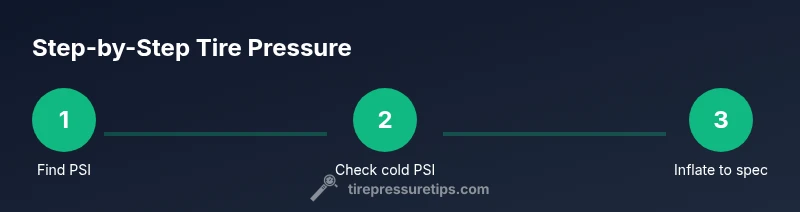
- Find the correct PSI on the door placard and manual.
- Check tires when cold with a reliable gauge.
- Inflate to the recommended PSI with small increments.
- Recheck after inflation and log readings.
- Monitor TPMS and replace faulty sensors if needed.
- Consider seasonal adjustments and regular professional inspections for long-term reliability.
Tools & Materials
- Tire pressure gauge (digital or analog)(Calibrated; read in psi; measure cold tires for accuracy)
- Air compressor or access to an air pump(Ensure it can reach the vehicle's recommended psi)
- Owner's manual or the door placard(For exact PSI values by model year and trim)
- Notebook or app to log readings(Helpful for tracking changes over time)
- Valve-cap wrench or small tool(For reseating caps after inflation)
Steps
Estimated time: Total: 30-50 minutes
- 1
Identify the correct PSI target
Read the door placard and, if needed, the owner's manual to confirm the cold PSI target for your Corolla. Note any variation for different trim levels or wheel sizes. This step prevents over- or under-inflation from the start.
Tip: If you can't read the placard, use the manual or contact a dealer for the exact spec. - 2
Check tires when cold with a gauge
Park on a level surface and wait for at least three hours or after the car has cooled. Remove the valve cap, place the gauge on the valve stem, and record the reading for each tire.
Tip: Use a consistent gauge type to minimize reading variance. - 3
Inflate to the specified PSI
If a tire reads low, add air in small increments (1-2 psi) and recheck after each increment. Do not exceed the target; overinflation reduces contact with the road.
Tip: If you can't reach the target in one session, stop at the recommended maximum safe pressure for the tire. - 4
Recheck all tires and reseat caps
After inflation, recheck each tire to confirm it matches the target psi. Replace the valve caps securely to prevent air leaks and keep the stems clean from dust.
Tip: Double-check the rear tires if you carry heavy loads; they sometimes require different pressure values. - 5
Log readings and monitor
Record the date, time, tire pressures, and any notes about temperature or workload. This helps identify slow leaks and seasonality.
Tip: Set monthly reminders to repeat the process and watch for gradual downward trends. - 6
Close with safety check
Inspect tires for signs of wear, sidewall damage, or punctures. If any tire looks unusual, seek professional inspection before driving long distances.
Tip: If a TPMS warning appears, verify pressure first; a sensor fault could also trigger the light.
Frequently Asked Questions
What is the recommended tire pressure for a Toyota Corolla?
The exact psi varies by model year and trim. Check the door placard or owner's manual for your specific value. Do not use the sidewall maximum as the operating pressure.
Check the door placard or owner's manual for your Corolla’s exact PSI; never inflate to the tire’s maximum sidewall rating.
How often should I check my Corolla's tire pressure?
Check at least monthly and before long trips. Always measure when the tires are cold for an accurate reading, and adjust as needed.
Check monthly and before trips when tires are cold, then adjust to the recommended value.
Why is my TPMS blinking or flashing?
A blinking TPMS warning can indicate a tire is below the safe pressure or a sensor fault. Check all tires with a gauge and inspect for leaks or damage if the light persists.
If the TPMS light blinks, check tire pressures with a gauge and inspect tires for leaks or sensor faults.
Can I drive with low tire pressure?
You can drive briefly, but underinflated tires compromise handling and increase the risk of a blowout. Inflate to spec as soon as possible and have the tires checked for leaks.
Driving on underinflated tires is unsafe long-term—inflate to the recommended PSI and inspect the tires.
Should I inflate to the maximum PSI listed on the tire sidewall?
No. The sidewall max is not the operating pressure. Use the door placard or owner's manual for the correct value; overinflating can reduce traction and lead to a harsher ride.
Never use the sidewall max; inflate to the recommended PSI on the placard.
What about seasonal changes and tire pressure?
Temperature changes affect air pressure; cold weather lowers PSI. Check when cold and recheck after temperature shifts to maintain accuracy.
Seasonal temperature changes affect tire pressure; check when cold and recheck after temperature shifts.
Watch Video
What to Remember
- Check cold tires against placard values.
- Use a trusted gauge for accuracy.
- TPMS supports, but does not replace manual checks.
- Seasonal changes impact pressure—recheck with the weather.
- Log readings to spot slow leaks and trends.