Tire Pressure Guide for Porsche 718 Cayman
A comprehensive, step-by-step guide to checking and maintaining tire pressure on the Porsche 718 Cayman, including TPMS insights, safety tips, and maintenance routines.


This guide helps you check and set the correct tire pressures for your Porsche 718 Cayman, with practical steps, TPMS guidance, and safety tips. You’ll learn where to find the manufacturer’s spec, how to measure accurately when tires are cold, and how to adjust pressures without compromising performance or safety. Expect a detailed, action-oriented approach tailored for sports cars like the Cayman.
Why correct tire pressure matters for the Porsche 718 Cayman
Maintaining the proper tire pressure on a mid‑engine sports car like the 718 Cayman is about safety, handling, tire longevity, and efficiency. Correct pressures help the tires maintain a proper contact patch with the road, reducing unpredictable steering response and improving braking stability. For performance driving, even small deviations can affect grip, cornering feel, and tire wear. The Tire Pressure Tips team emphasizes that the safest, most reliable approach is to follow the vehicle manufacturer’s specification printed on the door jamb placard or in the owner’s manual. In daily driving and precision handling scenarios, consistent pressures support predictable grip and even wear across all four tires. Remember, the TPMS is a helpful reminder but not a substitute for verifying pressures with a gauge; use both for best results.
How to locate the correct pressure for your Cayman 718
Your Cayman’s recommended tire pressures are listed on the door jamb placard and in the owner’s manual. The placard typically differentiates front and rear tire pressures and may show separate values for standard load versus heavy load conditions. Always check the cold tire pressure (before any significant driving) to get an accurate baseline. When parked for a few hours, the tires settle, and readings are most reliable. If you’ve lost the placard, the manufacturer’s website or a dealer can provide the exact numbers for your model year. Tire Pressure Tips recommends recording both front and rear cold pressures and noting any differences between seasons or driving conditions.
Front vs rear pressures and load considerations
Sports coupes like the 718 Cayman often have different target pressures for the front and rear tires. This helps optimize steering response, balance, and load distribution. If you’re carrying a heavier load or frequent track sessions, the manufacturer’s spec may change for front and rear tires. Consult the placard for precise values and avoid extrapolating from one side of the car to the other. A small variation between front and rear pressures is normal and intentional, not an error. Regular checks ensure both sets maintain their designed alignment with the chassis geometry.
Tools and materials you’ll need (quick reference)
Before you start, gather essential tools to measure and adjust tire pressure accurately. A calibrated digital tire pressure gauge is preferred for clarity, paired with a portable air compressor to dial in the exact target pressure. Keep the owner’s manual or the door placard handy to confirm the correct numbers for front and rear tires. Optional items include a notebook or digital log to track readings over time and wheel chocks if you’re on an incline. This preparation minimizes guesswork and speeds up the process.
Step-by-step overview for checking tire pressure
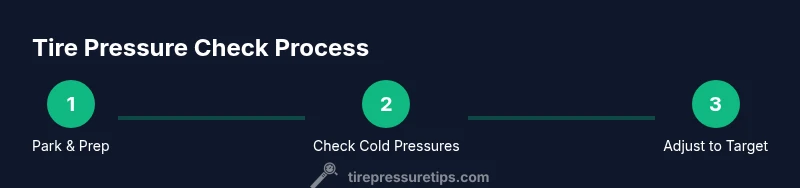
The process combines quick checks with careful adjustments. You’ll start by locating the correct cold-pressure targets, then measure each tire with a reliable gauge, and finally inflate (or deflate) to the target. After adjusting, recheck all four tires to ensure uniformity and record the results. If you have TPMS readings that diverge from your gauge results, treat the gauge as the primary source for absolute numbers and use TPMS as a secondary confirmation. This approach reduces the risk of over-inflation, under-inflation, and unexpected handling changes.
Common mistakes and how to avoid them
Rushing through measurements or using a car’s hot tire readings will produce misleading results. Don’t rely on the dash light alone; TPMS provides a trigger, not a precise measurement. Avoid inflating to “feel” based on seating or ride quality—control pressures with a gauge. Over-tightening valve caps or letting air escape slowly during adjustment can skew readings; use a steady, controlled approach and recheck after minor adjustments. Finally, don’t neglect the spare if your Cayman uses one; some setups share calculated baseline pressures across tires.
TPMS explained: what it does and when to trust it
Tire Pressure Monitoring System (TPMS) warns you when tire pressures deviate sufficiently from the factory target. It’s a crucial safety feature, especially for performance driving where quick changes in load can affect grip. However, TPMS is most effective when used alongside a reliable gauge. If you notice the TPMS warning while the gauge shows normal pressures, recheck after cooling the tires and inspect for valve leaks or sensor issues. Regular calibration and sensor health checks help maintain TPMS reliability.
Seasonal changes and temperature effects on tire pressure
Temperature shifts influence tire pressure; colder conditions generally lower the pressure, while hotter conditions raise it. Because the Cayman is a performance car, you may notice these changes more clearly during seasonal transitions or after track days. Always measure when tires are cold and adjust to the manufacturer’s spec accordingly. If you operate in extreme climates, consider a simple reminder schedule to recheck pressures at the start of each season.
Maintenance routine: keep it consistent
Create a simple routine to check tire pressure at least once a month and before long trips or track days. Keep a small log noting the date, measured pressures, and any changes in tire wear or handling. This habit helps you spot gradual declines due to slow leaks or weather changes. Consistency is key: a stable baseline makes it easier to detect meaningful deviations that require attention.
Tools & Materials
- Digital tire pressure gauge(Calibrated, with readings in psi and/or bar; use the same unit throughout checks)
- Portable air compressor(Cordless preferred; ensure it can reach the target pressure with stable airflow)
- Vehicle owner’s manual or door jamb placard(Contains the manufacturer-recommended front/rear pressures for your Cayman 718)
- Wheel chocks(Useful on sloped surfaces to prevent movement during checks)
- Notebook or digital log(Record measurements, dates, and any seasonal notes)
- Tire valve caps(Keep caps intact to prevent leaks, especially on performance tires)
Steps
Estimated time: 20-40 minutes
- 1
Park and prep
Park on a flat surface and set the parking brake. Activate all safety checks and locate the four valve stems. Ensure the vehicle is off and cool before you begin to avoid hot tire readings.
Tip: Use wheel chocks if you’re on a slope to prevent movement during the test. - 2
Locate the correct pressures
Consult the door jamb placard or the owner’s manual for the exact front and rear tire pressures for your Cayman 718. Note any differences based on load or season so you can target the right numbers for each tire position.
Tip: Record both front and rear values to compare over time. - 3
Check cold pressures
Use your calibrated gauge to measure each tire’s pressure when the tires are cold, ideally after the car has been parked for several hours. Read each value carefully and verify the unit you’re using.
Tip: Use the same gauge for all measurements to ensure consistency. - 4
Inflate or deflate to target
If a tire is below the target, add air until the gauge reaches the specified value. If above, release air gradually and recheck. Do this for each tire, keeping changes small to avoid overshoot.
Tip: Inflate in small increments and recheck rather than chasing a single large adjustment. - 5
Recheck all tires
After adjustments, measure all four tires again to confirm uniform pressures. Ensure front and rear tires are still within their respective targets.
Tip: If a tire reads significantly different after confirmation, inspect for leaks or valve problems. - 6
TPMS verification
If your TPMS indicated a warning, compare tone and readings with your gauge. Use TPMS as a backup check rather than a precise measurement tool.
Tip: If TPMS errors persist, consult a professional to inspect sensors and valve hardware. - 7
Record and monitor
Log the date, tire positions, and pressures. Note any patterns across seasons or after heavy driving. This history helps you detect slow leaks or changes in handling.
Tip: Keep the log accessible and review it monthly for trends. - 8
Final safety check
Inspect valve stems and tires for signs of wear, cracks, or leaks. Ensure valve caps are in place and that no foreign objects are present in the wheel wells.
Tip: If you notice any tire damage, stop driving and seek professional evaluation.
Frequently Asked Questions
How often should I check tire pressure on a Porsche 718 Cayman?
Check tire pressure at least monthly and before long trips or track days. Also recheck after seasonal temperature changes. Regular checks help prevent uneven wear and maintain optimal handling.
Check tires monthly and before long trips; recheck after seasonal temperature changes to prevent wear and ensure proper handling.
Why might the TPMS warn even if my gauge shows normal pressure?
TPMS can warn due to sensor drift, temperature changes, or a gradual leak that isn’t yet noticeable on the gauge. Rely on a calibrated gauge for precise numbers and treat the TPMS warning as a prompt to recheck.
TPMS can warn due to sensor drift or small leaks; trust a calibrated gauge for exact numbers and recheck when prompted.
Can I rely on the dash light alone for tire pressure?
No. The dash light is a warning system, not a measurement. Always verify with a gauge to determine exact pressure and adjust accordingly.
The dash light is a warning, not a measurement. Always measure with a gauge for exact numbers.
Does load affect tire pressure on the Cayman 718?
Yes. Heavier loads or driving styles can change the required front and rear pressures. Always check the placard for the correct targets when carrying different loads.
Load changes can affect the needed pressures; check the placard to confirm targets for different loads.
What if I can’t locate the placard or manual?
If the placard isn’t accessible, consult the manufacturer’s official resources or a Porsche service center for the exact front/rear targets for your model year.
If you can’t find the placard, check official resources or contact a service center for the exact targets.
Should I calibrate TPMS sensors after rotating tires?
Rotating tires doesn’t typically require manual TPMS calibration, but it’s wise to verify sensor positions and recheck pressures after rotation to ensure accuracy.
After rotation, recheck pressures to confirm accuracy and ensure sensors are properly positioned.
What are signs of a slow tire leak I should watch for?
Look for gradual pressure loss across days or weeks, a sticky valve stem, or a tire that consistently reads low after a refill. Investigate promptly to avoid sudden pressure loss.
Watch for slow, steady drops in pressure or a sticky valve; inspect promptly to prevent problems.
Watch Video
What to Remember
- Check cold pressures against manufacturer spec.
- Front and rear pressures may differ for the Cayman 718.
- Use a gauge as the primary measurement, TPMS as backup.
- Log readings to spot slow leaks or seasonal shifts.
- Recheck after any adjustment before driving again.