BMW Tire Pressure Guide: Check, Inflate, and Maintain
Learn how to check and adjust BMW tire pressure to the vehicle's spec, including TPMS considerations, seasonal changes, and maintenance tips. A practical, step-by-step guide to keep tires performing, improving safety, fuel economy, and tire life.


This guide shows you how to check and adjust BMW tire pressure to the vehicle’s spec, including TPMS aspects, cold-reading methods, and seasonal changes. You’ll need a reliable gauge, access to your door placard or manual, and an air source. By following these steps, you’ll improve safety, fuel efficiency, and tire life.
Understanding Why BMW Tire Pressure Matters
BMW tire pressure is not just a number on a sticker—it’s a performance and safety setting that influences handling, braking, tire wear, and fuel economy. The Tire Pressure Tips team emphasizes that for BMWs, the recommended pressures can vary by model, wheel size, load, and whether you’re driving solo or with passengers. In practice, keeping tires inflated to the manufacturer’s spec ensures optimal contact with the road, even weight distribution, and predictable steering response. This matters more on BMWs because they often feature low-profile tires and stiff suspensions designed for precise handling. According to Tire Pressure Tips analysis, neglecting proper inflation can lead to uneven tread wear, reduced grip in wet conditions, and higher rolling resistance that saps efficiency. Remember: the placard on the door jamb or in the owner’s manual is your authority, and it may differ between front and rear tires. Regular checks, especially during temperature fluctuations, keep your BMW performing as designed.
How to Check Tire Pressure Accurately
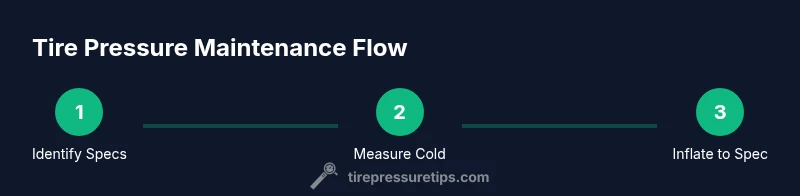
Accurate tire pressure starts with measuring when the tires are cold. A cold reading means the car hasn’t been driven for several hours, and the tires haven’t heated up from driving. Before you start, clear away dirt from the valve stem and wheel rim so the gauge seats cleanly. Remove the cap from the valve, press the gauge onto the stem firmly, and read the pressure on the display. Compare the reading to the official spec found on your door jamb placard or in the owner's manual. If the pressure is too low, add air in small increments and recheck. If it’s too high, release air slowly until you’re within range, then recheck again. Always check both front and rear tires, as BMWs sometimes use different targets for each axle. After adjusting, replace valve caps and wipe away any condensation or moisture.
Vehicle-Specific Pressure: Where to Find the Right PSI
Your BMW’s correct tire pressure is not universal; it’s model- and load-specific. Start with the door jamb placard—this sticker lists the recommended PSI for front and rear tires under normal conditions. The owner’s manual also documents these values and explains any model-specific caveats (like run-flat tires or spare tire requirements). If you regularly carry heavy loads or participate in performance driving, your BMW may have a higher or lower target per axle. Note that steering and braking dynamics change with slight pressure differences, which is why many BMW owners check both axles separately. Importantly, the placard is the authority; if it disagrees with the door sticker, use the placard, and consult a certified technician if you’re unsure. For extra accuracy, measure after the vehicle has cooled for at least a few hours and before the next drive.
TPMS: What It Tells You and What It Doesn’t
TPMS provides a warning when tire pressure falls below the recommended level or when the system detects a sensor fault. It does not replace a manual check, and it is not a precise gauge. If the TPMS light comes on, verify with a mechanical read using a gauge to determine the actual PSI. After you inflate or adjust, you may need to drive a short distance for the system to reset, depending on your BMW’s year and model. Be mindful that temperature changes can trigger TPMS warnings before you notice a difference on the gauge, so frequent checks are wise during cold snaps or heat waves. If you replace sensors or rotate tires, TPMS recalibration might be required by a technician.
Common BMW Tire Pressure Myths and Mistakes
Myth: Higher pressure always improves fuel economy. Reality: Overinflation reduces traction and causes uneven wear. Myth: If the light is off, pressure is fine. Reality: The TPMS can be fooled by slow leaks and sensor faults; manual checks are essential. Myth: You only need to check once a year. Reality: Tire pressure fluctuates with temperature and driving; monthly checks catch changes early. Myth: The spare tire uses the same PSI as the other tires. Reality: Spares have their own specification and should be checked per the placard. Debunking these myths helps prevent premature tire wear and unsafe driving conditions, especially on performance-oriented BMW platforms.
Troubleshooting Low or High Readings
Unexpected readings can come from a few sources: a slow leak from a nail or valve stem, a loose valve core, a faulty TPMS sensor, or recent gas-station inflation that left you overinflated. If you notice rapid changes in PSI in a short period, inspect the tire then test with a different gauge to confirm. When you suspect a leak, apply soapy water around the valve stem, bead, and sidewall to look for bubbles. If you find a leak, repair options vary by location and tire type—consult a professional if the tire shows sidewall damage or a damaged bead.
Seasonal Temperature Effects on Tire Pressure
Ambient temperatures influence tire pressure; as temperatures drop, air contracts and pressures fall; as it warms, pressures rise. The Tire Pressure Tips team notes that drivers in regions with wide seasonal swings should check tires more often in fall and spring. The goal is to maintain the target range shown on the placard through temperature transitions. If you have winter tires or switch tire types with the seasons, recheck pressures after installation. In BMWs with low-profile tires, even small pressure changes can noticeably alter ride quality and handling, so plan for more frequent checks during extreme temperatures and after long highway bursts in hot weather.
Maintaining Proper TPMS and Gasket Health
Regularly inspect TPMS sensors; if a sensor battery fails, replacement may be necessary. Keep valve stems clean and free of debris; damaged stems can cause slow leaks. When mounting new tires, ensure the TPMS sensor is properly seated and calibrated. If your BMW uses automatic TPMS calibration, you may still need to confirm pressures with a gauge to avoid surprises on the road. The alignment of sensors and the integrity of gaskets help keep a consistent, accurate reading. Regular maintenance reduces the risk of unexpected pressure changes and keeps your handling consistent.
Tools & Materials
- Digital tire pressure gauge(Prefer a gauge with a digital readout and a built-in release to avoid overinflation)
- Air compressor or inflator(At home or gas station; ensure it can reach a broad enough range and maintain steady output)
- BMW owner's manual or door placard(Use the exact front/rear values for your model and load)
- Soapy water bottle (for leaks)(Helpful to confirm slow leaks around valve stems and beads)
- Cloth or rag(Wipe condensation and keep rims clean for accurate readings)
- Notebook or app for logs(Track PSI over time to spot gradual changes)
Steps
Estimated time: 25-40 minutes
- 1
Identify the correct tire pressure specification
Locate the official PSI targets for your BMW from the door placard and the owner’s manual. Note any axle-specific values and considerations for load or winter tires. Understanding the exact targets before you begin saves you from overinflating or underinflating later.
Tip: If there’s a discrepancy between placard and manual, prioritize the placard and consult a dealer if needed. - 2
Prepare your tools and vehicle
Assemble a digital gauge, an air source, and your placard. Park on a flat surface, apply the parking brake, and turn off electronics to avoid pressure changes due to heat or movement.
Tip: Clear away snow, ice, or dirt from the valve stem to ensure an accurate seal. - 3
Measure cold tires
Before driving, measure pressure on all four tires when they are cold to avoid readings inflated by heat. Remove valve caps and place the gauge squarely on the stem; read the display and compare with the placard values.
Tip: If you’ve just driven, wait several hours and recheck after the tires have cooled. - 4
Inflate or vent to spec
If any tire is below target, add air in short bursts and recheck. If any tire is above target, vent air gradually and recheck. Repeat until all four tires meet the specified targets.
Tip: Avoid overfilling by using the gauge’s release valve to dial in exact pressure. - 5
Recheck and seal
After adjustments, recheck all tires to confirm accuracy. Replace valve caps firmly to prevent slow leaks and wipe away moisture from the stems.
Tip: Take a quick test drive of 5–10 miles and recheck again to ensure stability after settling. - 6
Document and monitor
Record the pressures and the date of measurement. Monitor changes over seasons and before long trips. Update logs if you notice consistent drift in one tire.
Tip: A simple log helps you detect gradual leaks or sensor issues early.
Frequently Asked Questions
Why is my BMW TPMS warning light on even when readings seem fine?
TPMS can warn about slow leaks, sensor faults, or temperature-driven changes. Always verify with a manual gauge to confirm actual PSI and reset the system if needed after adjustments.
The TPMS can warn for slow leaks or sensor faults; always confirm with a gauge before taking action.
Can I use generic PSI values from another brand for my BMW?
Use the model-specific pressures shown on your BMW placard or in the owner's manual. Variations exist by model, wheel size, and load, so generic values can be unsafe.
Use your BMW's exact placard values for each axle; generic pressures may be unsafe.
How often should I check tire pressure on a BMW?
Check monthly and before long trips. Temperature changes and load variations mean more frequent checks are prudent.
Check monthly and before long trips, especially during temperature swings.
Is TPMS the same as manual tire pressure checking?
TPMS provides warnings, not exact pressures. A manual gauge gives precise PSI readings, which you should rely on for accuracy.
TPMS warns you, but you should still measure PSI with a gauge for accuracy.
What causes incorrect tire pressure readings?
Temperature changes, recently inflating at a gas station, or a faulty valve can affect readings. Always test with a second gauge if in doubt.
Temperature, valve issues, or a faulty sensor can give wrong readings—check with another gauge.
Should the spare tire have the same PSI as other tires?
Spare tires often have different specifications. Check the placard for the correct spare PSI and adjust accordingly.
Check the spare's own spec on the placard and inflate to that value.
Watch Video
What to Remember
- Check cold pressures monthly before trips.
- Always follow the placard values for front and rear tires.
- TPMS supplements but does not replace manual checks.
- Temperature changes require more frequent checks.
- Record readings to spot gradual changes or sensor issues.