Trailer Tire Monitoring System: A Practical Guide to Safety and Maintenance
A practical guide to understanding trailer tire monitoring systems, choosing the right sensors, installing them, and using real-time data to improve safety and maintenance on all trailer setups.


A trailer tire monitoring system tracks tire pressure and temperature for all wheels in real time, sending alerts when pressures fall outside safe ranges or when temperatures rise unexpectedly. This helps prevent blowouts, uneven wear, and wasted fuel by enabling early adjustments. Whether you tow a utility trailer, boat trailer, or travel trailer, TTMS adds a critical safety layer. According to Tire Pressure Tips, understanding trailer tire pressure is essential for safe towing. The Tire Pressure Tips team emphasizes real-world use: choose a TTMS that matches your trailer’s axle count, mount and pair it correctly, and regularly calibrate to keep alerts relevant. This guide walks you through selecting, installing, and using TTMS for safer towing.
What is a trailer tire monitoring system and why it matters
A trailer tire monitoring system (TTMS) is a set of sensors attached to each trailer tire or wheel assembly that reports tire pressure and temperature to a central receiver or a mobile app. Unlike a typical vehicle TPMS, TTMS is designed to monitor the tires on your trailer, which can carry heavy loads and experience rapid temperature changes in the sun or during long pulls. A TTMS helps you catch under-inflation, over-inflation, slow leaks, or overheating before they escalate into flats or blowouts. For drivers, this translates to better fuel efficiency, longer tire life, and safer towing experiences. According to Tire Pressure Tips, practical TTMS setup starts with knowing your trailer’s axle count, tire size, and mounting constraints. The Tire Pressure Tips team notes that real-world use hinges on correct sensor placement, robust seals, and reliable data transmission—factors that determine how useful the system will be on the road.
Key benefits of TTMS include real-time visibility, proactive maintenance, and early warning signals that help you avoid risky situations at highway speeds. When chosen and installed correctly, TTMS also reduces the need for manual pressure checks during trips, especially in remote areas. This section lays the groundwork for choosing a system that suits your trailer, noting that not all TTMS solutions are created equal. You’ll see that the most effective setups balance accuracy, ease of installation, battery life, and compatibility with your preferred receiver or app.
Types of trailer tire monitoring systems
TTMS options vary in sensor placement (valve stem, bead seat, or hub-mounted sensors), communication method (RF, Bluetooth, or proprietary wireless), and mounting complexity. Some systems are designed for single-axle trailers with a compact receiver that mounts near the hitch, while others support multi-axle trailers with a centralized display or mobile app. Wireless models are often easier to install because they don’t require running power wires to each wheel, but they may depend on battery life and signal range. Wired variants, though more labor-intensive to install, can offer continuous power and potentially steadier data transmission in challenging environments. From a maintenance perspective, the choice influences how you inspect seals, inspect connections, and replace batteries when needed. Based on Tire Pressure Tips research, the most practical TTMSs for everyday trailers provide clear alerts, a straightforward pairing process, and long-lasting batteries. It’s important to verify compatibility with your trailer’s axle count and wheel size before purchasing.
When evaluating types, consider how you’ll view data (in-vehicle display, phone app, or both) and whether you want multiple trailers to share the same receiver. If you tow in remote areas or airports, a system with offline data storage can be valuable. Finally, confirm weatherproofing ratings for outdoor mounting and the ease of sensor replacement without specialized tools.
How TTMS sensors work and what to expect
TTMS sensors are designed to measure two primary variables: tire pressure and tire temperature. Pressure sensors monitor the air inside the tire and trigger alerts when the pressure drifts beyond a defined range. Temperature sensors track heat buildup, a telltale sign of friction, overloading, or slow leaks. Data from these sensors are transmitted to a central hub or receiver, which then updates the dashboard or mobile app in near real time. In practice, you’ll see a simple dashboard showing each tire’s current pressure and temperature, plus color-coded alerts when a tire needs attention. Some systems also provide historical data, trend graphs, and calibration checks to help you track changes over time.
For trailers with multiple axles, it’s common to have a separate sensor per tire, ensuring you can identify a single failing tire without guesswork. If your TTMS supports multiple trailers, you’ll be able to switch profiles in the app or at the receiver. It’s worth noting that sensor batteries influence notification timing; some sensors run on coin-cell batteries, while others use rechargeable systems. Regular battery checks are essential to prevent sudden data gaps during trips.
Choosing the right TTMS for your trailer
Choosing a TTMS requires balancing fit, function, and budget. Start by confirming the system supports your trailer’s axle count and tire sizes, and that sensors are compatible with your valve stems and bead seats. Look for weatherproofing ratings (IP or ingress protection) that match your trailer’s exposure, especially if you often tow in rain, snow, or dust. Consider the data interface: a bright, easy-to-read display in your truck, or a mobile app that provides push alerts and historical charts. Battery life matters; longer-lasting sensors reduce maintenance, but you should still know how to replace them quickly. Some TTMS packages allow you to manage multiple trailers or to customize alert thresholds for each tire. In addition, assess how the system handles calibration—some models require you to set a baseline during cold-soaked conditions and verify the data after a drive.
From a reliability standpoint, ensure that the hub-to-sensor communication is robust enough for your towing environment (long highway runs, mobile device interference, or dense cargo in the trailer). Finally, factor in the total cost of ownership, including spare sensors and potential replacement parts. The Tire Pressure Tips team recommends selecting a TTMS that provides clear alerts, straightforward installation, and supported updates to keep pace with new trailer tire standards.
Installation considerations and prep work
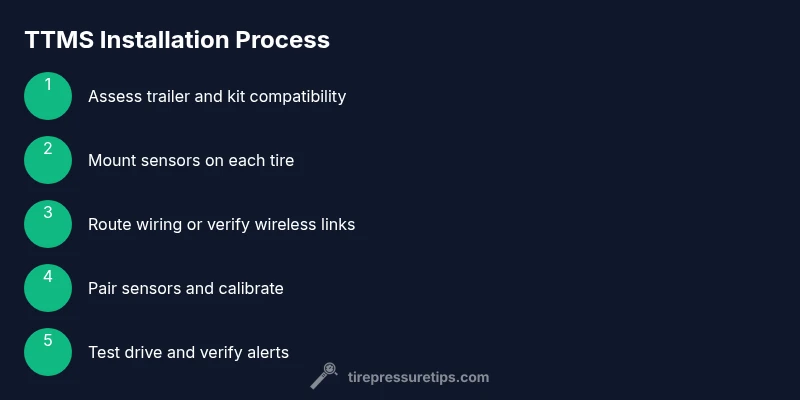
A successful TTMS installation begins with careful planning. Gather the kit, confirm you have the correct number of sensors for each tire, and inspect the trailer’s wheel hubs for corrosion or damage. If your system is wireless, you’ll want to ensure the receiver’s line of sight to all sensors, particularly if your trailer has metal walls or reflective surfaces nearby. For wired systems, you’ll run power to each sensor or connect a centralized power supply; use weatherproof seals and grommets to protect connections from moisture and road spray. Prepping the tires by cleaning the valve stems and rims minimizes mounting resistance and improves sensor accuracy. When mounting sensors, avoid overtightening and ensure the sensor orientation aligns with the manufacturer’s instructions to prevent false readings. Finally, plan a thorough test sequence: verify that all tires report, check for proper alert thresholds, and confirm that the app or display updates within a few seconds of a change.
Good planning also means collecting baseline data while the tires are cold, so you have an accurate reference for future comparisons. This reduces false alarms and helps you trust TTMS signals on the road.
Using TTMS data to improve safety and maintenance
Once your TTMS is installed, use the real-time data to guide maintenance decisions. Start by establishing baseline pressures for each tire when cold and compare readings against those baselines on every trip. If a tire consistently runs cooler or hotter than others, investigate potential causes such as improper seating, a damaged valve stem, or slow leaks caused by nail punctures. Develop a routine that includes checking sensor batteries, seals, and mounting hardware every few months, especially before long trips or seasonal changes. If your app offers alerts for temperature spikes or sudden pressure drops, treat those warnings as immediate action items rather than optional notifications. Regular calibration ensures the displayed values reflect actual pressures, which reduces nuisance alerts and increases your trust in TTMS data. In practice, consistent monitoring helps you catch issues before they become road hazards and can extend tire life by avoiding under-inflation and overheating.
Common pitfalls and best practices
Even the best TTMS can fail if installed carelessly. Common pitfalls include mismatched sensor types for the tire size, loose mounting hardware, exposed wiring, and batteries that die mid-trip. Weather can degrade seals, so use weatherproof grommets and corrosion-resistant hardware. Another frequent issue is poor app configuration—set alert thresholds that reflect your tires’ typical operating range to minimize nuisance alerts while preserving safety. Pro tip: log your calibration baseline and perform a quick post-drive check to confirm readings align with the expected tire conditions. Best practices also include labeling sensors by axle and position (front left, front right, etc.) to quickly identify a failing tire during inspections or emergencies. Lastly, review the manufacturer’s instructions for component replacement and firmware updates. From start to finish, a careful, methodical approach minimizes surprises on the road. The Tire Pressure Tips team also notes that a well-chosen TTMS significantly enhances trailer safety and maintenance discipline.
AUTHORITY SOURCES
- https://www.nhtsa.gov
- https://www.fhwa.dot.gov
- https://www.sae.org
Authoritative sources
For further reading and official safety guidelines, consult authoritative sources that address tire safety and monitoring technology.
- https://www.nhtsa.gov
- https://www.fhwa.dot.gov
- https://www.sae.org
Tools & Materials
- TTMS kit (sensors + receiver)(Ensure compatibility with trailer axle count and wheel size)
- Digital tire pressure gauge(Use to baseline pressures before/after installation)
- Wire cutters/stripper(For any wired connections)
- Electrical tape/heat shrink(Waterproofing for connections)
- Zip ties(Organize and secure wiring neatly)
- Electrical contact cleaner(Optional for cleaning corrosion from connectors)
- Sealant or weatherproof silicone(Exterior mounting protection)
- User manual / installation guide(Follow manufacturer instructions exactly)
- Battery test tool(If sensors use replaceable coin cells)
Steps
Estimated time: 1-2 hours
- 1
Gather materials and confirm compatibility
Collect the TTMS kit, gauges, and mounting hardware. Verify that the sensor count matches each tire and that the receiver supports your trailer’s axle layout. Double-check tire sizes and valve stem types before you begin.
Tip: Create a quick parts checklist to avoid missing a sensor or mounting adaptor. - 2
Inspect mounting areas and plan sensor placement
Examine rims, hubs, and wheel wells for corrosion or damage. Decide whether valves on all tires can be used or if hub-mounted sensors are required. Mark sensor locations to ensure consistent placement across all tires.
Tip: Place sensors away from heat sources and moving parts to reduce wear. - 3
Mount sensors on each tire
Install sensors according to the kit’s instructions, ensuring proper seating and airtight seals. For valve-stem sensors, replace valve caps with the sensor-equipped cap if provided. Tighten hardware to the manufacturer’s torque specifications.
Tip: Avoid overtightening to prevent sensor damage or tire stem deformation. - 4
Route and secure wiring or configure wireless links
If wired, route cables away from heat and creases; use weatherproof grommets and zip ties to secure. If wireless, verify line-of-sight and ensure the receiver can reach all sensors on a full trailer length.
Tip: Keep wiring away from suspension components to prevent chafing. - 5
Pair sensors with the receiver or app
Power on the receiver/app and initiate sensor pairing per the instructions. Verify each tire shows a live reading and confirm there are no duplicate IDs. Save the configuration and test alerts with a controlled pressure change.
Tip: Re-check after a short drive to confirm stable connectivity. - 6
Calibrate baseline pressures
With tires cold, record the baseline pressure for every tire. Set alert thresholds around these baselines to reflect normal variation. Repeat calibration after a long drive or when ambient temperature changes significantly.
Tip: Use cold tires for baselining to prevent inflated readings from heat buildup. - 7
Test drive and validate alerts
Take a short test run and monitor readings in real time. Trigger a slow leak or simulated over-inflation to ensure alerts fire promptly. Confirm the app or display alerts correctly and that the nurse of data is visible on all tires.
Tip: If an alert doesn’t trigger as expected, re-check sensor orientation and batteries.
Frequently Asked Questions
What is a trailer tire monitoring system?
A TTMS uses sensors on each trailer tire to monitor pressure and temperature and reports data to a central display or app. It helps you spot leaks, over- or under-inflation, and overheating before a failure occurs.
A TTMS uses sensors on each trailer tire to monitor pressure and temperature, reporting data to a display or app to help you catch problems early.
Do I need a TTMS if my vehicle has TPMS?
Vehicle TPMS typically does not cover trailer tires. TTMS is often necessary to monitor tires on any towed trailer separately from your vehicle.
Vehicle TPMS usually doesn't monitor trailer tires, so you’ll likely want a TTMS for the trailer.
How long do TTMS batteries last?
Battery life depends on the model and usage; check the manufacturer’s specifications for expected life and replacement intervals.
Battery life varies by model; refer to the manufacturer’s specs for expected longevity and replacement guidance.
Can one TTMS cover multiple trailers?
Some TTMS support multiple trailers with a single receiver or app profile; confirm limits with the kit you choose before buying.
Some TTMS can handle multiple trailers, but you should verify the limits with the kit you buy.
What maintenance is required for TTMS?
Regularly inspect sensors, seals, and wiring; verify calibration and battery status; replace components as needed.
Keep sensors clean, check seals and batteries, and recalibrate as needed to maintain accuracy.
Are there safety advantages to TTMS?
Yes. Real-time data helps prevent blowouts, reduces unexpected stops, and supports safer roadside towing.
TTMS improves safety by providing real-time data that helps prevent blowouts and unexpected stops.
Watch Video
What to Remember
- Install TTMS to gain real-time tire data
- Match sensors to axle count and tire size
- Calibrate baselines with cold tires for accuracy
- Regularly inspect seals, batteries, and mounting hardware