Tire Pressure Monitoring System for Trailer: A Practical How-To
Learn how to choose, install, calibrate, and maintain a tire pressure monitoring system for trailers. Practical tips, safety cautions, and setup checklists from Tire Pressure Tips.


You're going to learn how to choose, install, and maintain a tire pressure monitoring system for trailer, and how to troubleshoot common TPMS alerts on the road. This guide covers sensor compatibility, mounting considerations, battery life, wiring basics, and routine maintenance. According to Tire Pressure Tips, a well-maintained TPMS reduces blowouts and improves fuel efficiency.
Why tire pressure monitoring system for trailer matters
Maintaining correct tire pressure on a trailer is crucial for safety, efficiency, and tire longevity. A tire pressure monitoring system for trailer (TPMS) alerts you to slow leaks, underinflation, or sudden pressure changes as you tow. According to Tire Pressure Tips, trailer loads and sway dynamics can exacerbate pressure loss, making early warnings essential for safe highway travel. This section explains why TPMS specifically designed for trailers matters, including how airflow and weight distribution affect tire pressure, and how a good TPMS setup reduces risk on long trips and in varying weather. We'll cover how TPMS differs from car TPMS, why trailer wheels may require different sensor fitment, and how a good TPMS setup reduces risk on long trips and in varying weather. By investing time in proper TPMS installation, you gain peace of mind and, over time, potentially lower maintenance costs.
Tools & Materials
- Trailer TPMS kit (sensors + receiver)(Choose kit compatible with your trailer's rim size and valve stems)
- Digital tire pressure gauge(For cross-checking readings during setup)
- Screwdrivers and wrenches(Flat and Phillips, with small sizes)
- Wire cutters/strippers(For basic wiring inspection if needed)
- Electrical tape or heat shrink(Weatherproof connections)
- Replacement batteries or spare batteries(Keep on hand for quick swaps)
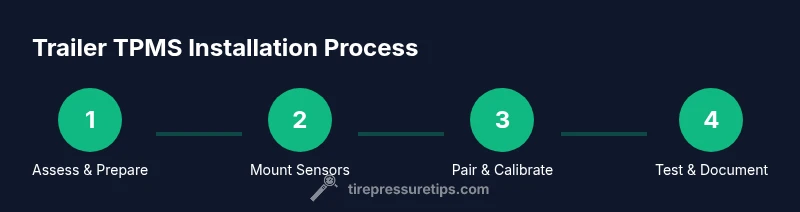
Steps
Estimated time: 60-120 minutes
- 1
Assess trailer TPMS readiness
Inventory wheel count, rim sizes, and valve stems; confirm sensor compatibility with your trailer configuration. This helps you avoid ordering the wrong sensors and ensures you cover every wheel.
Tip: Measure valve stem type and rim diameter before purchasing sensors. - 2
Select a compatible TPMS kit
Choose a kit that covers all axles, supports your rim types, and offers a clear user interface. A mismatched kit leads to wiring headaches and unreliable readings.
Tip: Prefer a multi-axle kit with a single receiver for simplicity. - 3
Mount sensors on every wheel
Install sensors on valve stems or rims per the manufacturer’s instructions. Tighten to the correct torque and avoid overtightening that can damage stems.
Tip: Rotate tires slightly to seat sensors during initial mount. - 4
Install the receiver and power
Mount the display in a dry, accessible spot in the tow vehicle and connect power. Ensure the antenna clearance is adequate to prevent signal dropouts.
Tip: Keep the display within easy reach for quick checks. - 5
Pair sensors with the receiver
Enter learning mode on the display and trigger each sensor to pair. Confirm readings populate for every wheel before moving.
Tip: Do this without the trailer connected to the tow vehicle first to avoid interference. - 6
Calibrate the system for your trailer
Follow the brand’s calibration procedure to map each sensor to its wheel. Validate that the displayed values reflect actual tire pressures when the trailer is stationary.
Tip: Use a known-good gauge to verify readings during calibration. - 7
Test readings during movement
Take a short drive and watch for consistent readings across all wheels. Note any alert behavior during acceleration and braking.
Tip: Pay attention to temperature readings that might indicate slow leaks. - 8
Document setup and secure wiring
Label each wheel, store calibration data, and secure all cables to prevent wear from vibration. This makes future maintenance easier and safer.
Tip: Create a one-page diagram linking wheel position to sensor ID. - 9
Plan ongoing maintenance
Schedule periodic sensor checks, battery swaps, and signal tests to maintain reliability. Update your checklist after major trips or changes in load.
Tip: Set a calendar reminder for annual battery checks.
Frequently Asked Questions
Do trailer TPMS work with passenger-vehicle TPMS systems?
Trailer TPMS systems operate independently from passenger-car TPMS unless a multi-system display is offered. Some setups pair with a tow-vehicle display, but most trailers use a dedicated receiver. Check compatibility before buying.
Trailer TPMS systems usually use their own receiver, though some options can connect to a tow-vehicle display. Check product specs to be sure.
Can I install TPMS on a multi-axle trailer?
Yes. Look for a multi-axle capable kit that can monitor all wheels and provide a clear display for each tire. Be prepared to configure per-axle monitoring in the app or display.
Yes. Use a multi-axle TPMS that supports all wheels and a display layout you can read at a glance.
How long do TPMS batteries last on trailers?
Battery life varies by model, but many trailer sensors last several years under typical usage. Replace batteries when readings become erratic or the sensor fails to pair.
Battery life varies by model, but most last several years with normal use.
Is professional installation required for trailer TPMS?
Not strictly required. DIY installation is common, but ensure proper sensor compatibility and correct calibration. Consider professional help if you’re unsure about wiring or mounting on a complex trailer.
DIY installation is common, but get help if you’re unsure about wiring or mounting.
Do TPMS detect slow leaks on trailers?
Yes. TPMS can alert you to gradual drops in tire pressure, helping you identify slow leaks before a blowout. Always verify readings with a gauge.
Yes, TPMS can alert you to slow leaks. Verify with a gauge when in doubt.
Should I recalibrate TPMS after tire rotation?
Yes. Recalibration ensures each sensor displays the correct wheel and pressure. Recheck all readings after rotation and road testing.
Yes, recalibrate after rotation to keep readings accurate.
Watch Video
What to Remember
- Choose a trailer-compatible TPMS kit.
- Mount sensors securely and protect wiring.
- Calibrate and verify readings with a known gauge.
- Schedule regular battery checks and maintenance.