TPMS for Kia Ceed: Troubleshooting and Maintenance
Learn how to diagnose, reset, and maintain TPMS on your Kia Ceed. This urgent guide covers common causes, step-by-step fixes, and safety reminders from Tire Pressure Tips.


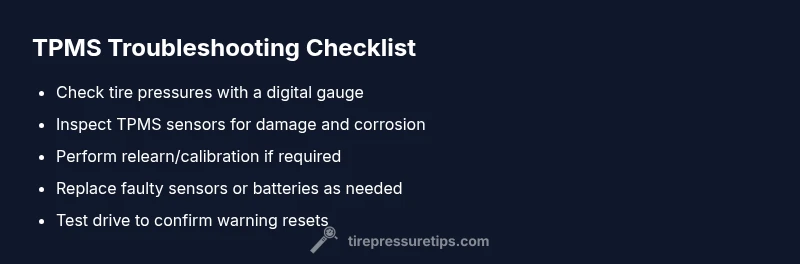
On a Kia Ceed, the most common TPMS issue is a failed sensor battery or a sensor that’s lost its power. Start with verifying tire pressures, then inspect all TPMS sensors for corrosion or damage, and perform a simple relearn if your wheels were rotated or replaced. If the warning persists, check the TPMS battery life and calibration.
Understanding TPMS and Kia Ceed System
The Tire Pressure Monitoring System (TPMS) in most Kia Ceed models is designed to alert you when a tire loses air pressure, helping you avoid unsafe driving conditions. For the TPMS Kia Ceed setup, accuracy starts with correct tire pressure in all four tires and ends with a reliable sensor network communicating with the vehicle’s computer. This section explains how TPMS detects pressure changes, what triggers a warning, and how the system initializes when a wheel is rotated, replaced, or serviced. You’ll learn how sensor power, battery health, and calibration affect readings, and how to interpret codes or light patterns that appear on the dashboard. By understanding the basics, you can distinguish between a genuine low-pressure condition and a sensor fault, saving time and avoiding unnecessary trips to a shop.
Common Causes of TPMS Warnings on a Kia Ceed
TPMS warnings can pop up for several reasons. The most frequent is low or uneven tire pressures across the four tires. Sensor batteries can fail or become weak over time, especially with frequent washing or road salt exposure. A damaged sensor or stem, accidental wheel impact, or corrosion at the valve can also trigger false readings. Finally, after wheel rotation, tire replacement, or certain tire repairs, the system may require a relearn (calibration) to map each sensor to its correct tire position. Understanding these causes helps you diagnose the warning accurately and decide whether to fix it yourself or seek professional help.
Quick Checks You Can Do Before Visiting a Tech
Before you call for help, run a quick DIY audit:
- Check all four tire pressures with a digital gauge and compare them to the vehicle’s recommended PSI (found on the door jamb label or owner's manual).
- Inspect tire valves for signs of damage or leakage, and look for visible sensor corrosion around metal stems.
- Note the dash light pattern: steady vs. blinking TPMS light can indicate different issues.
- If you recently rotated or replaced tires, prepare for a relearn/calibration step and ensure you know your vehicle year and trim. If any reading is far outside the recommended range, inflate to spec and recheck. If the light remains on after basic checks, move to relearn steps or professional service.
How to Relearn or Calibrate TPMS on Kia Ceed
Relearning or calibrating TPMS is model-year specific. In many Kia Ceed configurations, you need to inflate all tires to the recommended pressure, turn the ignition to the ON position without starting the engine, and perform a TPMS reset or relearn sequence in the infotainment or instrument cluster. Some setups require driving at a certain speed for several minutes to complete a relearn. If your owner’s manual lists a dedicated TPMS reset button, use it; otherwise, consult the official Kia guidance or a trained technician. The key is to ensure each sensor is correctly associated with its tire position and that the system recognizes all four sensors.
Battery and Sensor Maintenance for Longevity
TPMS sensors rely on small batteries that power the wireless signal to the car’s computer. Over time, battery degradation or sensor damage leads to intermittent or persistent warnings. Regular checks help you catch problems early. Avoid harsh impacts from potholes and curb contact, which can damage sensor housings. If you notice frequent misreadings or an obvious sensor fault, replacing the affected sensor or battery is more reliable than trying to repair the unit. After any replacement, perform a relearn to reestablish the sensor map.
When to Seek Professional Help
If the TPMS light persists after basic checks and relearning, it’s time to get professional help. A technician can test each sensor’s battery health, verify communication with the vehicle, and inspect wiring or control modules for faults. In some cases, you may need a full TPMS sensor replacement, wheel sensor calibration, or software updates to the vehicle’s ECU. A professional inspection can prevent misdiagnosis and ensure your Kia Ceed’s TPMS operates correctly for safe driving.
Steps
Estimated time: 30-60 minutes
- 1
Gather tools and verify pressures
Collect a digital tire-pressure gauge and the factory PSI specs. Check all four tires to confirm they’re within the recommended range before any adjustments.
Tip: Use the gauge on a cool tire for the most accurate reading. - 2
Inflate to recommended pressures
Inflate each tire to the exact spec from the label. If a tire is slow to leak, you may need to inspect for punctures or valve issues.
Tip: Don’t rely on memory; the label is the authority for PSI values. - 3
Inspect sensors and valves
Look for physical damage, corrosion around the valve stem, or a loose TPMS sensor cap. Replace any damaged hardware.
Tip: Even small leaks at the valve can trigger TPMS warnings. - 4
Attempt TPMS relearn
Follow your Kia Ceed’s relearn steps from the manual or vehicle menu. If required, drive at a steady speed as instructed to complete the process.
Tip: If no reset option is visible, a dealer or tech visit may be necessary. - 5
Verify the light
After relearn or battery replacement, confirm the TPMS light behaves normally and that readings are consistent across all four wheels.
Tip: Take a short test drive to ensure stability. - 6
If issues persist, seek professional help
Persistent warnings after relearn indicate sensor or ECU faults that require diagnostic tools and calibration by a professional.
Tip: Document the steps you took to help the technician diagnose faster.
Diagnosis: TPMS warning light on Kia Ceed or inconsistent tire pressures after rotation
Possible Causes
- highLow or uneven tire pressures
- highFaulty TPMS sensor battery or damaged sensor
- mediumTPMS relearn needed after tire rotation or replacement
Fixes
- easyCheck all four tire pressures and inflate to the recommended values
- mediumInspect sensors for damage, corrosion, or loose stems; replace faulty units or battery
- easyPerform the TPMS relearn/calibration procedure as per model/year requirements
Frequently Asked Questions
What does the TPMS light mean on a Kia Ceed?
The TPMS light usually signals a tire is underinflated or a TPMS sensor fault. Check all four pressures and inspect sensors for damage if the light stays on after inflation.
The TPMS light on a Kia Ceed typically means a tire is underinflated or there’s a sensor fault, so check pressures and sensor health.
Can you drive with a TPMS warning?
If the warning is present, avoid long trips and drive cautiously while you diagnose. Check pressures first and consider professional service if the light remains on.
If there's a TPMS warning, drive cautiously and check pressures; if it stays on, seek professional help.
How do you relearn TPMS on a Kia Ceed?
Relearn procedures vary by year. Inflate tires to spec, access the TPMS relearn option in the vehicle settings or use the reset button if available, then drive or wait for the system to confirm.
Relearning TPMS varies by year; inflate the tires, access the relearn option, and drive as directed until it confirms.
Why does TPMS show incorrect readings after tire rotation?
Rotation can swap sensor positions, confusing the system. A relearn often resolves the issue and updates the sensor map.
After rotation, a relearn usually fixes sensor position confusion and restores accurate readings.
What are common TPMS sensor failures?
Battery failure, damaged stems, or corrosion are typical sensor faults that trigger warning lights. Replacing the faulty sensor or battery often resolves the issue.
Common TPMS sensor faults include battery wear, stem damage, and corrosion; replacement often fixes the warning.
Watch Video
What to Remember
- Check tire pressures first; TPMS often flags pressure issues.
- Relearn TPMS after tire rotation or sensor work.
- Inspect and replace sensors or batteries as needed.
- Seek professional help if warnings persist after relearn.