Toyota Tire Pressure Sensor Location: Locate TPMS on Toyota Vehicles
Learn where Toyota tire pressure sensors (TPMS) are located, how to identify the exact position on your model, and steps to verify and maintain TPMS for safer driving.


Toyota TPMS sensors are mounted in each wheel, usually at the valve stem or within the wheel. For model-specific placement and maintenance steps, see our full guide. This quick answer confirms the general setup and points you to a detailed, model-by-model TPMS location guide.
What is TPMS and Why Location Matters
Tire Pressure Monitoring Systems (TPMS) monitor the air pressure in each tire and alert you if it drops below a safe threshold. Knowing the toyota tire pressure sensor location helps car owners understand warnings, plan service, and avoid unsafe driving conditions. In Toyota vehicles, TPMS sensors are installed in every wheel and are connected to the vehicle’s central computer. The exact mounting method can vary by model and year, so consulting the owner’s manual or a model-specific guide is a smart move for precise details. Regular checks of tire pressure with a reliable gauge complement the TPMS system and help maintain optimal traction and fuel efficiency.
Recognizing the sensor location also aids in diagnosing false alarms, especially after rotating tires or servicing rims. If a sensor is damaged or the battery is depleted, the TPMS light may stay on or flash. In such cases a proper scan with a TPMS tool will identify which wheel sensor needs attention.
Toyota Models: Common TPMS Sensor Placement Patterns
Toyota distributes its TPMS technology across several configurations. Some newer Toyotas use direct TPMS sensors that live inside the wheel and measure actual pressure. Others, particularly older or certain trims, rely on indirect TPMS, which uses wheel-speed data to infer pressure loss without a physical sensor in every wheel. The end result is that the sensor location you will inspect depends on model generation and wheel design. In practical terms, look for a small sensor near the valve stem in direct TPMS setups, or rely on your vehicle’s ABS-related data in indirect systems. For common models like the Corolla, Camry, and RAV4, you will often find the direct sensor mounted at or near the valve stem, sometimes tucked behind a valve cap or inside the wheel rim. When in doubt, check the service handbook or consult a Toyota-specific maintenance guide.
How to Confirm Your Vehicle's TPMS Location
To confirm exactly where the TPMS sensors sit on your Toyota, start with the owner’s manual, which often lists sensor type and mounting details. If the model brochure is available, it can provide a diagram showing sensor placement. A diagnostic scan tool that reads the TPMS IDs will identify which sensor is associated with each wheel. If you rotate tires or replace rims, remember to recalibrate or relearn the sensor IDs according to the vehicle’s procedure. In some cases you may need a service center to pair the sensors to the ECU after wheels are changed. Keeping a note of sensor IDs can help technicians quickly diagnose light alerts.
Visual Cues: Where to Look on Wheels
When inspecting visually, start at the wheel with the easiest access. In direct TPMS, the sensor is typically a small metal canister mounted inside the wheel and connected to the valve stem. The valve stem cap may conceal part of the sensor or its mounting hardware. If you do not see an obvious sensor near the valve stem, it could be behind the wheel cover or embedded in the rim. In indirect TPMS, you won’t find a sensor in the wheel; instead, the system interprets tire pressure changes via wheel-speed sensors. If you see a tire pressure warning, perform a quick check with a gauge to verify actual pressures against the recommended values, and then proceed with a formal inspection if the warning persists.
Model-Specific Notes for Popular Toyota Lineups
Corolla: Most recent generations use direct TPMS with sensors mounted in each wheel, near the valve stem. Camry: Direct TPMS is common on mid- to high-trim levels; the sensor is typically located inside the wheel, hard to spot without removing the tire. RAV4: Direct TPMS sensors are common in newer trims; expect the sensor near the valve stem or battery-like in the wheel assembly. Tacoma: Depending on the year, some trims may use indirect TPMS; if you see frequent false warnings, a sensor check or relearn procedure might be needed. Always verify with the model year’s TPMS manual or a trusted Toyota maintenance guide.
Maintenance, Safety, and Best Practices
Regular checks are key to TPMS reliability. Before inspecting sensors, ensure the vehicle is off, the battery is not being drained, and you follow safe wheel-handling practices. When removing tires, avoid damaging the sensor or its wiring. Use a proper TPMS diagnostic tool to read sensor IDs and statuses, and only replace sensors with compatible units. If you suspect a faulty sensor, testing with a known-good sensor or having the system relearn after tire service is often enough to restore accurate readings. Keep tires inflated to the recommended pressure and recheck after any temperature changes, since tire pressure sensitivity is real and influences alerts.
Tools & Materials
- Digital tire pressure gauge(calibrated within the last 12 months)
- Vehicle owner's manual (model-specific TPMS section)(location and procedure vary by model)
- TPMS diagnostic scan tool or OBD2 scanner with TPMS capability(to read sensor IDs and status)
- Flashlight(to inspect wheel wells and inside rims)
- Wheel chocks(use for safety when lifting wheels)
Steps
Estimated time: 30-60 minutes
- 1
Prepare the work area
Park on a flat surface, engage the parking brake, and place wheel chocks on the opposite wheels. This keeps the vehicle stable while you inspect or remove tires for TPMS access.
Tip: Use bright lighting to clearly see wheel components and sensor housings. - 2
Gather essential tools
Collect a digital tire pressure gauge, TPMS scan tool, and the vehicle owner’s manual before starting. Having these on hand speeds up locating and diagnosing the TPMS in your Toyota.
Tip: Verify that the scan tool is compatible with Toyota TPMS protocols. - 3
Access the wheel and valve area
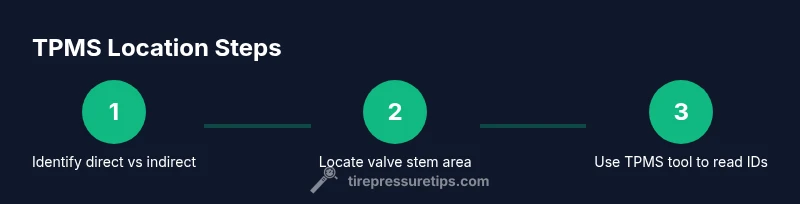
If your wheel has a center cap, remove it to reveal the hub area. Inspect the valve stem area first, as many direct TPMS sensors are located near the stem.
Tip: Handle wheel components gently to avoid sensor damage. - 4
Identify direct vs indirect TPMS
Look for a small sensor body inside the wheel near the valve stem, which indicates direct TPMS. If you don’t see a sensor, your vehicle likely uses indirect TPMS and relies on wheel-speed data.
Tip: If unsure, consult the owner’s manual or a Toyota service guide. - 5
Use a scan tool to confirm sensor IDs
Connect the TPMS tool and read the sensor IDs for each wheel. This confirms which sensor corresponds to which wheel and helps with relearn procedures after service.
Tip: Record IDs and wheel positions to simplify future maintenance. - 6
Document and relearn
If you replace tires or rims, perform the relearn procedure as outlined by Toyota. This ensures the ECU recognizes the new sensor IDs and maintains accurate readings.
Tip: Follow the model year’s exact relearn sequence for a reliable reset. - 7
Close up and test
Reinstall any removed components, reinstall wheel, and inflate tires to the recommended pressure. Drive the vehicle briefly to ensure the TPMS warning light behaves normally after servicing.
Tip: If the light stays on, recheck sensor IDs and pressures, then consult a professional. - 8
Document results
Record the service steps and sensor health for your records. This helps with future maintenance and reduces anxiety about TPMS warnings.
Tip: Keep a small log in your vehicle folder for quick reference.
Frequently Asked Questions
Where is the TPMS sensor located on a Toyota vehicle?
Most Toyota TPMS sensors sit in each wheel, near the valve stem or embedded in the wheel rim. The exact placement varies by model and year, so consult your owner’s manual for model-specific details.
Most Toyota TPMS sensors sit in the wheel near the valve stem. Check your manual for your exact model.
Can I locate TPMS without removing the tire?
Yes. Direct TPMS sensors are inside the wheel and may require wheel removal or partial disassembly. Indirect TPMS relies on wheel-speed data and does not have a sensor in the wheel itself.
In some cases you can identify the type by model, but direct sensors usually require wheel work.
What tools do I need to confirm the TPMS location?
A digital tire gauge, a TPMS diagnostic scan tool, and the vehicle’s manual. A flashlight helps with visibility in wheel wells.
A gauge, a TPMS tool, and the manual are usually enough to confirm the location.
What is the difference between direct and indirect TPMS?
Direct TPMS uses sensors inside the wheel to measure pressure. Indirect TPMS uses wheel-speed data to infer pressure loss, without a physical sensor in every wheel.
Direct reads pressure with wheel sensors; indirect uses wheel speed to infer pressure.
Why might my TPMS warning come on after a tire change?
Sensor IDs may need relearning after tires or rims are changed. Use the TPMS tool or visit a technician to relearn and reset the system.
You may need to relearn the sensors after a tire change.
If I cannot find a sensor, what should I do?
Consult the model-specific TPMS guide, verify if the vehicle uses indirect TPMS, and consider professional inspection if the sensor remains elusive.
If you cannot locate it, check the manual and consider a professional inspection.
Watch Video
What to Remember
- Identify TPMS type first (direct vs indirect).
- Use model-specific guidance to locate sensors.
- Treat sensor components with care during inspection.
- Relearn sensors after any tire or wheel work.