Tire Sensor Replacement: A Practical TPMS Guide
A comprehensive, step-by-step guide on tire sensor replacement, including TPMS types, tools, relearn steps, and safety tips from Tire Pressure Tips.


To replace a tire sensor, identify whether your vehicle uses direct TPMS sensors or indirect sensor logic, select a compatible sensor, and perform the sensor replacement along with TPMS reset or relearn. DIY replacement is possible for direct sensors with the right tools, while some vehicles require special scan tools or professional calibration.
Why tire sensor replacement matters
Proper tire sensor replacement ensures accurate TPMS readings, which help maintain correct tire pressures, maximize fuel efficiency, and improve safety. If TPMS alerts are inconsistent or the low-pressure warning stays on, you may need to replace the tire sensor. According to Tire Pressure Tips, many drivers overlook sensor wear and battery life as the root cause of false alerts. In this guide on tire sensor replacement, we cover how to identify whether you have direct TPMS sensors or indirect systems, what parts you need, and how to perform a safe replacement with the right tools. We’ll also explain reset/relearn steps to bring your system back to accurate readings, so you can drive with confidence.
As you read, keep in mind that tire sensor replacement is one of several maintenance tasks that preserve tire pressure accuracy. Using the guidance from Tire Pressure Tips helps ensure you approach the job methodically and safely. You’ll learn how to verify compatibility, gather the correct tools, and complete the relearn sequence so your TPMS reporting aligns with reality.
Direct TPMS vs. indirect TPMS: Understanding sensor types
Direct TPMS sensors are mounted inside each tire and measure real-time air pressure, sending data to the vehicle's computer. Indirect TPMS uses ABS wheel-speed data to infer pressure changes without a dedicated sensor inside the tire. The Tire Pressure Tips analysis shows direct sensors generally provide precise PSI readings and quicker fault detection, but they require battery maintenance and occasional sensor replacement. Indirect systems can be cheaper upfront but may rely on tire size and wheel-speed patterns, which can lead to less precise readings. When planning tire sensor replacement, knowing which type your vehicle uses helps you choose between OEM direct sensors or compatible aftermarket options and determines whether relearn steps need a specialized tool.
Understanding the sensor type is a critical first step, because it influences the replacement approach and the required tools.
Signs you need to replace a TPMS sensor
A failed TPMS sensor often shows up as persistent warning lights or inconsistent readings. Look for indicators such as:
- Frequent false alerts or a stubborn warning light
- A sensor battery failure indicator on your dashboard
- Inconsistent PSI data from a tire or a tire not registering in TPMS
- A damaged valve stem or sensor core
- A tire replaced or rotated but TPMS data remains incorrect
If you notice these signs, plan a tire sensor replacement rather than ignoring the warning. Pro tip: check the tire for punctures and determine if replacement is needed before swapping the sensor.
Brand note: This guidance aligns with industry best practices highlighted by Tire Pressure Tips.
How to choose the right replacement sensor
First confirm compatibility with your make, model, and year. You can opt for OEM direct TPMS sensors or reputable aftermarket units; the latter can be cost-effective but may require additional relearn steps. Ensure the sensor battery is rated for many years of service, and verify whether your vehicle needs an ID relearn via a scan tool or on-board method. Some vehicles require a specific sensor ID reprogramming to match the vehicle's ECU; without this, the TPMS may not register the new sensor. If in doubt, contact a qualified technician. The Tire Pressure Tips team notes that choosing the correct sensor type and performing a proper relearn are essential for long-term accuracy and safety.
Choosing the right sensor prevents repeated failures and keeps your TPMS reliable.
Tools, materials, and safety considerations
Prepare the workspace by gathering the essential tools and components before you start tire sensor replacement. This section covers the must-have items and safety steps to avoid common mistakes. Using the correct torque and proper valve stem hardware is critical to prevent leaks. Always work on a cool tire and use protective gloves. If you encounter a damaged wheel or corroded valve stem, stop and consult a professional. The right tools help prevent damage to the wheel and sensor during installation.
Understanding the relearn process and calibration options
After installing a new TPMS sensor, you must relearn or calibrate the system so the vehicle recognizes the sensor IDs. Relearn procedures vary by manufacturer; some cars accept a push-button relearn, others require a scan tool with a live data stream. In many cases, the process includes inflating tires to specified pressures, initiating the relearn mode, and driving for a short period to allow the system to register the new sensor. If you see the TPMS light flashing or staying on after relearn, re-check the sensor IDs and pressures. The Tire Pressure Tips team reminds readers that a properly completed relearn is critical for safety.
When in doubt, use the vehicle’s owner manual or consult a professional for vehicle-specific steps.
Maintenance after replacement and troubleshooting
After replacing TPMS sensors, schedule regular checks of tire pressures using a reliable gauge. Keep the replacement sensors’ IDs documented and stored for future maintenance. If the TPMS warning resurfaces, re-check the tires and ensure no leaks exist; in some cases, a sensor may fail and need replacement again. For best results, perform a road test and monitor readings over the next 100-200 miles, noting temperature changes that can affect TPMS data. This ongoing maintenance helps ensure continued accuracy and safety on the road.
Quick recap: why tire sensor replacement matters for safety and efficiency
Tire sensor replacement ensures accurate TPMS data, proper inflation, and extended tire life. By understanding sensor types, choosing the right replacement, and completing a proper relearn, you protect yourself and others on the road. The Tire Pressure Tips team emphasizes consistent maintenance as the best path to reliable TPMS performance.
Tools & Materials
- Direct TPMS sensor (new)(OEM or reputable aftermarket; ensure compatibility with your make/model)
- TPMS relearn tool or vehicle scan tool(Needed for most direct sensors; verify compatibility with vehicle)
- Tire pressure gauge(Prefer digital for accuracy; verify gauge is calibrated)
- Valve stems and cores kit(Includes valve core, stem, grommet; replace if damaged)
- Torque wrench(Use manufacturer torque specs to avoid leaks)
- Soapy water spray(For checking leaks around valve stem after installation)
- Wheel chocks(Stabilize vehicle before you lift a wheel)
- Gloves and safety glasses(Protect hands and eyes during replacement)
- Owner's manual / service documentation(Vehicle-specific relearn steps can be found here)
Steps
Estimated time: 60-90 minutes
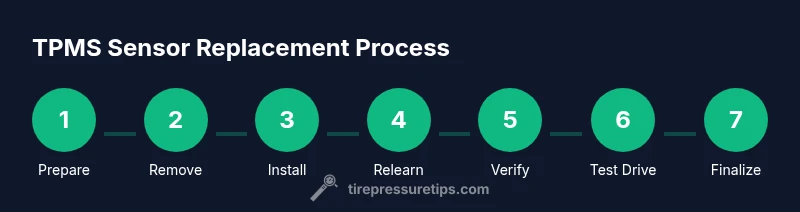
- 1
Park, secure, and inspect the wheel area
Park on a flat surface and engage the parking brake. Place wheel chocks on the opposite side to prevent movement, then inspect the wheel and tire for damage or obvious issues before starting the replacement.
Tip: Keep a clear work area and organize tools so you don’t misplace parts. - 2
Loosen lug nuts and remove the wheel
Loosen lug nuts while the wheel is still on the ground, then lift the vehicle with a jack and secure it with stands. Remove the wheel carefully and place it on a stable surface.
Tip: Loosen nuts in a star pattern to avoid warping the wheel. - 3
Access TPMS sensor and remove the old unit
Deflate the tire if needed and detach the TPMS sensor from the wheel. Remove the old sensor and valve stem assembly using the appropriate tools, taking care not to damage the wheel.
Tip: Keep track of the sensor orientation and ID if possible. - 4
Install new TPMS sensor and re-mount the wheel
Install the new sensor with proper valve stem hardware, torque mounting bolts to the manufacturer spec, and reseat the tire bead. Reinstall the wheel on the hub and tighten lug nuts by hand first.
Tip: Double-check that the tire bead sits evenly around the rim to prevent leaks. - 5
Perform TPMS relearn or calibration
Use the relearn procedure appropriate for your vehicle—this may be a push-button method or a tool-based reset. Inflate tires to the recommended pressures and follow the vehicle's relearn steps until the system recognizes the new sensor IDs.
Tip: If the light doesn't behave after relearn, retry the process with the owner's manual steps. - 6
Verify readings and finalize the repair
Check each tire’s pressure with a gauge, confirm the TPMS light is off, and monitor readings for a short drive to ensure stability. Record the new sensor IDs for future maintenance.
Tip: Take photos of the sensor IDs and notes for quick future reference. - 7
Road test and monitor readings
Take a short road test to confirm TPMS data remains accurate across temperature changes and road conditions. If the readings drift or warning lights reappear, re-check the sensor installation and relearn steps.
Tip: Monitor readings for the first 100-200 miles after replacement to ensure stability.
Frequently Asked Questions
What is TPMS and why replace a sensor?
TPMS stands for Tire Pressure Monitoring System. Replacing a sensor restores accurate tire pressure readings and helps prevent under-inflation issues that affect safety and efficiency.
TPMS helps monitor your tire pressure. Replacing a faulty sensor restores accurate readings for safe driving.
Can I replace TPMS sensors myself?
Yes, many direct TPMS sensors can be replaced DIY with the right tools and relearn procedure. Some vehicles require professional calibration or specialized software.
DIY replacement is possible for many direct TPMS sensors with the right tools; some vehicles need professional calibration.
What is required to relearn a TPMS sensor?
Relearn procedures vary by vehicle. They may use a simple button, a scan tool, or a specific sequence of driving. Always follow the vehicle manufacturer's instructions.
Relearn methods vary by vehicle; follow the owner's guide or use a scan tool as needed.
How long does tire sensor replacement take?
Total time for replacement plus relearn typically ranges from about 60 to 90 minutes, depending on sensor type and vehicle.
Most replacements take about an hour, plus any relearn time.
Are aftermarket TPMS sensors reliable?
Aftermarket sensors can be reliable if they’re compatible and properly relearned. OEM sensors often offer the best fit and long-term reliability, but costs vary.
Aftermarket sensors can work well if compatible and relearned properly; OEM sensors usually have the best reliability.
What are common symptoms of a failing TPMS sensor?
Common signs include frequent false warnings, slow or missing PSI readings, and a TPMS light that won’t clear after inflation.
Common symptoms include false warnings and inconsistent tire pressure readings.
Watch Video
What to Remember
- Identify sensor type before replacement.
- Use the correct sensor and relearn method.
- Ensure a proper seal and torque during installation.
- Verify TPMS after replacement and perform a short road test.