Tire Pressure Sensor Troubleshooting for Honda Civic 2012
Urgent, practical troubleshooting guide for the 2012 Honda Civic TPMS. Learn symptoms, diagnostic flow, step-by-step fixes, and maintenance to keep tires properly inflated.


If the TPMS warning is on in your 2012 Honda Civic, the most likely culprits are low tire pressure, a faulty sensor battery, or a drained sensor. Start by verifying all tires are inflated to the vehicle’s recommended PSI, then check for sensor faults using a scan tool. This quick check often resolves the issue without professional help.
Understanding TPMS and the 2012 Civic
If you drive a 2012 Honda Civic, you know that tire pressure alerts demand immediate attention. The tire pressure sensor Honda Civic 2012 is part of a system designed to keep tires properly inflated for safety, fuel economy, and tire life. According to Tire Pressure Tips, TPMS can be direct (wheel-mounted sensors) or indirect (ABS-based), and the approach used on the Civic depends on the trim and year. In this guide we’ll focus on the direct TPMS common to most 2012 Civics, explain how the sensors work, why they fail, and how to approach diagnosis step-by-step. We’ll also cover calibration, relearning, and maintenance to prevent nuisance alerts.
A properly functioning TPMS helps you avoid sudden deflations, improves grip in wet or icy conditions, boosts fuel economy, and extends tire life. In the Civic, each wheel has a sensor that reports tire pressure to the vehicle’s computer, which compares readings to a stored reference. When a tire falls below the recommended pressure or when a sensor battery dies, the dash light illuminates and a warning message may appear. Understanding the basics helps you troubleshoot without guessing. As Tire Pressure Tips Team notes, battery life in a TPMS sensor is finite, and valve stems or seals are common leak points. Regular checks will save time and money in the long run.
Common Symptoms You Might See
The most obvious sign is the TPMS warning light staying on after you start the car. If the light goes off and comes back on, there may be a transient pressure fluctuation or sensor read error. You might also notice one tire reading low on the display, or feel uneven handling due to inflated readings, which isn’t simply a tire pressure issue. In some cases, the warning appears after driving through a cold snap or a rapid change in temperature, which is normal but may mask a leak. Finally, if you’ve recently rotated tires or replaced wheels, a relearn could be required; without it, the system can misreport pressures. If you observe tires visibly underinflated, do not ignore the warning—adjust to the correct PSI before driving far.
Quick Home Checks Before You Start a Repair
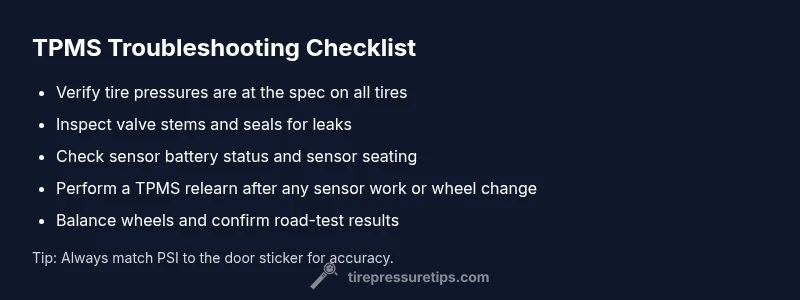
Start with a precise PSI check using a reliable gauge. Compare your readings with the door jamb sticker and adjust each tire to the target pressure, preferably when tires are cold. Look for obvious culprits: a loose or missing valve cap, cracked valve stems, or nails and punctures. Inspect wheels for damaged rims or bent mounting surfaces that could affect sensor readings. If you recently filled tires, wait a few minutes and recheck to ensure stable readings. For many Honda Civics, a simple reset or relearn after correcting pressures can clear minor faults; if the light persists, deeper diagnostics are needed.
Diagnostic Flow: From Symptom to Solution
Symptom: TPMS light on with tires at or near correct pressure.
Causes:
- high: Dead sensor battery or sensor failure (high)
- medium: Loose sensor connection or damaged wiring to the hub (medium)
- low: Rapid temperature change causing transient readings (low)
Fixes:
- Check all tires to the correct PSI and recheck after a cool-down period, then perform a relearn if your model requires it (easy).
- Inspect valve stems for leaks and reseat sensors if possible; retorque wheel hardware to spec (easy to medium).
- If readings remain inconsistent, read the TPMS IDs with a scan tool, replace the failing sensor, and re-learn (medium to hard).
Note: If you don’t have the right tool or the light remains after basic steps, professional service is advised.
Step-By-Step: Replacing or Relearning TPMS on a 2012 Civic
- Prepare your tools and ensure the car is on a flat, level surface; gather a digital tire gauge, a sensor-specific relearn tool, and the vehicle owner’s manual. Tip: cold tires yield the most accurate readings.
- Confirm PSI on all tires using the correct target for your Civic; adjust any underinflated tires and remeasure to confirm consistent readings. Tip: write down the values.
- Use a scan tool to pull TPMS sensor IDs if your Civic needs a relearn. If a sensor ID is missing or readings are erratic, replace the faulty sensor rather than chasing a phantom fault. Tip: avoid cheap, non-certified parts.
- If replacing a sensor, remove the wheel, replace the sensor, and ensure the valve stem seal is intact; torque the lug nuts to spec after mounting. Tip: check wheel weights and balance.
- Relearn the TPMS using the method specified for your trim: through the car’s settings menu, or with a dedicated relearn tool at a shop. Drive a short distance to complete the relearn cycle. Tip: perform the relearn with cold tires.
- Road test: drive 10–15 miles at a steady speed and verify the TPMS warning stays off; recheck pressures after a few hours. If the warning returns, inspect for leaks, battery issues, or wiring faults. If you can’t complete this safely, seek professional help immediately.
Safety, Pitfalls, and Expert Help
- Wear eye protection and gloves when removing wheels; avoid contact with hot brake components.
- Do not overinflate tires during testing; it can damage the tire bead or rim.
- Don’t ignore a persistent TPMS warning; a faulty sensor battery can degrade braking performance and fuel economy.
- If you’re uncomfortable with wheel removal or sensor replacement, a certified automotive technician should handle the job.
- Safety-first: never drive with a known tire leak or damaged wheel.
Prevention and Maintenance for Civic TPMS Health
- Check tire pressures monthly and after long trips or temperature shifts; keep readings within 2 psi of each other.
- Schedule TPMS sensor battery life checks every 5–7 years; battery life varies by sensor model.
- Replace damaged valve stems and ensure wheel sensors are clean and protected from corrosion.
- When replacing wheels, ensure sensors are properly seated and that the relearn is completed to avoid nuisance warnings.
- Keep a spare valve cap and a small gauge in your glovebox to maintain accuracy on the go.
- Document sensor IDs after any replacement to support future maintenance.
Quick Actions to Remember
- Always start by verifying true tire pressures cold.
- If TPMS warns after pressure correction, perform a relearn and test drive.
- Replace faulty sensors rather than trying to “patch” bundled issues.
- Use OEM-specified parts and a qualified technician when needed.
- Tie in your maintenance schedule with seasonal temperature changes to minimize false alarms.
Steps
Estimated time: 1-2 hours
- 1
Verify tire pressures cold
Check all tires with a reliable gauge. Compare to the Civic door jamb sticker and adjust to spec. Record values for future reference.
Tip: Cold tires yield the most accurate readings. - 2
Scan for TPMS IDs
If available, use a TPMS scan tool to pull sensor IDs. This confirms which tire sensors are reporting and helps with relearn planning.
Tip: Record IDs in a safe place for future maintenance. - 3
Inspect sensors and valves
Visually inspect wheel sensors, valve stems, and seals for damage or leaks. Replace any damaged components before moving on.
Tip: Tighten wheels to the manufacturer spec after service. - 4
Replace faulty sensors if needed
If a sensor battery is dead or a sensor is physically damaged, replace the unit with an OEM-equivalent part.
Tip: Avoid counterfeit sensors that can fail quickly. - 5
Relearn the TPMS
Use the vehicle’s relearn procedure or a professional tool to reinitialize sensors. This step is essential after sensor work or wheel changes.
Tip: Follow the exact sequence in the owner’s manual. - 6
Road test and recheck
Drive 10–15 miles and verify the TPMS light stays off. Recheck tire pressures after cooling to confirm stabilization.
Tip: If the light returns, re-check for leaks or sensor faults and consider professional help.
Diagnosis: TPMS warning light (dashboard) or inconsistent readings on the Honda Civic 2012
Possible Causes
- highDead or failing TPMS sensor battery in one or more wheels
- highLow or fluctuating tire pressures across tires
- mediumDamaged valve stems, leaks, or improper sensor seating
- mediumTPMS relearn not completed after sensor work or wheels changed
- lowWiring/connectors to the TPMS sensor hub or antenna damaged
Fixes
- easyVerify and correct tire pressures to the door jamb specification; recheck after cooling period
- mediumInspect and reseat or replace faulty TPMS sensors; verify sensor IDs with a scan tool
- easyPerform TPMS relearn using vehicle settings or a relearn tool, then test drive
- mediumInspect valve stems, seals, and wheel mounting surfaces for leaks or damage and repair as needed
Frequently Asked Questions
What does the TPMS warning mean on a 2012 Honda Civic?
The TPMS warning indicates a tire pressure issue detected by sensors or a fault in the system. Start by checking all tires for proper inflation and then diagnose sensor health or relearn if needed.
The TPMS warning means a tire pressure issue or sensor fault. Check inflation first, then diagnose sensor health or relearn the system if needed.
Can I reset TPMS myself on a 2012 Civic?
Yes, most Civics allow a DIY relearn through the vehicle’s settings or with a relearn tool. If the light persists after relearn, inspect sensors and tires or seek professional help.
You can often relearn TPMS yourself via the car’s settings or a relearn tool; if it stays on, get a professional check.
Is it safe to drive with the TPMS light on?
If the light indicates low tire pressure, address it promptly before long trips. If the light is due to a sensor fault, you can usually drive short distances but monitor the tire pressure closely.
If it shows low pressure, fix it soon. If it’s a sensor fault, drive cautiously and get it checked.
What causes TPMS sensor failure?
Common causes include battery depletion in the sensor, physical damage to the sensor or core, and leaks at the valve stem. Regular maintenance helps prevent failures.
Sensor battery drain, physical damage, or valve leaks are common TPMS sensor failures.
Direct TPMS vs indirect TPMS on a Civic?
Direct TPMS uses wheel-mounted sensors and provides actual pressure readings, while indirect TPMS uses ABS data to estimate pressure. Honda Civics around 2012 typically rely on direct TPMS in many trims.
Direct TPMS uses wheel sensors; indirect TPMS uses ABS data. Civics from that era often use direct TPMS.
How often should TPMS be serviced or replaced?
TPMS components generally last several years, but batteries in the sensors are not replaceable separately in most cases. Plan sensor replacement if readings become unreliable.
Sensors last years, but batteries wear out. Replace sensors if readings fail.
Watch Video
What to Remember
- Verify cold tire pressures before any TPMS work.
- Relearn the system after sensor work or wheel changes.
- Replace faulty sensors rather than patching symptoms.
- Consult a professional if the warning persists after checks.