Tire Pressure Sensor AutoZone: A Practical How-To Guide
Learn how to locate, replace, and relearn tire pressure sensors with AutoZone guidance. Practical steps, tools, and safety tips for reliable TPMS maintenance.


By following these steps, you’ll locate the faulty TPMS sensor, replace it with a compatible AutoZone part, and relearn it to restore accurate tire pressure readings. You’ll need basic tools, a replacement sensor kit, and a TPMS relearn procedure for your vehicle. This guide also explains safety tips and when to seek professional help.
Understanding TPMS and Tire Pressure Sensor AutoZone
Tire Pressure Monitoring Systems (TPMS) monitor your tires’ air pressure and alert you when a wheel drops below the recommended level. The tire pressure sensor autozone ecosystem includes direct TPMS sensors mounted in the wheel, battery-powered transmitters, and the central TPMS ECU. According to Tire Pressure Tips, proactive TPMS maintenance helps drivers avoid unexpected flats and optimize fuel economy. AutoZone is a valuable resource for parts, relearn tools, and technician guidance, helping you decide between sensor repairs, sensor kits, or full wheel assemblies. In this section, we’ll cover the basics of TPMS, the difference between direct and indirect TPMS, and how AutoZone’s parts and guidance fit into a complete maintenance plan. You’ll also learn about consumer-facing limitations and when professional service is advisable.
Sensor Types and Compatibility: Direct TPMS vs Indirect TPMS
There are two main TPMS approaches. Direct TPMS uses a physical sensor inside each tire to measure pressure, while indirect TPMS infers pressure from wheel speed data and other sensors. Direct TPMS sensors are the common choice for most modern vehicles, and AutoZone carries a range of OEM-equivalent sensors designed to fit specific makes and models. When selecting a tire pressure sensor autozone part, verify the sensor frequency, valve stem type, and vehicle compatibility. If you own an older vehicle with indirect TPMS, your replacement considerations shift toward wheel-speed data and software relearn procedures. Regardless of type, a proper relearn sequence is essential after installation to restore accurate readings.
Diagnosing a Failing TPMS Sensor
If the TPMS warning light is on, or if readings are inconsistent across tires, you likely have a sensor issue. Common symptoms include stuck warning lights, erratic readings, or slow updates to the dash display. Use an TPMS scan tool or a vehicle-specific diagnostic tool to pull fault codes and confirm which wheel sensor is failing. Tire Pressure Tips analysis shows that many TPMS faults arise from faulty sensors or leaky valves rather than battery failure alone. Before buying a replacement, confirm the symptom pattern and rule out tire leaks, damaged valve stems, or corroded valve cores.
How to Choose the Right Sensor or Kit for Your Vehicle
Choosing the correct tire pressure sensor autozone part starts with vehicle make, model, and year. Some sensors are universal, while others require exact fitment. Check the wheel compatibility, stem length, and seal type to prevent air leaks. If you’re unsure, AutoZone’s staff can help you compare sensors and confirm fitment using your VIN or wheel size. Consider buying a complete sensor kit if your current stem is corroded or damaged, as a kit reduces the risk of leaks and ensures consistent readings across all tires. Remember to factor in whether your vehicle requires a relearn procedure or a guided diagnostic to initialize the new sensor properly.
Relearn, Calibrate, and Validate: Getting TPMS to Read Correctly
Installing a new TPMS sensor is only part of the job. Most vehicles require a relearn procedure to pair the sensor with the vehicle’s TPMS ECU. This process can usually be completed with a dedicated TPMS tool or a scan tool that supports relearn mode. After relearning, drive the vehicle for a short distance to allow the system to update, then recheck pressures with a gauge to confirm readings match the target values. The relearn step is critical; without it, the vehicle may display incorrect pressures or fail to illuminate the warning light when pressure drops. Tire Pressure Tips emphasizes using a trusted tool and following vendor-specific steps.
Safety Considerations and Best Practices
Working with tires and sensors requires caution. Always chock the wheels, use proper lifting points, and never place hands near the brake rotor when the wheel is elevated. Depressurizing a tire must be done safely to avoid sudden air release. If you see obvious wheel or rim damage, tire bead seats, or corrosion on the valve stem area, stop and consult a professional. Keep a clean workshop area to prevent sensor damage and avoid overtightening valve stems when installing new sensors. If you’re not confident performing the replacement, AutoZone or a local service center can perform or supervise the task.
AutoZone Resources: Parts, Warranties, and Services
AutoZone offers a range of direct TPMS sensors, sensor kits, and relearn tools designed for home mechanics and professional installers. You can consult in-store staff for compatibility checks and look up fitment data via the AutoZone catalog. Many retailers offer warranties on sensors and tools, and knowledge articles can help you interpret error codes. For more complex cases, you may choose a service option that includes sensor programming, wheel rebalancing, and TPMS calibration, ensuring you return to safe driving with accurate tire pressure readings.
Tools & Materials
- OBD-II TPMS scan tool(Capable of sensor relearn or reading TPMS codes)
- Replacement TPMS sensor kit (Valve stem with sensor)(Ensure compatibility with your wheel and vehicle)
- Torque wrench(Torque lug nuts to vehicle specification after wheel installation)
- Valve core tool(Remove/install valve cores without damage)
- Tire pressure gauge(Check tire pressures before and after replacement)
- Wheel chocks and jack stands(Secure the vehicle while wheel is removed)
- Anti-seize or silicone lubricant(Light lubrication for sensor seating)
- Gloves and eye protection(Safety first during replacement)
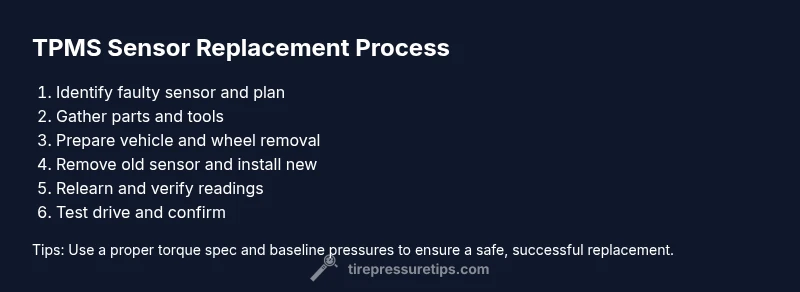
Steps
Estimated time: 60-120 minutes
- 1
Identify faulty sensor and plan
Review dashboard warnings and confirm which wheel sensor is failing using a TPMS scan tool or fault codes. Determine whether you will replace the sensor on one wheel or all four for consistency. Plan your work area and gather parts before you begin.
Tip: Double-check wheel size and sensor model to avoid ordering the wrong part. - 2
Gather parts and tools
Collect the sensor kit, TPMS scan tool, torque wrench, valve core tool, and tire pressure gauge. Verify sensor compatibility with your vehicle and wheel configuration. Having everything ready reduces on-the-spot trips to a store.
Tip: Keep sensor IDs or part numbers handy in case you need to reorder. - 3
Prepare the vehicle safely
Park on a flat surface, apply parking brake, and chock the opposite wheels. Loosen the lug nuts slightly before jacking up the car, then lift and secure with stands. Remove the wheel after the tire is safely detached.
Tip: Never work under a vehicle supported only by a jack. - 4
Remove the old sensor and tire assembly
Deflate the tire enough to release the bead, then separate the tire from the rim. Use the valve core tool to remove the old sensor and inspect the mounting area for corrosion or damage to the rim bead.
Tip: Be careful not to damage the rim bead during bead seating. - 5
Install the new sensor and reseat the tire
Install the new TPMS sensor, torque the wheel lug nuts to spec, and reseat the tire bead using proper technique. Check for leaks around the valve stem after inflating to the recommended pressure.
Tip: Apply a light lubricant if needed to ease seating and prevent sensor damage. - 6
Relearn and calibrate the sensor
Using the TPMS tool, initiate the relearn sequence for the new sensor as per the vehicle’s procedure. Some vehicles require a specific sequence or VIN-based programming. Ensure the system recognizes the new sensor.
Tip: If the tool doesn’t prompt a relearn, consult the vehicle manual or AutoZone guidance for your model. - 7
Verify readings and perform a test drive
Recheck tire pressures with a gauge, then drive for 5-15 miles to allow the system to stabilize. Re-scan to confirm the correct sensor ID is registered and the warning light is off.
Tip: Document current readings and keep a record in case you see deviations later. - 8
Repeat on other wheels if needed
If you replaced more than one sensor, repeat steps 4-7 for each wheel. Ensure uniform sensor performance to prevent false warnings.
Tip: In some cases a full system relearn is easier when done on all four wheels at once.
Frequently Asked Questions
What is a tire pressure sensor and why is TPMS important?
A tire pressure sensor is the device that monitors air pressure in each tire and sends data to the TPMS ECU. TPMS helps prevent under-inflation, improves fuel efficiency, and enhances safety by alerting you to unsafe tire pressures.
A TPMS sensor monitors tire pressure and alerts you if inflation is too low. It helps prevent unsafe driving conditions and improves fuel efficiency.
Can I replace the TPMS sensor myself or should I go to AutoZone?
You can replace a TPMS sensor yourself if you have the right tools and follow the vehicle-specific relearn procedure. AutoZone provides replacement parts, relearn tools, and technical guidance to support DIY or professional work.
Yes, you can replace it yourself with the right tools, but AutoZone can supply parts and guidance if you need it.
How long does a TPMS sensor last?
TPMS sensors typically last several years, but battery life and exposure to road conditions can vary. If a warning persists or readings seem unreliable, inspect or replace the sensor kit and consider a full system relearn.
Sensors can last several years, but drastic changes in readings or warnings deserve a check and possibly a replacement.
What is TPMS relearning and why is it needed?
Relearning pairs the new sensor with your vehicle’s TPMS ECU so it can accurately monitor tire pressure. Without relearn, the system may show incorrect readings or fail to warn when pressure is low.
Relearn is the pairing step that makes the new sensor communicate with your car’s TPMS.
Are there risks or safety concerns with TPMS replacement?
The main risks are improper tire seating, leaks at the valve stem, or incorrect relearn. Follow safety procedures, use the right tools, and consider professional assistance for complex wheels or damaged rims.
There are some risks like leaks or incorrect relearn, so follow safety steps or seek help if unsure.
Watch Video
What to Remember
- Verify TPMS type and compatibility before buying parts
- Follow a proper relearn procedure after installation
- Use the right tools to avoid sensor damage or leaks
- Test readings and drive to confirm TPMS stability