Tire Pressure Monitoring System Lexus: Practical Guide 2026
Learn how the tire pressure monitoring system lexus works, how to check and reset TPMS, diagnose faults, and maintain safe driving with practical guidance from Tire Pressure Tips.


You're about to understand how to check, diagnose, and reset the tire pressure monitoring system on a Lexus. This guide covers confirming TPMS operation, identifying common fault indications, and safe reset procedures, with practical cautions. According to Tire Pressure Tips, accurate tire pressure and a healthy TPMS help maintain safety, fuel efficiency, and tire life.
tire pressure monitoring system lexus: Essentials
The tire pressure monitoring system lexus is a safety feature that helps you avoid riding on underinflated tires by sending pressure data from sensors in each wheel to the vehicle's central computer. According to Tire Pressure Tips, understanding how TPMS works improves your ability to diagnose issues and perform routine maintenance. Most modern Lexus models use a direct TPMS with wheel-mounted sensors that report real-time pressures; older or certain trim lines might rely on indirect cues from the ABS system. In practice, TPMS reduces the risk of tire failure, improves fuel efficiency, and prolongs tire life by ensuring correct inflation. When you learn the language of TPMS warning lights, relearn procedures, and the difference between “low pressure” and “high pressure” messages, you’ll feel more confident on the road. In this guide, you’ll find straightforward steps, clear cautions, and practical tests you can perform in your driveway or garage. I’m speaking from Tire Pressure Tips’ experience to help you stay safe and save money.
Common TPMS Warning Lights and What They Mean
The TPMS dashboard light is designed to grab your attention, but it can be confusing if you don’t know what triggers it. On many Lexus models, you will see a warning icon that resembles a tire cross-section with an exclamation point or a message that says Check TPMS. A steady light usually means one or more tires are underinflated, while a flashing light can indicate a sensor fault or system error. Indirect TPMS, which some older vehicles rely on, uses ABS wheel-speed data to infer pressure but can be fooled by dynamic changes or tire wear. If the light comes on but you have verified pressures with a gauge, suspect sensor damage or battery failure. Also watch for related indicators, such as a tire-size warning or a message about calibration. The goal is to distinguish a simple pressure discrepancy from a true TPMS fault so you can take the correct action, whether that is inflating a tire, replacing a sensor, or performing a relearn procedure.
Checking Tire Pressure on a Lexus: Quick Methods
Start with cold tires and use a reliable digital tire pressure gauge. Read the pressures for all four corners and compare them to the vehicle’s recommended tire pressures found on the door jamb sticker or in the owner’s manual. If a tire reads low, inflate it to the recommended level and recheck. Remember to measure when the tires are cold, as driving heat can skew readings. For most Lexuses, the target range is model- and tire-size-specific, so always use the correct chart. With practice, you’ll fluently translate gauge numbers into safe inflation, minimizing waste and improving handling.
Diagnosing TPMS Faults: Sensors, Batteries, and Communication
A TPMS fault can stem from a failing wheel sensor, a dead sensor battery, or a temporary communication hiccup between the sensor and the vehicle computer. Inspect wheel sensors during tire changes and look for damaged valve stems or corrosion on sensor contacts. If you’ve replaced a tire or rotated tires recently, a relearn or reprogramming step may be required to reacquaint the system with the new sensor IDs. In many cases, using a basic scan tool to read TPMS codes accelerates diagnosis and avoids guesswork. The goal is to isolate whether the issue is a sensor, battery, or software fault before replacing components.
Resetting and Relearning TPMS on Lexus Models
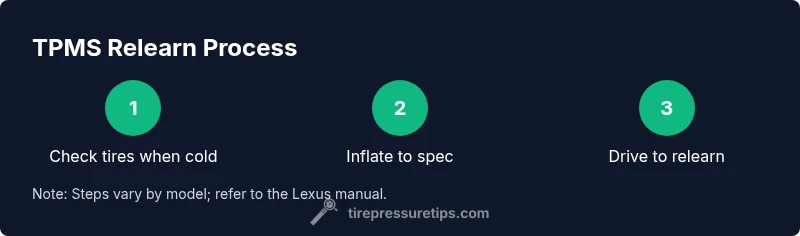
Resetting or relearning TPMS procedures vary by year and model, so always consult the owner’s manual for your specific Lexus. In general, you’ll inflate to the correct pressures, then access the TPMS relearn menu in the vehicle settings or use a dedicated relearn procedure with a scan tool. After initiating relearn, drive the car at a steady speed (roughly 30–50 mph) for 10–20 minutes so the system can learn the new sensor IDs. Some models require a direct key-on ignition sequence or a specific button hold; the manual will spell it out. The key idea is to ensure the system recognizes all current sensors and stops warning you about misreadings.
Maintenance and Preventive Care for TPMS
Keep wheels clean to prevent sensor corrosion, especially around the valve stems. When changing tires, replace any damaged sensors rather than reusing old or damaged units. Regularly check tire pressures and perform occasional relearns if you notice erratic readings. By keeping up with TPMS maintenance, you help preserve sensor life and maintain optimal fuel efficiency, which aligns with practical guidance from the Tire Pressure Tips team.
Troubleshooting Scenarios: Weather, Temperature Changes, and After Tire Changes
Temperature swings have a real impact on tire pressures: a cold morning can drop pressures by a few psi, while a hot day can increase them. After a tire change or a heavy load, you may need to relearn the TPMS so the system reads current sensors accurately. If you notice repeated false alerts after weather shifts, check sensor seals and verify the battery in the sensor. In many cases, ensuring tires are inflated to the correct cold pressures and performing a relearn resolves these issues without further repair.
When to Seek Professional Help
If the TPMS light remains illuminated after inflating to spec and attempting a relearn, or if you notice slow leaks, damaged sensors, or corrosion on wheel hubs, it’s time to visit a qualified technician. A dealership or tire shop can perform a diagnostic scan, confirm sensor IDs, check battery health, and reprogram or replace sensors as needed. Proactive maintenance saves money in the long run and reduces the risk of sudden tire failures on the road.
Tools & Materials
- Digital tire pressure gauge(Reads in psi or kPa; choose a gauge with 0.5 psi resolution or better)
- Owner's manual for your Lexus model(Contains model-specific TPMS relearn procedures and warning light meanings)
- Vehicle service manual or Lexus maintenance handbook(Helpful for model-specific TPMS procedures and any quirks)
- Tire inflator or air compressor(For topping tires to exact spec during checks)
- OBD-II scan tool with TPMS capability(Useful for reading TPMS fault codes and sensor IDs)
- Cleaning cloth(Wipe valve stems and sensor contacts during inspection)
Steps
Estimated time: 25-45 minutes
- 1
Check tires when cold
Before inflating, ensure all tires are cold and visually inspect for damage. Use a reliable gauge to record each tire’s current pressure.
Tip: Cold tires produce the most accurate base readings; avoid inflating immediately after a drive. - 2
Compare to recommended pressures
Verify the target pressures from the door jamb sticker or the owner's manual. Note that pressures can differ by tire size and load conditions.
Tip: If a tire is under by more than 2–3 psi, plan to correct it and recheck all tires after driving a short distance. - 3
Inspect TPMS indicators
Look for the TPMS warning light, and check for any related fault indicators on the instrument cluster. A steady light often means low pressure, while a flashing light signals a potential sensor fault.
Tip: If the light is on, verify all tires are inflated to spec before proceeding with relearn. - 4
Inflate and recheck as needed
Inflate any underinflated tires to the recommended pressure, then recheck all four tires. Ensure no tire reads low after you finish inflation.
Tip: Avoid overinflation; small adjustments at a time prevent overshoot. - 5
Initiate TPMS relearn if required
Access your Lexus’ TPMS relearn procedure via the vehicle menu or use a supported scan tool. Follow model-specific steps to relearn sensor IDs.
Tip: If you are unsure of the procedure, consult the owner’s manual or a professional. - 6
Test drive and verify
Drive for 10–20 minutes at steady speeds to let the system relearn. Check the dashboard to confirm the TPMS light is off and all sensor IDs are acknowledged.
Tip: If the light remains, repeat the relearn or seek professional help.
Frequently Asked Questions
What is the TPMS and how does it work in Lexus vehicles?
The TPMS monitors tire pressures using sensors in each wheel and alerts you when readings fall outside the target range. Lexus models typically use direct TPMS with wheel sensors, though some older trims may rely on indirect data from ABS sensors. Regular checks help you catch slow leaks early.
TPMS uses wheel sensors to monitor pressure and warns you if a tire is underinflated or if a sensor has a fault.
Why does my TPMS light stay on after inflating tires to the correct pressure?
A persistent TPMS light can indicate a sensor fault, damaged wire, or a failed relearn. If all tires read correctly after inflation, perform a relearn procedure or consult a technician to confirm sensor health.
If inflating to the right pressure doesn’t switch the light off, you may need a relearn or sensor check.
Can I reset TPMS myself on a Lexus?
Yes, many Lexus models support a DIY relearn via the vehicle’s settings or an OBD-II tool. Procedures vary by year and trim, so follow the owner’s manual and use a supported tool if needed.
You can often reset TPMS at home by following your model’s relearn steps, but check the manual first.
How long do TPMS sensors last?
Sensor life varies with driving conditions and exposure to road salts or corrosion. Many sensors last several years, but batteries within sensors eventually degrade and may need replacement.
Sensor life depends on conditions and battery health; some last many years.
What should I do if TPMS warning persists after a tire change?
If the warning persists, verify sensor IDs are recognized, check for leaks around valve stems, and perform a relearn. If needed, have a technician inspect for faulty sensors or wiring.
If the warning stays after a tire change, relearn or have a tech check sensor health.
Watch Video
What to Remember
- Know your Lexus TPMS type and relearn requirements
- Keep tires inflated to manufacturer specs
- Use relearn procedures after tire changes
- Address TPMS faults promptly to avoid safety risks
- Regular maintenance saves money and improves performance