Lexus RX 350 Tire Pressure Monitoring System (TPMS) Guide
A practical, step-by-step guide to understanding, checking, and maintaining the tire pressure monitoring system on the Lexus RX 350. Learn how TPMS works, how to reset warnings, and tips for safer tires.


In this guide, you will learn how to check and maintain the Lexus RX 350 tire pressure monitoring system (TPMS). You'll understand common TPMS warning lights, sensor basics, reset procedures, and when to service or replace sensors. By following these steps, you’ll improve fuel economy, handling, and tire life while avoiding unsafe pressures.
How TPMS Works in the Lexus RX 350
The Lexus RX 350 uses a tire pressure monitoring system to track air pressure in each tire and alert you when any tire deviates from the recommended level. According to Tire Pressure Tips, TPMS in most modern Lexus vehicles relies on sensors in each wheel that report pressure readings to the vehicle's computer, which then communicates warnings via the dashboard. There are two common TPMS architectures: direct TPMS, with actual sensor readings, and indirect TPMS, which infers pressure through wheel speed sensors. Understanding which system your RX 350 uses helps you decide when to check pressures manually and when to trust the dashboard signals. Direct TPMS sensors mount in the valve stem or wheel rim and report real-time pressure, while indirect systems use ABS wheel-speed data to flag potential underinflation even if there isn’t a sensor in every wheel. Knowing this distinction helps you plan maintenance and diagnostics more effectively.
Direct TPMS vs Indirect TPMS in the RX 350 (Overview)
Direct TPMS provides precise psi readings from sensors installed in each tire, usually at the valve stem. Indirect TPMS relies on wheel speed sensors and vehicle dynamics to infer pressure changes. In practical terms, direct TPMS gives you exact pressure values on the dash or an OBD tool, whereas indirect TPMS signals a warning when the system suspects a pressure difference. For RX 350 owners, this distinction matters when choosing service paths—manual pressure checks complement direct TPMS, while indirect systems may require sensor re-learn or software updates after tire changes.
Reading TPMS Warning Lights and Messages
A TPMS warning light can indicate several scenarios: a tire is underinflated relative to the vehicle’s recommended pressure, a sensor failure, or a system fault needing diagnostic attention. The RX 350 typically displays a TPMS warning symbol along with a message on the multi-information display. If the light comes on after inflating tires, drive the vehicle for a short period to allow the system to relearn; if it stays on, there may be a faulty sensor, damaged valve stem, or dead battery in a wheel sensor. Always correlate the warning with a manual pressure check to verify the condition before proceeding with any service.
How to Check Tire Pressure and TPMS Status Without Tools
Start by visually inspecting tires for obvious damage or wear. Use a trusted tire pressure gauge to measure cold, parked readings. Compare your measurements to the vehicle’s door jamb sticker or owner’s manual for the recommended range. If a tire reads below the recommended pressure, inflate it using an air compressor until it reaches the target; recheck to confirm. After adjusting pressures, watch for a TPMS refresh cycle—some vehicles require a short drive to update sensor readings. If the TPMS still shows a warning after inflation, a sensor or wiring fault may be present and requires inspection.
Resetting TPMS After Inflating or Replacing Tires
Reset procedures vary by model year, but the goal is to re-sync the vehicle’s computer with the actual tire pressures. In many RX 350 models, you’ll perform a relearn sequence via the infotainment system or a dedicated button, sometimes after driving the car for a few miles. If you recently replaced tires, install new sensors or ensure existing sensors are properly seated and balanced. Always follow the official procedure in the owner's manual for the exact steps and any required tool usage. A successful relearn clears the warning and stores the new baseline pressures.
Sensor Life, Battery, and When to Replace
TPMS sensors in the RX 350 sit in the wheel assemblies and use a small battery to transmit data. Over time, sensor batteries degrade, seals can fail, and readings may drift. If a tire consistently reports incorrect pressure or if one wheel reports pressure while others are accurate, you may have a failing sensor or a damaged valve stem. Replacement usually involves removing the tire from the rim and installing a new sensor, followed by a relearn procedure. Battery life for these sensors varies with climate, mileage, and tire maintenance, so plan periodic checks especially if you notice frequent TPMS warnings.
Common Causes of TPMS Faults and Quick Fixes
Common TPMS faults include dead or weak sensor batteries, corroded sensor contacts, damaged valve stems, and issues with the system’s receiver or software. Start with verifying tire pressures using a gauge, then check for corroded or loose valve stems. If a sensor is suspected, arrange for a professional diagnostic with a TPMS-capable scan tool. For intermittent warnings, a sensor re-seat and a relearn can often resolve the issue. If the battery is weak, sensor replacement is typically necessary.
Lexus RX 350-Specific Considerations: Relearn Procedures and Warnings
The RX 350's TPMS setup varies slightly by year and trim. Some models require a driven relearn procedure, others use a hand-held tool or the vehicle’s own menu to initiate the relearn. Always consult the owner’s manual for model-specific instructions and recommended service windows. During relearn, ensure all tires are within spec and that you’ve replaced any damaged sensors or stems. The goal is a stable and repeatable tire pressure reading in all four corners to maintain optimal handling, fuel efficiency, and safety.
Maintenance Schedule for TPMS and Tires
Incorporate TPMS checks into your regular tire maintenance cycle. Check pressures monthly and after long trips or temperature changes, since ambient temperature affects tire pressure. When you rotate tires or replace wheels, plan for a proper relearn. Seasonal tire changes are a good reminder to verify TPMS operation, and annual inspections with a TPMS diagnostic tool can catch sensor or battery issues before they trigger warning lights.
Troubleshooting Guide: Quick Fixes for Common TPMS Problems
If TPMS warnings are erratic, start with cold tire pressures and verify readings with a gauge. Check wiring connections at the wheel well and around the sensor valve. For a persistent warning, perform a relearn and drive the car in a safe area to complete the cycle. If the warning persists, schedule a diagnostic with a TPMS professional and consider sensor replacement if readings remain inconsistent.
Real-World Scenarios: When TPMS Alerts Appear on the RX 350
Scenario 1: A cold morning shows a flashing TPMS light after starting the car. Check all tires, inflate as needed, and drive to complete a relearn. Scenario 2: After tire rotation, the TPMS light stays on. Relearn the system and confirm sensor positions; misplacement can trigger warnings. Scenario 3: You notice one tire slowly losing pressure over weeks. Inspect for leaks, then replace the affected sensor if necessary. Each scenario highlights the importance of cross-checking with a manual pressure test.
Using TPMS Data to Improve Tire Care and Safety
TPMS data is a powerful tool for proactive tire maintenance. Regularly comparing sensor readings with manual pressure checks helps you catch slow leaks and sensor drift before they become safety issues. Use the data to determine when to rotate tires, replace sensors, or update tires to maintain optimal grip and fuel efficiency. By treating TPMS as a regular maintenance aid, you reduce the risk of underinflation-related hazards and extend tire life.
Tools & Materials
- Tire pressure gauge(Digital or dial gauge; use a cold tire for accuracy)
- Air compressor or tire inflator(With built-in gauge preferred)
- Owner's manual / RX 350 service manual(Model-year specific TPMS relearn steps)
- TPMS relearn tool or scan tool(Optional depending on model year; some RX 350s support built-in relearn)
- Valve core tool(Use if you need to replace valve stems or seals)
- Spare sensors or replacement valves(Only if you know a sensor or stem is failing)
Steps
Estimated time: 15-45 minutes
- 1
Park safely and inspect tires
Find a flat, level area and apply the parking brake. Visually inspect all tires for obvious damage, bulges, or embedded objects. This initial check helps you identify issues that could affect TPMS readings or tire safety.
Tip: Take a quick photo of tire tread and sidewalls for reference. - 2
Check cold tire pressures with a gauge
Use a trusted manual gauge to measure the pressure in each tire when cold. Compare readings to the door jamb sticker and your vehicle manual to confirm acceptable ranges. Record any discrepancies for later.
Tip: Always check in the morning before driving to avoid heat-related pressure changes. - 3
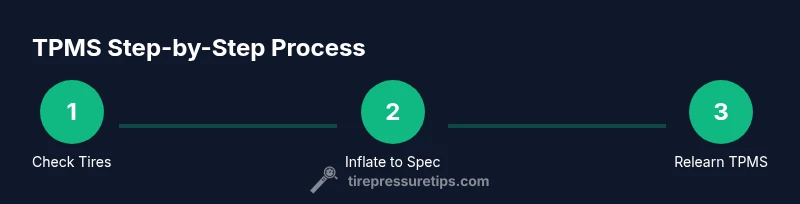
Inflate to recommended range
If any tire is underinflated, add air until it matches the recommended range. Do not rely solely on the TPMS; manual verification ensures accuracy and reduces risk of underinflation.
Tip: Do not exceed the maximum pressure listed on the tire sidewall. - 4
Initiate a TPMS relearn if required
Consult the RX 350 owner’s manual for the exact relearn method. Some models require a button sequence, others a drive cycle; ensure all tires are within spec before starting.
Tip: During relearn, avoid heavy braking or sudden cornering. - 5
Drive to complete relearn
Drive the vehicle at a steady speed in a safe area to allow the TPMS to relearn; a few miles is typical but follow the manual.
Tip: Monitor the dash for a confirmed TPMS signal rather than a flashing indicator. - 6
Inspect sensors and valves if warnings persist
If the TPMS warning remains after a relearn, inspect valve stems and wheel sensors for damage or corrosion. Replace faulty components as needed.
Tip: Corrosion at sensor heads is a common cause of intermittent readings. - 7
Document the maintenance
Record the tire pressures, sensor status, and relearn results. This log helps you monitor future changes and provides a reference for technicians.
Tip: Keep a digital note with dates and readings for quick review. - 8
Schedule a professional check if needed
If warnings persist or you suspect sensor failure, arrange a diagnostic with a TPMS-qualified technician to verify wiring, battery condition, or sensor integrity.
Tip: Professional checks can prevent unsafe driving scenarios caused by faulty TPMS.
Frequently Asked Questions
What is TPMS and why is it on the Lexus RX 350?
TPMS stands for tire pressure monitoring system. It helps monitor each tire's pressure and alerts you when pressure deviates from the vehicle's recommended range. This improves safety, handling, and fuel efficiency.
TPMS monitors your tire pressure and warns you if it gets too low or high, helping you stay safe on the road.
How do I know if my TPMS sensor is failing?
Signs of a failing TPMS sensor include persistent warning lights, inconsistent readings across tires, or a warning that the system is unavailable. A professional diagnostic is recommended to confirm sensor health.
If the TPMS light stays on or seems inconsistent, have the system checked by a technician to confirm sensor health.
Do I need special tools to relearn the TPMS?
Some RX 350 models require only the car’s built-in menus and a sequence of button presses; others may need a scan tool or relearn device. Always follow the model-year specific instructions in the owner's manual.
Relearn methods vary by year; check the manual for the exact steps for your RX 350.
Can temperature affect TPMS readings?
Yes. Temperature changes can cause tire pressures to rise or fall, affecting TPMS readings. It's best to check pressure when tires are cold and after notable weather changes.
Yes, temperature can change tire pressure, so check when cold and after temperature shifts.
When should I replace TPMS sensors?
Replace TPMS sensors when readings drift persistently, there’s a known leak at a valve stem, or after a sensor battery failure. A professional can confirm the need and perform replacement.
Replace sensors if readings drift or if a battery fails; have a technician verify first.
Is it safe to drive with a TPMS warning?
If a TPMS warning occurs, pull over safely and check tire pressures. If any tire is underinflated or if you’re unsure, avoid long drives until the issue is resolved.
Pull over safely if the TPMS warns and check pressures before continuing.
Watch Video
What to Remember
- Check tires regularly and verify TPMS readings with a gauge.
- Follow model-specific relearn procedures to refresh TPMS data.
- Address persistent warnings promptly to maintain safety.
- Inspect sensors and stems during tire service to prevent false alerts.
- Use TPMS data to inform routine tire maintenance and rotation.