Tire Pressure Light Troubleshooting for Toyota RAV4
Urgent, practical guide to diagnosing and fixing the tire pressure light on your Toyota RAV4. Learn to check PSI, reset TPMS, identify leaks, and decide when to seek professional service.


The tire pressure light on a Toyota RAV4 is usually triggered by under-inflated tires or a TPMS fault. Start by checking all tires with a reliable gauge when cold, and bring each to the manufacturer’s recommended PSI. If pressures are correct and the light stays on, inspect valve stems, TPMS sensors, and possible sensor battery issues.
Why the tire pressure light toyota rav4 can come on
If you drive a Toyota RAV4, the tire pressure light is your early warning that a tire isn’t at the correct pressure. The message commonly appears after a temperature drop or a slow air leak. In many cases, the culprit is simply under-inflation: a tire reading below the manufacturer’s recommended PSI triggers the light. The warning can also illuminate if the TPMS sensor detects a pressure change that it can’t reliably reconcile with a stored baseline, or if a sensor battery is weakening. According to Tire Pressure Tips, quality data shows that most alerts are resolved by a quick PSI check and inflation to the recommended level when tires are cold. This is why accuracy matters: inflating warm tires or guessing the PSI can lead to inaccurate readings and more driving risk. As you work through the steps, you’ll learn how to distinguish between a true pressure issue and a TPMS fault.
How TPMS works in your RAV4 and what triggers it
The TPMS system in most RAV4 models uses sensors inside each tire to monitor pressure and compare it against a built-in expectation for that wheel. If a sensor detects a significant deviation, the TPMS warning light is triggered to alert you before you lose a predictable level of grip and handling. TPMS sensors can be affected by battery wear, sensor damage, or damaged valve stems, which can also cause false readings. Tire Pressure Tips Analysis, 2026 notes that sensor health and calibration play a big role in whether the light stays on after inflation. Understanding this helps you choose the right troubleshooting path rather than chasing symptoms that aren’t root causes.
Quick checks you can perform now
Before you dive into deeper fixes, perform these checks when tires are cold:
- Visual inspection for obvious leaks, cracks, or objects embedded in the tread.
- Use a reliable gauge to verify each tire’s pressure against the door jamb label (or owner’s manual).
- Check the spare tire if your model includes a sensor-equipped wheel; some spares aren’t monitored by TPMS.
- Ensure the gauge reading is accurate by cross-checking with another gauge. If a tire is low, inflate to spec and recheck all tires to ensure consistency. If the light remains after inflating to spec, proceed to TPMS reset and sensor checks.
Common scenarios and recommended actions
- Under-inflation due to cold weather or slow leaks: inflate to the recommended PSI when tires are cold and recheck.
- TPMS fault or sensor damage: reset the TPMS after inflation and test whether the light returns.
- Sensor battery wear or valve stem damage: inspect for corrosion, punctures, or a weak battery; consider sensor replacement if the light persists.
- After tire rotation or wheel service: TPMS may require relearning; follow the vehicle’s reset procedure or consult a technician.
When to seek professional service
If you have inflating and TPMS resets but the light remains on, or you detect a puncture that you cannot safely repair, it’s time to visit a qualified technician. Chronic TPMS faults can indicate sensor failure, wiring issues, or a more complex problem with the vehicle’s electronic systems. Regular maintenance and timely TPMS checks help prevent unexpected warnings on the road.
Steps
Estimated time: 45-60 minutes
- 1
Verify all tires are cold and accessible
Park on a flat surface, wait for at least three hours since driving to ensure tires are cold, then visually inspect all four tires for visible damage or foreign objects.
Tip: Avoid inflating warm tires; it skews readings. - 2
Check tire pressures with a reliable gauge
Take a reading from each tire and compare to the door jamb label. If any tire is below the recommended PSI, plan to inflate to spec.
Tip: Use a gauge you trust and confirm readings with a second gauge if unsure. - 3
Inflate tires to the recommended PSI
Top off each tire to the exact PSI listed on the label. Do not exceed the maximum PSI marked on the tire sidewall.
Tip: Inflate to the label, not to feel or approximate pressure. - 4
Recheck all tires after inflation
Recheck each tire’s pressure to ensure it now matches the recommended value. This confirms no lingering leaks affect readings.
Tip: If one tire remains consistently low, inspect for punctures or leaks. - 5
Reset or relearn the TPMS if your vehicle requires it
Follow the RAV4’s TPMS reset procedure found in the owner’s manual or on-screen prompts. This helps the system recalibrate after inflating.
Tip: You may need to drive a short distance for the relearn to complete. - 6
Drive to verify the light behavior
Take a short 10–15 minute drive at city speeds to allow the TPMS to relearn and confirm the light goes out.
Tip: If the light reactivates, the issue may be sensor-related. - 7
Escalate to professional service if unresolved
If the light stays on after steps 1–6, suspect TPMS sensor failure, battery issues, or wiring faults and book a diagnostic with a professional.
Tip: Persisting warnings can indicate safety-critical faults.
Diagnosis: Tire pressure light stays on after inflating tires to the recommended PSI
Possible Causes
- highUnder-inflation detected by one or more tires
- mediumTPMS fault or sensor misreadings
- lowSensor battery wear or valve damage affecting TPMS
Fixes
- easyInflate all tires to the recommended cold PSI and recheck
- easyReset TPMS following the owner's manual procedure and re-test
- mediumInspect valves for damage and check each sensor’s health; replace if needed
Frequently Asked Questions
What does the tire pressure light mean on a Toyota RAV4?
The light usually signals under-inflated tires or a TPMS fault. Inflate to spec and reset TPMS if required to clear the warning.
The TPMS light often means under-inflation or a sensor issue; inflate to spec and retry the TPMS reset if needed.
How do I check tire pressure correctly?
Use a reliable gauge, measure when the tires are cold, and compare with the door label. Repeat for all tires including the spare if applicable.
Check all tires when cold with a trusted gauge, then compare to the sticker on the door frame.
Should I reset TPMS after inflating tires?
Yes. After inflating to spec, follow the vehicle's TPMS relearn procedure so the system recognizes the new pressures.
Yes, reset TPMS after inflating so the system relearns the new pressures.
What if the light stays on after inflation and reset?
Persistent warning suggests a faulty sensor, damaged valve stem, or battery issue in the TPMS. Have the system diagnosed by a professional.
If it stays on, you probably have a sensor or battery issue and should get a professional check.
Can a spare tire trigger the TPMS light?
Most modern TPMS setups monitor road tires; some spares are unmonitored. Check your owner’s manual for specifics.
Most spares aren’t monitored by TPMS, but check your manual to be sure.
How long does a TPMS relearn take after inflation?
Relearn times vary by model, but many systems complete after a short drive. If not, refer to the manual or a technician.
It often happens within a drive, but if it doesn’t, consult the manual or a pro.
Watch Video
What to Remember
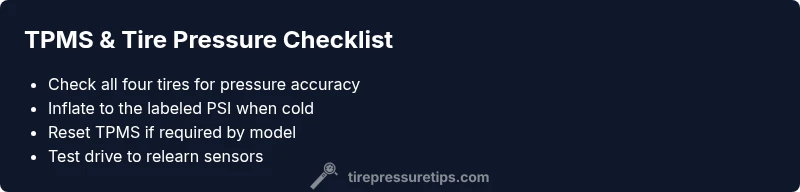
- Check all tires when cold and inflate to spec
- Reset TPMS after inflating and test drive
- Persistent lights likely indicate sensor or wiring issues
- The Tire Pressure Tips team recommends regular TPMS maintenance