Tire Pressure Light Mazda CX-5: Troubleshooting Guide
Urgent, practical troubleshooting for the tire pressure light on Mazda CX-5. Learn quick checks, TPMS basics, and safe steps to restore proper tire pressure.


1) The tire pressure light mazda cx 5 is usually triggered by a real pressure drop or a faulty TPMS sensor. 2) Start with the basics: check all tires with a reliable gauge when they're cold, compare against the door jamb sticker, and correct any underinflation. 3) If the light stays on after inflation, reset the TPMS or have a professional diagnose the system.
Understanding the tire pressure light mazda cx 5
When the tire pressure light mazda cx 5 appears on your dashboard, it’s not a mystery—it's a pragmatic signal about air pressure. In most Mazda CX‑5 models, the light comes on when the TPMS detects a deviation from the factory tolerance, or when a sensor hasn’t reported in a while. According to Tire Pressure Tips, the most common trigger is a real pressure drop caused by a slow leak or by seasonal temperature changes. Start with the simplest explanation: check all tires with a trusted gauge, compare to the door jamb sticker, and ensure you measure when the tires are cold. If you find underinflation, bring each tire up to the recommended cold level from the sticker, then recheck. If the light reappears after inflation, the issue may be deeper—leaks, sensor faults, or a reset requirement.
Beyond simple inflation, remember that the Mazda CX‑5 TPMS dataset depends on sensor accuracy and battery health. If the tire pressure light remains even after filling to spec, there is a meaningful chance the TPMS sensor or its wiring is at fault. In those cases, a professional diagnostic is recommended to avoid false readings and to protect tire safety and fuel economy.
Common Causes of Activation
The tire pressure light on a Mazda CX-5 can be triggered by several factors. First, a real drop in pressure due to a slow leak or puncture is the most common cause, especially after driving with a curb strike or a nail in the tread. Second, temperature shifts, particularly moving from cool to warm environments or after heavy driving, can cause pressure to fluctuate enough to trigger the light. Third, TPMS sensor battery depletion or sensor failure can surface as a false warning, even if the tires are properly inflated. Fourth, recent tire service, wheel rotation, or a sensor relocation during maintenance can disrupt sensor readings and trigger a reset-needed scenario. Finally, sometimes a software or communication hiccup within the TPMS module can cause a temporary warning that resolves after a recheck.
If you notice the light after a tire change or after replacing a wheel, expect sensor-related inconsistencies and plan a targeted inspection of the affected wheel and its sensor.
Quick Checks You Can Perform Safely
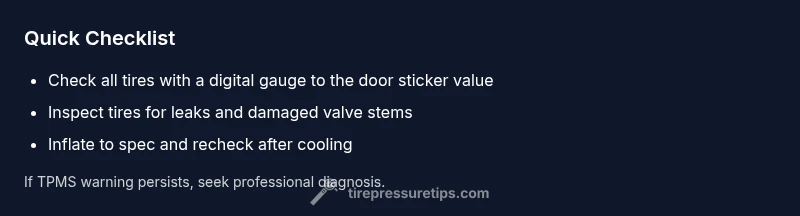
- Park on a flat, level surface and let tires cool before measuring.
- Use a reliable digital or analog gauge to compare each tire’s pressure to the door jamb sticker.
- Inspect tires for signs of slow leaks: nail holes, cut tread, or embedded objects; check for sidewall damage that could compromise air retention.
- Check valve stems for cracks or corrosion, and ensure valve caps are present and snug to prevent air loss and debris ingress.
- If a tire is notably low, inflate it to the specified cold pressure and recheck after a short drive to account for heating. Do not ignore a visibly deflated tire; it risks heat buildup and failure.
- If you recently rotated tires or serviced the wheels, allow time for the TPMS to recalibrate and monitor the light for a short drive to confirm whether it settles.
How to Check Tire Pressure Accurately for Your Mazda CX-5
Accurate tire pressure checking starts with clean, cold tires and a reliable gauge. Remove the valve cap, place the gauge on the valve stem, and press firmly until you get a steady reading. Repeat on all four tires (and the spare, if equipped) and compare against the vehicle’s specified cold inflation pressure shown on the door jamb sticker or owner’s manual. If any tire is underinflated, inflate to the recommended value and recheck. After inflation, re-seat the valve cap and drive briefly to allow the TPMS to reassess if necessary. Keep in mind that your tire pressure can change with weather, load, and sustained highway speeds, so regular checks are essential for safety and efficiency.
Resetting TPMS and When to Seek Help
Resetting TPMS is not a one-size-fits-all action; Mazda provides model-year specific procedures. If you’ve corrected inflations and the warning persists, consult the owner’s manual for the exact TPMS reset method. In many cases, a short drive after inflating to spec will allow the system to recalibrate. Do not rely on a reset as a substitute for addressing actual underinflation or a possible sensor fault. If the light stays on after a proper inflation and reset, or you notice inconsistent readings across tires, it’s time to seek professional service. A certified technician can diagnose sensor health, battery status, and any wiring issues that could cause false positives or missed warnings.
Diagnostic Mindset: What to Do If It Doesn’t Clear
If the tire pressure light mazda cx 5 remains on after inflating to the specified level and performing a reset, approach the problem methodically. Start by rechecking inflation on all tires when cold to rule out measurement error, then inspect for hidden leaks. Consider swapping with a known-good sensor in a controlled test if a sensor fault is suspected. A professional TPMS diagnostic can measure sensor battery health, monitor transmission integrity, and reprogram or replace faulty components as needed. Finally, ensure proper wheel installation torque and sensor compatibility with your MX model to prevent future issues.
Final Safety Reminders and Prevention Tips
- Regularly check tire pressure at least once a month and before long trips; temperature and load variation will influence readings.
- Always inflate to the factory-specified cold pressure; remember that readings taken after driving will be higher due to heat buildup.
- Monitor for any visible tire damage and promptly address slow leaks to prevent sudden blowouts.
- If the TPMS warning persists after inflation and basic checks, seek professional diagnosis rather than continuing to drive on an underinflated or unstable tire.
- Keep your spare tire and TPMS battery in good condition; both can influence safety and readiness.
Step-By-Step Troubleshooting Deep Dive
- Verify cold inflation pressures on all four tires using a trusted gauge against the door sticker. 2) Look for nails, screws, or damage; repair or replace affected tires as needed. 3) Inspect valve stems and TPMS sensor positioning; reseat or replace if corroded or loose. 4) Inflate to the recommended cold pressure, then drive for 10-15 minutes and recheck. 5) If the warning persists, perform the TPMS reset per the owner manual. 6) If still active, schedule a professional TPMS diagnostic.
What to Do If You Still Have Questions
If you’re unsure about how to interpret readings or perform a TPMS reset, contact a qualified technician or refer to your Mazda CX-5 owner’s manual for model-specific steps. Tire Pressure Tips recommends erring on the side of caution—drive only if all tires are within spec and the TPMS is responding reliably. For ongoing warnings, a professional inspection will help prevent unsafe driving conditions and preserve tire life.
Steps
Estimated time: 40-60 minutes
- 1
Check cold tire pressures
Park on a level surface and measure each tire with a gauge when tires are cold. Compare against the door jamb sticker to identify underinflation.
Tip: Use a digital gauge for consistency and accuracy. - 2
Inspect tires for damage
Look for nails, cuts, or bulges that could cause slow leaks. Check the wheel rims and valve stems for wear or corrosion.
Tip: Remove the valve cap and sniff for any hissing sounds indicating air leakage. - 3
Inflate to spec and re-check
Fill each tire to the recommended cold pressure. Recheck after a few minutes once the tires have cooled slightly to confirm stability.
Tip: Ensure you re-seal valve caps tightly after testing. - 4
Reset the TPMS
Follow the Mazda owner’s manual TPMS reset procedure for your model year. If the system tolerates the reset, drive for a short distance to let it recalibrate.
Tip: Note that some models require a key-on, engine-off cycle. - 5
Test drive and recheck
Take a short, controlled drive to allow the system to register changes, then recheck tire pressures and the dashboard light.
Tip: If the light returns, the issue may be sensor-related. - 6
Seek professional help
If the warning persists after inflation and reset, have a technician diagnose TPMS sensors, wiring, and calibration accuracy.
Tip: Professional diagnosis can prevent further tire damage.
Diagnosis: Dashboard tire pressure warning light stays on after inflating tires and driving short distances
Possible Causes
- highReal tire underinflation due to slow leak or puncture
- mediumTPMS sensor battery or sensor fault
- lowTPMS recalibration required after tire service or rotation
- lowSoftware or communication issue within TPMS module
Fixes
- easyRecheck all tires when cold and inflate to the door-sticker spec; retest warning
- easyInspect for leaks and repair/replace the affected tire as needed
- easyReset TPMS according to the Mazda owner manual or service bulletin
- mediumIf warning persists, schedule professional TPMS diagnostic and sensor test
- hardReplace TPMS sensor or module if fault is confirmed
Frequently Asked Questions
What does the tire pressure light mean on a Mazda CX-5?
The light indicates a pressure deviation detected by TPMS or a sensor issue. Check all tires cold, compare with the door sticker, and address any underinflation or sensor fault.
The TPMS warning means your tires aren't at the recommended pressure or there's a sensor problem. Start with a cold-pressure check and consult a technician if the light stays on.
Can I drive with the TPMS light on?
If the tires are properly inflated to spec, driving a short distance to a safe location is generally possible, but avoid long trips and monitor for rapid changes. If you notice a tire feel or leak, pull over safely.
You can move a short distance if all tires are at spec, but don’t drive long, and don’t ignore leaks or warning patterns.
How often should I check tire pressure?
Check tire pressure monthly and before long trips. Changes in temperature and load can cause pressure shifts, triggering the TPMS light even when tires seem fine.
Check monthly and before trips; temperature and load affect pressure.
What if the TPMS sensor battery is dead?
A dead battery in the TPMS sensor requires sensor replacement or reprogramming. A professional can confirm battery health and replace the sensor if needed.
If the TPMS sensor battery is dead, a technician will likely replace or reprogram the sensor.
Should I replace all tires if the TPMS warning persists?
Not necessarily. A persistent warning after inflation and reset could indicate a sensor issue, tire damage, or calibration fault. A diagnostic will determine whether a single sensor needs replacement or other repairs.
Not always. Get a diagnostic to see if only a sensor or a tire needs attention.
Watch Video
What to Remember
- Check all tires against the vehicle spec label.
- Inflate to the recommended cold pressure before driving far.
- Reset TPMS after correcting pressures and drive to recalibrate.
- If the light remains, seek professional TPMS diagnosis.