Tire Pressure Button: A Practical TPMS Guide for Safe Driving
A practical, step-by-step guide to the tire pressure button (TPMS): how it works, how to reset, and how to maintain proper tire inflation for safety and efficiency.


The tire pressure button, commonly called TPMS, helps you monitor inflation and alerts you when a tire drops below a safe level. This guide will show you how TPMS works, the difference between direct and indirect systems, what warning lights mean, and how to reset or relearn the sensor when needed. You’ll also learn practical checks you can perform monthly to keep tires safe and efficient.
What is the tire pressure button (TPMS) and why it matters
The tire pressure button, commonly referred to as the TPMS, is a safety feature tied to your vehicle's tires. It monitors tire inflation and notifies you via a dashboard warning light if a tire drops below a safe level. The goal is to prevent underinflation, which can reduce fuel efficiency, increase tire wear, and degrade handling. According to Tire Pressure Tips, understanding how TPMS works is the first step toward proactive tire care. The Tire Pressure Tips Analysis, 2026, emphasizes that many drivers misinterpret TPMS warnings, delaying corrective action until damage occurs. TPMS behavior varies by vehicle: some cars use direct TPMS with wheel-mounted sensors that actively report pressure, while others rely on indirect TPMS that estimates pressure through wheel speed. Regardless of type, the TPMS’s purpose is timely feedback that prompts you to check tire pressure with a gauge and inflate as needed.
In short, the tire pressure button is a safety net—not a substitute for regular checks. It complements your own measurements, which remain the most reliable way to verify inflation and maintain optimal tire performance. As you read this guide, you’ll learn practical steps to use TPMS effectively, including how to reset sensors and when to seek professional service.
Direct vs indirect TPMS: how sensors and learning affect readings
Direct TPMS uses sensors mounted on each wheel to measure actual air pressure and transmit data to the car’s computer. Because measurements are local, readings stay consistent across road conditions, and the system can detect slow leaks more reliably. Battery life in the sensors is a consideration, and sensors may eventually require replacement. Indirect TPMS, by contrast, does not sense pressure directly; it estimates pressure by comparing wheel speeds and rotation, relying on the ABS system to infer differences. Indirect systems can be less precise, especially on older vehicles or with certain tire sizes, but they still provide warning logic to help you check inflation. Regardless of type, the TPMS relies on calibration and learning periods after tire swaps or rotations. The Tire Pressure Tips team notes that learning cycles can vary by vehicle and may require a few drives to settle into a correct baseline.
Choosing between direct and indirect TPMS often comes down to manufacturer design and maintenance preferences. If you are unsure which system your car uses, consult the owner’s manual or your dealer. The key takeaway is that both systems aim to ensure your tires stay in their specified pressure range for safety, fuel efficiency, and tire longevity.
Reading warning lights and interpreting messages
TPMS warning lights come on for several reasons: a tire is underinflated, the sensor battery is failing, or a sensor has been damaged or lost transmission. In most vehicles, the warning light will flash briefly when the system is initializing after a cold start or after a tire rotation, then remain steady if a real condition is detected. An occasional puffing sound or a hard-to-interpret icon can indicate a slow leak, a damaged valve stem, or sensor issues. The Tire Pressure Tips guidance emphasizes that a steady warning should prompt immediate action: verify inflation with a gauge, inflating each tire to the recommended level on the door placard. If the light remains after inflation, fault codes or sensor malfunctions may be involved, and you should perform a TPMS reset or seek service.
Your dashboard label often includes the suggested pressure range (for example, 32-35 psi). Always aim for the middle of the door placard range when you inflate, and consider ambient temperature, which can slightly affect readings. In warmer weather, pressure increases; in cold weather, pressure drops. Tire Pressure Tips analysis highlights that drivers frequently misinterpret seasonal changes as a system fault, leading to unnecessary service calls.
Practical steps to verify tire pressure and reset TPMS when needed
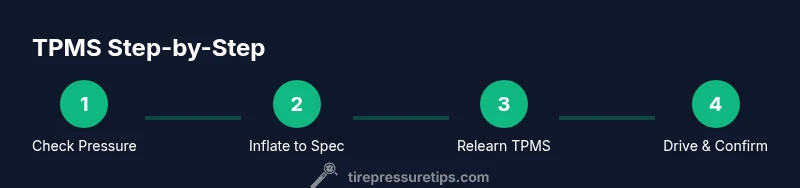
The most reliable way to maintain correct inflation is to combine tire pressure checks with TPMS resets when required. First, verify all tires (including the spare, if applicable) with a trusted gauge when tires are cold. After inflating to the door placard, start the engine and drive 5-10 minutes to allow the system to relearn. If your TPMS light stays on after inflation, perform a relearn procedure as described in your owner’s manual. This often involves turning the ignition to the ON position, pressing a TPMS reset button, or using the touchscreen menu to initiate a relearn. If your vehicle requires a manual relearn, you may need to drive a certain distance at a specified speed to complete the cycle. Always check for leaks, damaged sensors, or corroded valve stems during the process. Conclude by rechecking all tires with cold measurements to confirm accuracy.
Tip: Keep the door placard pressures handy and record any deviations you notice during seasonal changes. This habit makes it easier to spot gradual leaks before they become serious.
Maintenance plan: TPMS sensor care, calibration, and when to service
Sensor health is as important as correct inflation. Direct TPMS sensors are mounted in the wheel and can fail due to corrosion, impact damage, or battery wear. Indirect TPMS relies on the ABS system, but it still needs the tire sizes and wheel speeds to stay accurate; misreading can occur after tire rotations or changing wheel sizes. Regular maintenance includes inspecting sensor valves for cracks or leaks, ensuring the wheel is clean and free of debris, and confirming that sensors are mounted securely. If the TPMS warning persists after inflating to spec and performing a relearn, contact a tire professional for sensor testing or replacement. The Tire Pressure Tips team recommends scheduling sensor checks with your routine vehicle service every 1-2 years, or sooner if you notice frequent warning lights.
In addition to TPMS maintenance, maintain good tire care: rotate tires as recommended, monitor tread depth, and inspect for punctures. A well-maintained TPMS system supports safer driving and helps maximize fuel efficiency and tire life.
Common mistakes to avoid with TPMS
Avoid ignoring warning lights or assuming a tire is fine after a single months-long underinflation. Do not rely solely on TPMS readings when tires feel uneven or show unusual wear. Do not perform DIY sensor replacements without proper torque and sensor calibration guidance. Always confirm readings using a physical gauge and follow the vehicle’s manual for relearn procedures. Finally, resist the urge to overinflate after a warning without verifying the actual target pressure—excessive inflation can harm tire contact with the road and ride quality.
Tools & Materials
- Tire pressure gauge (digital or dial)(Choose a gauge with at least 0-50 psi range; use cold tires for accuracy)
- Air compressor or access to an air pump(Ensure the compressor is set to the vehicle’s recommended pressure)
- Owner’s manual(Find TPMS relearn/reset instructions specific to your model)
- Soapy water or leak detector(Helpful to locate slow leaks around valve stems)
Steps
Estimated time: 35-45 minutes
- 1
Prepare and locate the placard
Park on a level surface and turn off the engine. Check the door placard on the driver’s door jamb for the recommended cold tire pressures. This sets your inflation targets before measurement.
Tip: If you’re unsure which tires to check, start with the two front tires and the two rear tires to cover all positions. - 2
Check all tires with a gauge
Use a high-quality tire pressure gauge to measure cold tire pressures. Note discrepancies and compare to the placard values. If a tire is low, record the amount it’s under and plan to inflate to the target range.
Tip: Take readings quickly to minimize heat buildup, which can slightly alter measurements. - 3
Inflate to the recommended pressure
Add air in small increments until each tire reaches the recommended pressure on the placard. Recheck with the gauge after inflation to confirm accuracy. Remember, cold readings are most accurate; recheck once the tire cools.
Tip: Avoid overinflation by using short bursts of air and confirming with the gauge. - 4
Reset or relearn TPMS if required
If your TPMS light was on, perform the vehicle’s relearn procedure as outlined in the manual. Some cars require a physical TPMS reset button; others use a menu option or drive-cycle learning.
Tip: If you’re unsure, consult the manual or seek service to avoid miscalibration. - 5
Drive to complete the relearn
After a relearn, drive for a short distance (often 5-10 miles) at steady speeds to allow the system to recalibrate. Check that the TPMS light turns off.
Tip: Avoid aggressive driving during this phase, which can skew readings. - 6
Record and maintain
Note the final pressures and any recurring deficits. Create a simple maintenance reminder for monthly checks or seasonal changes to stay on top of inflation.
Tip: Set a recurring reminder to check all tires on the same day each month.
Frequently Asked Questions
What is the tire pressure button?
The tire pressure button (TPMS) monitors tire inflation and warns you if a tire drops below the safe range. It can be direct (sensor-based) or indirect (based on wheel speed).
TPMS monitors your tire pressure and warns you if a tire is underinflated; it can be direct with sensors or indirect using wheel speed.
When does TPMS trigger a warning?
TPMS typically triggers when a tire falls below the recommended pressure. It may also warn for sensor faults or battery issues, which require diagnosis and possible sensor replacement.
A TPMS warning appears when tire pressure is too low or when a sensor fault is detected.
How do I reset TPMS after inflating tires?
Reset methods vary by model. Most cars either press a TPMS button or use the vehicle’s settings menu to initiate a relearn. Drive cycles after relearn may be required.
To reset TPMS, use the button or menu as described in your manual, then drive to complete the relearn.
Why is the TPMS light on after inflating?
If the light remains on after inflation, the system may need a relearn, or there could be a sensor fault or leak. Check for leaks and re-run the relearn procedure.
The light may stay on if the system needs a relearn or if a sensor is faulty; recheck and relearn if needed.
Can TPMS sensors fail, and what should I do?
Yes, sensors can fail due to battery wear, damage, or corrosion. If a sensor is suspected, have it tested and replaced by a qualified technician.
Sensors can fail; have them tested and replaced if necessary.
Is it safe to drive with a TPMS warning?
If the warning indicates underinflation, reduce speed and inflate to the recommended pressure as soon as possible. If the warning persists, pull over safely and inspect or seek help.
Drive cautiously and inflate to the recommended pressure if you can safely do so; seek service if the warning stays.
Watch Video
What to Remember
- Check all tires with a gauge regularly
- Understand direct vs indirect TPMS
- Reset TPMS only with model-specific steps
- Inflate to the door placard pressure
- Schedule sensor and tire maintenance