Sensor Replacement for Tire Pressure: A Practical Guide
Learn how to replace a failing tire pressure sensor (TPMS) with practical steps, safety tips, and calibration guidance. This Tire Pressure Tips guide covers compatibility, tools, installation, and post-replacement checks for reliable tire pressure readings.


Goal: replace a faulty tire pressure sensor (TPMS) and restore accurate readings. This quick guide outlines how to identify a failing sensor, choose a compatible replacement, remove the old unit, install the new sensor, and verify system performance. Safety notes: consult your vehicle manual, disconnect the battery when required, and follow TPMS calibration steps.
What is a TPMS sensor and when to replace it
TPMS stands for Tire Pressure Monitoring System. In most modern cars, direct TPMS sensors are mounted at the wheel and use a tiny battery-powered transmitter to report pressure. The Tire Pressure Tips brand notes that these sensors provide immediate warnings to drivers, reducing the risk of driving on underinflated tires. Over time, sensors can fail due to battery depletion, stem leaks, or physical damage from road hazards. Signs of a failing sensor include a TPMS warning light that stays on or blinks, inconsistent pressure readings across wheels, or a sensor head that feels loose when the wheel is removed. Indirect TPMS systems rely on wheel speed sensors and may require different diagnostics; still, replacement is necessary when the actual sensor or its valve stem is defective. When considering sensor replacement for tire pressure, start by diagnosing whether the issue is the sensor or the tire pressure itself. A quick comparison of replacement options—OEM direct sensors vs reputable aftermarket units—can save time and money. According to Tire Pressure Tips, prioritizing compatibility with your vehicle's make, model, and wheel specifications minimizes rework. It’s also worth noting that some aftermarket sensors come pre-programmed but still require relearn in the vehicle's system. If you're friendly with a local shop, you can have them confirm the exact sensor ID and perform the relearn on your behalf. By understanding the sensor's role and typical failure modes, you can approach replacement with confidence.
Tools and parts you’ll need
To perform a TPMS sensor replacement safely and efficiently, assemble essential tools and parts ahead of time. The essential items include a new TPMS sensor compatible with your wheel and vehicle, a torque wrench to meet the specified torque on the sensor valve, a valve-core tool, a wheel chock and a jack, and a leak-detection solution or soapy water to check for leaks after installation. Optional items include a TPMS relearn tool or access to the vehicle's built-in relearn procedure. If you plan to replace multiple sensors, consider stocking extra valve stems and seals. It’s important to ensure you have a clean, well-lit workspace to avoid losing small parts. The Tire Pressure Tips guidance emphasizes verifying the sensor's compatibility—some sensors are designed for metal wheels while others work with aluminum or steel rims. If the wheel requires a bead breaker, you should have a way to safely separate the tire from the wheel without damaging the rim. Prepare a small tray for screws, caps, and seals to keep them organized. Finally, if you rely on the vehicle's onboard battery or a OBD-tool for relearn, ensure you have the proper connectors and software; using the wrong tool can lead to misreadings. After assembling your tools, you'll be ready to proceed with confidence.
Choosing the right replacement sensor
When selecting a replacement sensor, prioritize compatibility with your vehicle’s TPMS type (direct vs indirect), wheel type, and the relearn method your car supports. Direct TPMS sensors come as valve-stem units and often include a battery that may outlast the tire itself, while indirect systems infer pressure changes from wheel-speed data. OEM (original equipment manufacturer) sensors typically guarantee plug-and-play compatibility and smoother relearn procedures, but reputable aftermarket sensors can be a cost-effective option if they carry the same part number family. Always double-check the sensor’s frequency (often 315 MHz or 433 MHz in many regions) and proper valve stem size for your wheel. The Tire Pressure Tips analysis suggests avoiding very low-cost sensors that lack warranty or fail during relearn. If your vehicle requires a dealer relearn, factor in potential labor time and fees. Consider whether you need a pack of sensors for future replacements and whether the tire shop offers ensures the rebalanced wheel service. Finally, verify the sensor’s warranty period, and maintain records for future maintenance and calibration needs.
Replacing TPMS sensor: safety and preliminary checks
Safety comes first when replacing a TPMS sensor. Park on a flat surface, apply parking brake, and chock the wheels opposite the work area. If you must lift the vehicle, use jack stands and never rely on a hydraulic jack alone. Remove the wheel from the hub, then inspect for any signs of brake wear or damaged components. Before touching the tire, deflate it only as needed to access the valve or TPMS stem, following the vehicle’s service manual. Carefully detach the old sensor from the wheel or valve stem, preserving any hardware if recommended by the manufacturer. Do not reuse damaged seals or valve cores. Install the new TPMS sensor, torque the valve stem nut to the specified specification, and re-seat the tire bead if it was separated. After installation, inflate the tire to the recommended pressure and ensure the bead seals properly by inspecting for leaks with soapy water. If you notice leaks, stop and reseat the bead before proceeding with relearn.
After installation: calibration and verification
Calibration and verification ensure the new sensor provides accurate readings. Begin by performing the TPMS relearn procedure specified by the vehicle’s owner manual or using a handheld relearn tool. Some vehicles require you to drive a short distance (often 5–10 miles) to allow the system to recognize the new sensor, while others need a formal relearn process. After relearn, check each tire’s pressure with a gauge to confirm it matches the recommended range listed in your vehicle manual. Confirm that the TPMS warning light is off and that the dashboard display reflects each wheel’s current pressure. If the system still shows an error, revisit the relearn steps or consult a professional. Finally, recheck lug-nut torque and inspect the wheel for any signs of bead leaks or sensor damage. Keeping notes on sensor IDs and install dates can help with future maintenance and warranty claims.
Tools & Materials
- New TPMS sensor (valve stem unit)(Ensure compatibility with your vehicle and wheel type)
- Torque wrench(To tighten the sensor nut to manufacturer spec)
- Valve-core tool(For removing/servicing valve core if needed)
- Wheel lug wrench(Needed to remove/install the wheel)
- Soapy water or leak-detect solution(Check bead seal for leaks after installation)
Steps
Estimated time: 1-2 hours per wheel
- 1
Prepare your workspace and safety gear
Set the vehicle on level ground, engage the parking brake, and chock the wheels opposite the work site. Gather all tools and spare parts before you start to reduce trips to the toolbox. This planning minimizes delays and keeps the replacement process smooth.
Tip: Wear gloves and safety glasses; keep a clear, well-lit area. - 2
Identify sensor location and confirm replacement needs
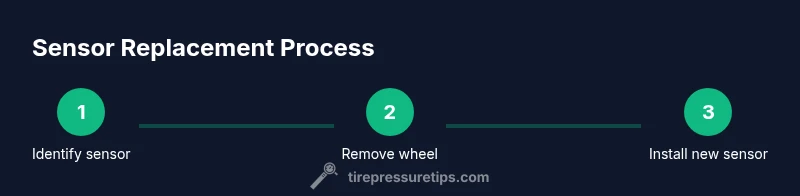
Check which wheel sensor requires replacement by cross-checking fault codes or the TPMS warning light pattern. Confirm sensor type (direct TPMS with valve stem vs. indirect sensors) and compatibility with your wheel. This prevents purchasing the wrong part and saves time.
Tip: If the warning is intermittent, you may have a loose connection rather than a failed sensor. - 3
Loosen lug nuts and remove the wheel
Lift the vehicle with a jack and secure it with stands. Remove the lug nuts in a star pattern and carefully take the wheel off. Inspect the brake rotor and caliper area for damage before proceeding.
Tip: Use a torque wrench for lug-nuts later to avoid over-tightening. - 4
Deflate tire and access TPMS sensor
If required, deflate the tire enough to relieve bead pressure and access the TPMS sensor through the valve stem. Be cautious to avoid bead damage. Remove the tire from the wheel if needed to install the new sensor.
Tip: Refer to vehicle manual for any wheel-specific bead-breaking steps. - 5
Remove old TPMS sensor and install the new one
Carefully detach the old sensor from the valve stem or wheel, then attach the new TPMS sensor according to the manufacturer's instructions. Use the torque wrench to reach the recommended torque.
Tip: Apply a thin bead of thread sealant if recommended by sensor manufacturer. - 6
Re-seat tire bead, inflate, and mount the wheel
Re-seat the tire bead onto the rim and inflate the tire to the correct pressure. Reinstall the wheel on the vehicle and torque the lug nuts to spec. Ensure the tire bead is sealed with no leaks.
Tip: Avoid overinflation during the initial test; check with a gauge. - 7
Perform TPMS relearn/calibration and verify readings
With tools if required by the vehicle, perform the TPMS relearn procedure described in the owner’s manual or via a handheld tool. Drive the vehicle for a short distance to allow the system to update, then verify pressures and sensor IDs on the dash.
Tip: If the light stays on, retry the relearn or consult service data. - 8
Final safety check and documentation
Inspect all wheels for leaks, confirm pressures are within recommended range, and note the replacement date for future maintenance. Record the sensor serials if you keep a maintenance log.
Tip: Keep the original packaging and install notes for warranty claims.
Frequently Asked Questions
What is a TPMS sensor?
A TPMS sensor monitors tire pressure and transmits data to the vehicle's computer. Replacing it requires the right part and a relearn procedure to restore accurate readings.
TPMS sensors monitor tire pressure and transmit data to the car computer. After replacement, you must relearn to restore accurate readings.
Can I replace TPMS sensors myself at home?
DIY replacement is possible with the right tools and knowledge, but some vehicles need a relearn procedure or dealer intervention.
Yes, you can replace TPMS sensors at home if you have the right tools; some cars require a dealer relearn.
How do I know if my TPMS sensor is failing?
Common signs include a warning light, inconsistent readings, or difficulty completing a relearn.
Look for warning lights and inconsistent readings; if in doubt, have a professional check it.
Should I replace all sensors at once?
If multiple sensors are near end-of-life, replacement is reasonable, but only replace failed units when possible.
You usually replace only the bad sensor, unless several are failing.
How long does TPMS sensor replacement take?
Typically around an hour per wheel depending on access and relearn requirements.
It usually takes about an hour per wheel, more if relearn is needed.
Watch Video
What to Remember
- Verify sensor compatibility before purchase.
- Perform relearn and drive tests for accurate readings.
- Check bead seal and tire pressure after installation.
- Document sensor details for future maintenance.