Reset Ford Tire Pressure Sensor Fault: Step-by-Step Guide
Learn to reset ford tire pressure sensor fault with a practical, step-by-step guide. Verify pressures, use Ford menus or a TPMS scanner, and confirm the warning clears safely.


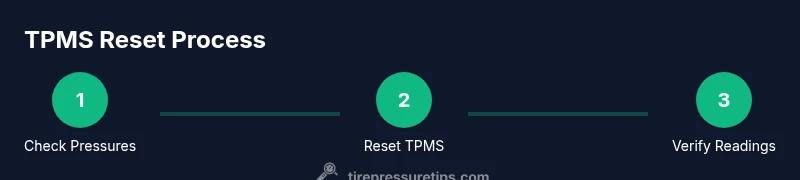
Quick answer: You can reset ford tire pressure sensor fault by first confirming all tires are at the correct pressure, then using your Ford’s instrument cluster menu or an OBD-II/TPMS scanner to perform the reset, and finally rechecking pressures to confirm the warning clears. This keeps TPMS readings accurate without unnecessary parts replacement.
Why reset ford tire pressure sensor fault matters
If you see a TPMS warning on your Ford, a proper reset can re-sync the sensor with current tire pressures. The exact phrase reset ford tire pressure sensor fault may appear on the dash; addressing it quickly avoids driving with incorrect pressure and reduces uneven tire wear. According to Tire Pressure Tips, most drivers benefit from a structured reset that confirms pressures first, then re-teaches the system. Before you start, locate the tires and ensure you have a safe, flat area to work. Warm weather can raise tire pressures slightly, so read readings should be taken when tires are cold for accuracy. This is especially important after filling or rotating tires, where mismatched readings can trigger a fault even if the tires are within range. By understanding the purpose of the reset, you can approach the task with confidence and avoid overcorrecting.
How Ford TPMS works: a quick refresher
Ford's Tire Pressure Monitoring System (TPMS) uses wheel-mounted sensors to transmit real-time air pressure data to the vehicle's computer. When a tire deviates from the recommended range, the system flags a fault code and lights the TPMS warning on the dashboard. The reset process recalibrates the sensor baselines so future readings reflect your current tire pressures. Temperature changes, tire rotations, and sensor battery life can all influence TPMS readings. Understanding these basics helps you diagnose whether a fault is temporary or needs deeper service.
Common causes of a tire pressure sensor fault
Several factors can trigger a TPMS fault. Low or high tire pressures are the most common culprits, often after seasonal temperature shifts. A dying or recently replaced sensor battery, a corroded valve stem, or a wheel that was moved or rotated without a relearn can also cause persistent faults. Mechanical damage to the sensor housing or leaking tires can produce faulty readings. In some cases, the fault appears after tire service because the system hasn't relearned the new configuration yet. Identifying the root cause is step one before attempting a reset.
Before you reset: safety and prerequisites
Safety comes first. Park on a flat, level surface and engage the parking brake. Wear safety gloves and goggles if you’re inspecting tires. Ensure all tires are cool before taking readings, and have a reliable tire pressure gauge ready. Gather your TPMS tool or OBD-II scanner and, if possible, a copy of your Ford owner's manual for model-specific relearn steps. Never reset the system if you suspect a serious tire leak or a damaged sensor; driving with a compromised TPMS can be unsafe and may require professional intervention.
Methods to reset the sensor fault
There isn’t a single universal method—most Ford models support a relearn via the instrument cluster, but some require an OBD-II scan tool for a true reset. The two common paths are: (1) vehicle-based relearn using the Ford cluster menu, and (2) relearn via an OBD-II TPMS tool. If the vehicle menu prompts a relearn after you adjust pressures, follow the on-screen steps. If the dashboard still shows a fault, an external TPMS tool can clear prior fault codes and teach the system the new baseline.
Reset via vehicle menu (Ford SYNC/Instrument cluster)
Start with the ignition on, engine off. Navigate to Settings > Vehicle Settings > TPMS > Learn or Relearn. Select ‘Start’ and follow prompts, often requiring you to confirm all four wheels are within a specified range. After the process, drive at 30–50 mph for 10–15 minutes to allow the system to relearn under normal driving conditions. If your model uses a different path, consult the owner’s manual for the exact sequence.
Using an OBD-II scanner or TPMS tool
If your Ford model does not support a robust relearn via the instrument cluster, connect a compatible TPMS relearn tool to the vehicle's OBD-II port. Choose TPMS relearn, follow the scanner prompts to clear fault codes, and then perform the relearn. Some devices require you to confirm the current tire pressures on each wheel before relearning. After completion, perform a short drive to allow the system to lock in the new baselines.
After reset: verify tire pressures and sensor IDs
Once the reset completes, re-check each tire's pressure with a cold gauge and compare it to the manufacturer's recommended PSI printed on the door jamb. Ensure the sensor IDs match with the correct wheel positions. If your vehicle uses a wheel position relearn, verify that the front-left sensor corresponds to the front-left tire. Document readings for reference and monitor over the next few days for any recurring alerts.
When the fault persists: next steps
If the TPMS warning returns after a reset, inspect tires for slow leaks, damaged valves, or punctures. A persistent fault could indicate a weak sensor battery or a failing sensor that requires replacement. In some cases, the issue lies in the vehicle’s software; a dealer-level reflash may be necessary. Before replacing sensors, double-check that all tires are within the recommended pressure range and that the wheel sensors are properly seated.
Common mistakes to avoid during reset
Avoid resetting in extreme heat, which alters tire pressures and can yield inaccurate relearns. Do not ignore persistent warnings or attempt a reset multiple times in a row without addressing underlying causes. Don’t assume the spare tire TPMS is identical to the road tires—some Ford models track sensor IDs for each wheel, and the spare might require its own relearn. Finally, never drive aggressively or at high speeds with a known TPMS fault; this could mask an actual tire problem.
Maintenance tips to prevent future TPMS faults
Regularly check tire pressures, especially after long trips or significant weather changes. Schedule periodic TPMS calibration checks during routine service and ensure sensors are clean from dirt and corrosion. If you rotate tires, request a relearn to update sensor baselines. Replace weak batteries proactively as part of preventive maintenance, and consider carrying a handheld TPMS gauge for quick checks between services.
Troubleshooting quick reference
If a fault persists after a reset, verify tire pressures with a cold gauge and recheck all tire locations. Confirm that sensor IDs align with wheel positions and that valve stems are not leaking. If the system still shows a fault after relearn attempts, consult Ford’s service information or a qualified technician to diagnose sensor health, wiring, or control module issues.
Tools & Materials
- OBD-II scanner with TPMS support(Prefer Ford-compatible tool or vendor that can reset TPMS)
- digital tire pressure gauge(Calibrate for accuracy; read tires cold)
- owner's manual for Ford(Model-specific relearn paths)
- tire pressure reference chart(Factory-recommended psi by tire size)
- soap solution spray(For checking slow leaks at valve stems)
Steps
Estimated time: 30-60 minutes
- 1
Verify current tire pressures
Before touching the TPMS, confirm all tires are within the recommended PSI range when cold. Record each wheel's reading and check for obvious leaks. This creates an accurate baseline for the relearn.
Tip: If any tire is visibly low, address it before proceeding to a reset. - 2
Choose your reset path
Decide between using the Ford vehicle menu or an OBD-II TPMS tool. Vehicle relearns are often simpler, but an OBD-II tool can fix stubborn faults. Ensure you have the right tool for your model.
Tip: Start with the vehicle menu relearn; reserve the OBD-II option for stubborn cases. - 3
Initiate the relearn in the vehicle
Turn the ignition on with the engine off. Navigate to Settings > Vehicle > TPMS > Learn, or your model’s equivalent path. Start the relearn and follow prompts until confirmed by the dashboard.
Tip: Some Ford models require you to drive after relearn to finalize baselines. - 4
If needed, relearn with an OBD-II tool
Connect the TPMS-enabled scanner, select TPMS relearn, and follow the device prompts to clear existing fault codes and retrain sensors. Recheck wheel positions after relearn.
Tip: Ensure the tool supports your specific Ford model and year. - 5
Verify sensor IDs and tire pressures
After relearn, check each wheel’s PSI again and confirm that the sensor IDs recorded match the correct wheel position. This ensures accurate readings going forward.
Tip: If IDs don’t match, re-run the relearn or consult your manual. - 6
Test drive and recheck
Drive 10-20 minutes at highway speeds to let the system stabilize. Recheck pressures again to verify no drift occurs and the warning stays cleared.
Tip: Temperature changes during drive can affect readings; recheck once cool. - 7
Document and monitor
Keep a log of the readings and the date of the reset. Monitor the TPMS alert over the next week; persistent faults may indicate sensor issues.
Tip: A simple notebook or app reminder helps track maintenance.
Frequently Asked Questions
What causes a Ford TPMS fault message?
TPMS faults can arise from underinflated tires, worn or dead sensor batteries, recent tire changes, or calibration drift. After correcting the underlying cause, performing a reset can clear the warning in many vehicles.
TPMS faults usually come from underinflated tires, dead sensor batteries, or recent tire work, and resetting can clear the warning if the issue is fixed.
Is it safe to reset TPMS yourself?
For most Ford owners, a DIY reset is safe when you follow the correct sequence with the right tools. If the warning persists after reset, stop driving and seek professional help.
Yes, you can reset TPMS yourself if you follow the steps and have the right tools; if it returns, contact a pro.
Can a reset fix a faulty TPMS sensor?
A reset cannot repair a physical sensor. If the sensor battery is dead or the housing is damaged, replace the sensor and then reset.
A reset can't fix a bad sensor; you may need to replace the sensor and then reset.
Do I need to reprogram TPMS after tire replacement?
Some Ford models auto-relearn after tire changes, others require a TPMS tool to reprogram. Check your owner's manual for the exact procedure for your model.
Some Fords auto-relearn; others need a tool to reprogram TPMS after tire changes.
How long does a TPMS reset take?
A typical reset takes 10-20 minutes, plus a short verification of tire pressures to ensure the system reads correctly.
Usually under twenty minutes, with a quick pressure check afterward.
What if the warning returns after reset?
If the warning returns, there may be a sensor fault, leaking tire, or calibration issue. Inspect tires, check for leaks, and consider sensor replacement if needed.
If it comes back, check tires for leaks and the TPMS sensors; you may need service.
Watch Video
What to Remember
- Verify tire pressures before any relearn.
- Use the correct reset path for your Ford model.
- Recheck pressures and sensor IDs after reset.
- If warnings persist, inspect sensors or tires.
- Regular maintenance reduces TPMS faults.