Lexus Tire Pressure Reset: TPMS Calibration Guide
Learn how to reset the Lexus TPMS after adjusting tire pressure, with model variations, verification steps, and maintenance tips from Tire Pressure Tips. Safe, practical guidance for drivers.


Resetting the Lexus TPMS after adjusting tire pressures ensures the system learns the new values and avoids false alarms. This quick guide shows when a reset is needed, the common methods (dashboard/menu reset and scan-tool reset), and how to verify proper calibration. Following Tire Pressure Tips helps you maintain accurate readings and safer driving.
Why TPMS Resets Matter for Lexus Owners
According to Tire Pressure Tips, a properly reset TPMS is essential after you adjust tire pressure, rotate tires, or replace sensors. The Tire Pressure Tips team emphasizes that TPMS calibrations help the onboard computer learn the new baseline and reduce nuisance warnings. When calibration is off, you may receive false tire pressure warnings, which can lead to unnecessary stops or underinflated tires in traffic. For Lexus owners, understanding the reset process ensures that the system protects you with accurate readings and timely notifications. This section explains how TPMS functions, why resets are sometimes required after maintenance, and how a missed reset can affect fuel efficiency, tire wear, and handling. The goal is to help you approach TPMS maintenance with confidence, backed by practical guidance from Tire Pressure Tips and established automotive safety standards.
Key takeaways: TPMS relies on wheel-mounted sensors and a learning process; resets align the system to new pressures after service; improper resets may cause incorrect warnings or delayed alerts.
Tools & Materials
- Digital tire pressure gauge(Use it when tires are cold for accurate readings (parked for 3+ hours).)
- Tire inflator/pump(Ensure you can bring each tire to the manufacturer’s cold PSI.)
- Access to Lexus TPMS menu or owner's manual(Model-specific navigation varies; have the manual handy.)
- Optional diagnostic scan tool(Some Lexus models support TPMS resets via a scan tool.)
- Vehicle placard or door jamb PSI chart(Reference for recommended cold PSI values.)
Steps
Estimated time: 20-40 minutes
- 1
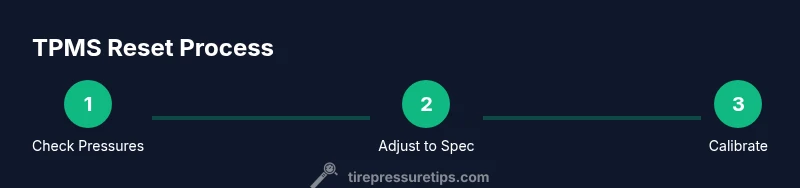
Check current tire pressures with a gauge
Before any reset, measure all four tires with a digital gauge when they are cold. Record each value to confirm you are starting from accurate baselines. This step helps you decide if a reset is truly needed or if you simply need minor pressure adjustments.
Tip: Do this after the vehicle has been idle for several hours to avoid heat-influenced readings. - 2
Adjust tires to the recommended cold PSI
If any tire is below or above the placard value, adjust using a reliable air source until every tire matches the recommended cold PSI listed on the door jamb placard or owner’s manual. Recheck each tire after inflation.
Tip: Use the placard values as the standard; do not rely on in-drive readings. - 3
Open the TPMS reset option in the Lexus menu
Access the TPMS reset or calibration option through the vehicle’s Settings or Vehicle menu. Pathways vary by year and trim; common routes include Settings > Vehicle > TPMS or Services > TPMS.
Tip: If you can’t locate it, consult the owner’s manual or your dealership for model-specific guidance. - 4
Initiate TPMS calibration/reset
Select the reset/calibration option and confirm. Some models perform an automatic learning process; others require you to drive afterward to complete the calibration.
Tip: Confirm on-screen prompts and note any confirmation sounds or indicators. - 5
Drive to complete calibration
After a reset, take a 10–20 mile drive under typical highway and city speeds to allow the system to learn the new pressures. Avoid extreme braking or rapid tire warming during this window.
Tip: A short test drive can help the system finish learning more quickly. - 6
Verify the TPMS indicator and readings
Check that the TPMS warning light stays off and that the basic tire pressures register near the targets on the gauge. If the light remains, recheck sensor status or perform another reset as needed.
Tip: If warning persists, you may have a sensor fault or an underperforming battery. - 7
Re-check all tire pressures again
After the calibration period, re-measure each tire to ensure stability. This confirms the reset took hold and the new baseline is accurate.
Tip: Record readings for future reference and maintenance history. - 8
If reset still fails, seek professional help
Some Lexus TPMS sensors or modules may require dealer calibration or sensor replacement. Do not drive aggressively with an unresolved TPMS fault.
Tip: Ask the service advisor to run a TPMS diagnostic and confirm sensor battery health.
Frequently Asked Questions
Do I always need to reset TPMS after changing tires on a Lexus?
Not every time, but many situations require a reset, especially after replacing sensors or major tire changes. Some models learn automatically with a short drive, while others need manual calibration through the vehicle settings.
Not always, but you should reset TPMS after sensor changes or major tire work; many models learn automatically after a short drive.
How long does TPMS calibration take after a reset?
Calibration typically completes during or shortly after a road test. Plan for a 10–20 mile drive to allow the system to learn the new pressures and stabilize.
Calibration usually finishes during a 10 to 20 mile drive after you reset.
What tools are required for a TPMS reset?
You’ll need a tire pressure gauge, an air source for inflating tires, and access to the Lexus TPMS menu. An optional diagnostic tool can help diagnose sensor faults.
A gauge, an inflator, and access to the TPMS menu are enough for most resets.
What if the TPMS light stays on after reset?
Recheck tire pressures and sensor connections. If the light remains, there may be a faulty sensor or battery, and you should seek service.
If the light stays on, double check pressures and sensors; you may need professional service.
Can I reset TPMS without dealership involvement?
Many Lexus models let you reset TPMS at home via the vehicle settings or a scan tool. For older or sensor issues, dealership service can calibrate or replace sensors.
You can often reset TPMS yourself, but for sensor problems, a dealership can help.
Watch Video
What to Remember
- Check tire pressures when tires are cold.
- Use vehicle TPMS menu or tool to calibrate.
- Drive 10–20 miles to complete calibration.
- Verify lights and readings after reset.
- If issues persist, consult a professional.