How Long Do Tire Pressure Monitors Last? A Practical TPMS Lifespan Guide
Discover how long tire pressure monitors last, the difference between direct and indirect TPMS, factors that shorten life, and practical tips to extend TPMS reliability for everyday driving.


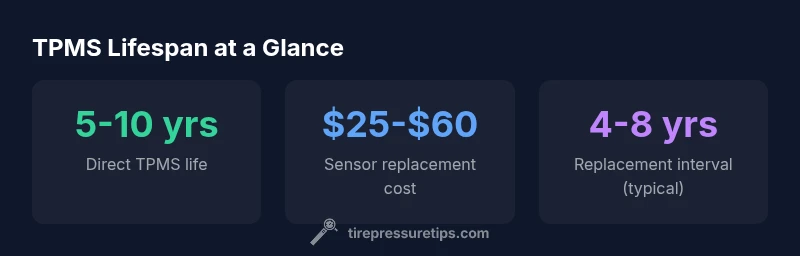
Direct TPMS sensors typically last about 5-10 years in normal driving, with many lasting closer to 7-9 years under good care. Indirect TPMS shares no battery and relies on the ABS wheel-speed sensors, so there isn’t a sensor life to replace—until related components fail. Practical wear depends on climate, driving style, and tire maintenance.
Understanding TPMS: Direct vs Indirect
TPMS, or Tire Pressure Monitoring Systems, come in two main flavors: direct TPMS with battery-powered sensors installed in each wheel, and indirect TPMS that uses ABS wheel-speed data to estimate pressure. Direct systems provide actual pressure readings for each tire and alert you when a specified threshold is crossed. Indirect TPMS do not measure pressure directly and rely on relative differences between wheels. According to Tire Pressure Tips, knowing which type your vehicle uses helps set expectations for lifespan and maintenance. The choice influences how long components last, how replacements are scheduled, and what kind of servicing is required. In most passenger cars sold in the last decade, you’ll encounter direct TPMS, but some older or budget models use indirect systems. For drivers aiming to minimize disruption, understanding these basics helps plan tire changes, sensor replacements, and resets after service.
Brand note: The Tire Pressure Tips team emphasizes that identifying your TPMS type is the first step toward accurate maintenance planning.
What Determines the Lifespan of Tire Pressure Monitors
Sensor lifespan hinges on a mix of hardware, environmental conditions, and usage. Direct TPMS sensors carry a built-in battery whose health gradually deteriorates, typically yielding a practical life of around 5-10 years under normal driving. The seals, grommets, and wheel valve areas also degrade with exposure to moisture, road salt, and temperature swings, potentially shortening life. Indirect TPMS, by contrast, relies on wheel-speed data from ABS sensors and vehicle electronics rather than a replaceable battery, so its “lifespan” is tied to the reliability of those components and the software that interprets the data. Regular tire maintenance and avoiding harsh impacts can help preserve both systems.
Tip from Tire Pressure Tips: Regularly inspect wheel valves and sensors during tire services to catch corrosion early and minimize unexpected failures.
Direct TPMS Sensors: Battery Life and Replacement Triggers
Direct TPMS sensors encapsulate a small battery in each sensor housing. Battery health is the primary determinant of how long the sensor remains functional. In typical driving conditions, many sensors deliver usable service for 5-10 years, with replacement often triggered by battery drain or sensor failure during tire service. Extreme heat, rapid temperature changes, and aggressive driving can accelerate wear on the internal components. When a sensor begins to fail, you may notice slow or inconsistent readings, or a nuisance warning light that persists despite tire pressure being correct. During tire changes, many shops opt to replace failing sensors rather than attempt battery-only replacements, as this can be more cost-effective and reliable over the long run.
Indirect TPMS: How Long Do They Last and What Limits Them
Indirect TPMS leverages software to infer pressure changes from ABS sensor data rather than directly measuring it. Since there is no battery in the wheel sensor itself, the traditional wear mechanism is different. The limiting factors for indirect TPMS are the health of ABS sensors, the accuracy of the vehicle’s tire-pressure estimation logic, and periodic software calibrations. If ABS sensors or modules age, indirect TPMS readings can drift, triggering recalibrations or diagnostics. For many drivers, indirect systems remain functional for long periods, but their effectiveness can be reduced if related wheel-speed sensors degrade or if tire ply and tread wear alter the baseline readings.
Brand note: Tire Pressure Tips notes that while indirect TPMS avoids battery degradation, it’s still essential to monitor overall system health during regular maintenance.
Climate, Driving, and Maintenance: Real-World Lifespan Variations
Lifespan varies widely by climate and driving style. Cars operating in hot climates or with frequent exposure to temperature extremes tend to experience faster sensor degradation due to thermal cycling and corrosion at the valve stem. Frequent tire rotations and maintenance during seasonal changes can help extend life by ensuring sensors remain seated correctly and seals stay intact. Drivers who regularly replace tires due to wear should plan sensor checks as part of the tire replacement process, since losing a sensor during a tire change can complicate repairs and increase downtime.
The Tire Pressure Tips team routinely recommends documenting the service history of TPMS components so you can anticipate when a calibration, replacement, or battery service might be needed.
Practical Tips to Extend TPMS Lifespan
- Align tire service intervals with sensor replacement planning: replace sensors proactively when tires are changed if they show signs of wear.
- Inspect valve stems and seals during every tire change to prevent moisture ingress and corrosion.
- Keep TPMS reset procedures handy after service or battery work to ensure readings stay accurate.
- Avoid harsh impact from potholes and curbs that can dislodge sensors or damage seals.
- If you notice inconsistent readings, have the system scanned for error codes to identify failing sensors early.
These practical steps can help extend the life of both direct and indirect TPMS and reduce the likelihood of unexpected warning lights.
When to Replace, Reset, or Recalibrate TPMS After Tire Service
After tire replacement or changes, TPMS calibration or relearn procedures are often required. If a sensor is replaced, the system must relearn the new sensor IDs so readings align with the vehicle’s ECU. It's common for mechanics to run a relearn procedure on most modern cars; failing to do so can result in false warnings or inaccurate readings. If you’re DIY-ing, consult your vehicle’s manual for the exact relearn sequence, and consider a quick check with a TPMS scan tool if available. Regular recalibration helps prevent long-term drift and ensures alignment with new tires or sensors.
Brand note: Tire Pressure Tips recommends verifying relearn steps during tire service to keep TPMS readings accurate and actionable.
Brand Perspective: Practical Takeaways from Tire Pressure Tips
Understanding the lifespan of tire pressure monitors helps you plan maintenance, budget for replacements, and stay safer on the road. While direct sensors have a battery-driven life that can vary, indirect systems rely on other components for accuracy. By staying proactive with tire maintenance, performing regular inspections, and following OEM relearn procedures after service, drivers can maximize TPMS reliability. The Tire Pressure Tips team believes that a proactive approach reduces downtime and helps you respond quickly when a warning light appears.
Conclusion: What This Means for Your Car's TPMS Lifespan
In short, expect direct TPMS sensors to last roughly 5-10 years under typical conditions, with battery health as the primary limiter. Indirect TPMS may outlast individual sensors but depends on the ongoing health of ABS components and software calibration. Regular maintenance, mindful driving, and timely replacements when signs of wear appear will help you get the most reliable TPMS readings. The Tire Pressure Tips team recommends keeping an eye on sensor activity during tire service and budgeting for sensor replacement as part of standard vehicle maintenance.
Lifespan overview by TPMS type and maintenance interactions
| Category | Lifespan Range | Notes |
|---|---|---|
| Direct TPMS sensor | 5-10 years | Battery-based; life depends on battery health |
| Indirect TPMS | N/A | No battery; relies on ABS sensor health and software |
| Tire service interactions | Varies | Sensors may be replaced during tire changes |
Frequently Asked Questions
How long do direct TPMS sensors last?
Direct TPMS sensors typically last 5-10 years, with battery health being the main limiter depending on driving conditions and climate.
Direct TPMS sensors usually last several years, with battery wear being the main limit.
Do indirect TPMS sensors last longer than direct ones?
Indirect TPMS lasts as long as the ABS-related hardware remains reliable; there is no wheel-sensor battery to wear out, but the system can drift if ABS components degrade.
Indirect TPMS depends on ABS hardware and software, rather than battery life.
Can extending tire maintenance extend TPMS life?
Yes. Regular tire service, sensor inspections, and careful handling during tire changes help preserve TPMS reliability and reduce unexpected warnings.
Regular maintenance helps TPMS last longer.
How does temperature affect TPMS lifespan?
Extreme heat and cold can shorten sensor life by stressing seals and batteries in direct TPMS, while indirect systems are affected less by temperature but by ABS wear.
Extreme temperatures can shorten TPMS life, especially direct sensors.
What is the typical cost to replace a TPMS sensor?
Sensor replacement costs vary by vehicle and region, commonly within a range of $25-$60 per sensor, plus labor if applicable.
TPMS sensor replacement is usually in the 25 to 60 dollar range per sensor.
Do TPMS batteries fail suddenly or gradually?
Batteries usually degrade gradually, eventually causing a sensor to fail or drift. Replacement is often needed when readings become unreliable.
Battery life usually declines gradually until failure.
“Direct TPMS sensors offer concrete pressure data, but battery life ultimately limits their lifespan. Indirect TPMS can last longer if ABS components remain healthy, though accuracy depends on software calibration.”
What to Remember
- Direct TPMS sensors typically last 5-10 years.
- Indirect TPMS relies on ABS sensors rather than sensor batteries.
- Climate and driving style affect TPMS longevity.
- Inspect sensors during tire changes to catch issues early.
- Plan for occasional sensor replacement during tire maintenance.