FOBO TPMS: A Practical How-To Guide for Tire Pressure Monitoring
Learn how to install, pair, calibrate, and maintain FOBO TPMS sensors for reliable tire pressure monitoring. This step-by-step guide covers compatibility, tools, troubleshooting, and tips to keep your tires properly inflated.


FOBO TPMS sensors provide wireless, app-driven tire pressure monitoring via external valve-stem sensors that pair with a smartphone. This guide outlines how to choose a FOBO kit, install sensors on each wheel, pair them in the app, calibrate readings, and perform basic maintenance. Following these steps will improve visibility into tire pressure and help prevent underinflation, boosting safety and efficiency.
What FOBO TPMS is and why drivers choose it
FOBO TPMS is a popular aftermarket tire pressure monitoring system that uses external, battery-powered sensors mounted on each wheel’s valve stem. The sensors transmit tire pressure data wirelessly to a companion smartphone app, providing real-time readings, alerts, and historical trends without relying on the vehicle’s built-in TPMS. According to Tire Pressure Tips, FOBO TPMS offers a practical, quick-to-install alternative for drivers who want direct visibility into pressure conditions across all four corners. The system can help you spot gradual leaks, avoid unsafe underinflation, and maintain optimal performance. This section explains what makes FOBO TPMS a compelling option for many cars and trucks, including compatibility considerations, installation steps, and everyday use scenarios.
How FOBO TPMS integrates with your vehicle's TPMS ecosystem
FOBO TPMS sensors are designed to be vehicle-agnostic when used as a stand-alone monitoring solution. They do not replace your car’s OEM TPMS, but provide parallel data that you can monitor via the FOBO app. The app displays current pressures, tire temperatures, and a status for each wheel. If a pressure drops or rises outside your preset alert thresholds, the app sends you a notification. This dual-layer approach helps drivers confirm OEM TPMS warnings while giving a direct readout from the tires themselves. When choosing FOBO, check compatibility with your vehicle's wheel configurations (some cars have run-flat tires, different valve stems, or aftermarket wheels).
Selecting the right FOBO kit for your vehicle and needs
FOBO sells multiple sensor kits, including four-wheel sets and kits with extra accessories. Consider tire sizes, wheel types, and whether you want a simple four-sensor setup or a kit that includes mounting hardware and spare valve caps. In many cases, a basic four-sensor FOBO kit aligns with most passenger cars, SUVs, and light trucks. If you have unique wheels (run-flat tires, aftermarket rims, or specialty vehicles), verify sensor compatibility and mounting hardware with the supplier or installation guide. The goal is secure seating on the valve stem and reliable wireless transmission to the app to avoid false alerts.
Preparing for installation: safety, prep, and planning
Before you start, gather your FOBO sensor kit, a fully charged smartphone, and a clean, flat workspace. Park on level ground away from traffic and allow tires to cool for at least 30 minutes if you’ve been driving. Inspect each wheel for damage around the valve stem and keep valve caps nearby. Have a clean microfiber cloth to wipe stems, a digital tire gauge to cross-check readings, and a readable installation guide. If you’re new to TPMS work, review safety warnings about pressurized tires and sharp edges around rims. Proper planning reduces mistakes and increases the likelihood of a successful setup.
Installing FOBO TPMS sensors on each wheel
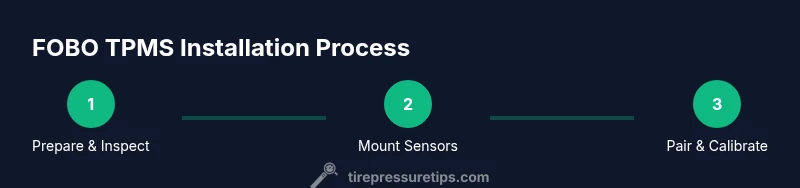
Begin with a single wheel and attach the FOBO sensor to the valve stem per the kit’s instructions. Ensure the gasket seals well and the sensor is snug but not over-tightened. Repeat for all wheels, keeping sensors oriented consistently (e.g., sensors facing outward and clear of brake components). After mounting, visually inspect each valve area to ensure no interference with wheel hardware or tire bead seating. This step establishes a solid physical foundation for reliable wireless communication with the app.
Pairing sensors with the FOBO app and initial calibration
Power on your phone and open the FOBO app. Add a new vehicle or wheel group, then initiate pairing. The app will scan for sensors on each wheel and assign them to positions (FL, FR, RL, RR). If the sensors don’t appear immediately, you may need to rotate a wheel slightly or press a pairing button on the sensor. After pairing, start a basic calibration by following the on-screen prompts, which may include driving a short distance to let the sensors calibrate their offsets. Keep tires cold during this process for accuracy.
Calibrating sensors and verifying readings
Calibration aligns the sensor data with your vehicle’s expected baseline. In the FOBO app, enter or confirm target tire pressures for each wheel and enable your alert thresholds. Once calibrated, compare FOBO readings with a handheld tire gauge on each wheel to verify accuracy. If a wheel shows a large discrepancy, recheck sensor seating and re-calibrate. Regular verification helps identify sensor drift or mounting issues before they become problems.
Common issues and quick troubleshooting
Some users experience delayed alerts, weak Bluetooth connections, or inconsistent readings. Check that each sensor is properly mounted and that the app has the necessary permissions and Bluetooth access. Ensure your phone stays within range of the sensors, and keep the app updated. If readings vary by more than a few psi versus a gauge, re-seat the sensor, re-calibrate, or contact FOBO support for compatibility tips with your rims.
Maintenance, battery life, and replacements
FOBO sensors are battery-powered; their longevity depends on usage and climate. If you notice weaker signal strength or slower updates, consider replacing sensors in pairs to keep performance balanced. Keep valve stems clean and free from corrosion, and protect sensors from harsh impacts. Periodically check seals and replace worn valve caps to prevent leaks that could skew readings.
Driving with FOBO: day-to-day experience and expectations
Once set up, FOBO TPMS provides continuous visibility into tire pressures wherever you drive. You’ll get alerts if a tire drops below your threshold or if a temperature spike indicates a potential issue. This hands-on monitoring can change your maintenance routine by encouraging proactive checks before trips and after long drives. With a consistent calibration and good app hygiene, FOBO becomes a reliable co-pilot for tire health.
Safety considerations and limitations
FOBO TPMS complements but does not fully replace OEM TPMS. It’s important to verify that critical pressure warnings still appear on your vehicle’s dashboard if your car supports TPMS alerts. Do not rely solely on the FOBO app for safety-critical decisions about tire health; use it as an additional data source alongside physical gauges and vehicle indicators.
Next steps and advancing your FOBO usage
As you gain experience, consider using FOBO’s advanced features like historical pressure trends, temperature tracking, and per-wheel alert customization. If you rotate tires or switch wheels, update the sensor positions in the app to maintain accurate monitoring. Over time, you’ll build a reliable tire health routine that complements routine maintenance and improves overall vehicle safety.
Tools & Materials
- FOBO TPMS sensor kit (4 sensors)(Four sensors, one per wheel; verify compatibility with your vehicle's valve stems)
- Smartphone with Android or iOS and the FOBO app(Bluetooth enabled; keep app updated)
- Valve core tool(Used to install sensors and ensure seal seating)
- Digital tire pressure gauge(Cross-check FOBO readings for accuracy)
- Microfiber cloth(Clean valve stems and sensor seating areas)
- Owner's manual or FOBO installation guide(Reference for model-specific steps)
- Safety gloves(Optional protection when handling wheels)
Steps
Estimated time: 30-60 minutes
- 1
Prepare the install space
Park on a flat surface, ensure tires are cold, and lay out all components. Inspect wheels for damage near the valve stems and gather the tools you’ll need. Cleaning the stems helps achieve a secure seal before sensor installation.
Tip: Wear gloves to protect hands from sharp edges and hot components; confirm torque specs after wheel work. - 2
Attach FOBO sensors to all four wheels
Screw the FOBO sensors onto each valve stem per the kit’s instructions. Check for a snug fit and seal around the stem. Avoid overtightening to prevent sensor damage or valve stem leaks.
Tip: Hand-tighten first, then give a small additional turn with a wrench if the kit specifies. Double-check clearance from brake components. - 3
Power up and pair in the FOBO app
Enable Bluetooth and start the FOBO app. Add a new vehicle/group and initiate sensor pairing. Assign each sensor to a wheel position and name them clearly (FL, FR, RL, RR).
Tip: If a sensor doesn’t appear, rotate the wheel a bit or follow the sensor’s pairing prompt; ensure the app has location permissions for the best results. - 4
Calibrate initial offsets
Follow prompts in the app to calibrate sensor offsets. This usually involves confirming baseline pressures when tires are cold and allowing the system a moment to learn the wheel position data.
Tip: Keep tires cold during calibration for the most accurate baseline readings. - 5
Verify readings with a gauge
Cross-check a few wheels with a digital tire gauge to confirm that FOBO readings align with physical measurements. If there’s a discrepancy, re-seat the sensor and re-calibrate.
Tip: Document any persistent discrepancies and repeat calibration after a short drive. - 6
Test drive and confirm alerts
Take a short test drive and observe how the app reports pressures and alerts. Ensure you receive notifications for underinflation or abnormal temperature changes.
Tip: Set alert thresholds to match your vehicle’s recommended pressures and your driving conditions.
Frequently Asked Questions
What is FOBO TPMS and how does it differ from OEM TPMS?
FOBO TPMS is an aftermarket system using external sensors to monitor tire pressure and transmit data to a smartphone app. It runs alongside the vehicle’s factory TPMS, offering direct tire readings in addition to OEM warnings. This can enhance visibility, especially on older cars or wheels without built-in sensors.
FOBO TPMS is an aftermarket system with external sensors that send pressure data to a phone app, working alongside your car’s built-in TPMS for extra visibility.
Can FOBO sensors be used on all vehicles?
Most passenger cars, SUVs, and light trucks can use FOBO sensors, but compatibility depends on wheel design and valve stems. Always check the kit’s compatibility notes and the vehicle’s wheel configuration before purchasing.
Most common cars work with FOBO sensors, but check wheel design and valve stems before buying.
How long do FOBO TPMS batteries last?
Battery life varies with usage and climate, but FOBO sensors are designed for multi-month to multi-year operation in typical driving conditions. Replace sensors as needed when performance declines.
Batteries last for many months, sometimes years, depending on use; replace sensors when performance drops.
Do I need to re-calibrate after tire changes?
Yes. After tire changes or wheel swaps, re-pair and recalibrate the sensors in the FOBO app to ensure continued accuracy.
Yes, re-pair and recalibrate after tire changes to keep readings accurate.
Will FOBO TPMS replace my car’s TPMS warnings?
FOBO complements OEM TPMS by providing additional data. It should not be the sole source for critical warnings; rely on the vehicle’s dashboard indicators as well.
FOBO adds data but don’t rely on it alone for warnings; use your car’s TPMS indicators too.
What maintenance is recommended for FOBO TPMS?
Periodically inspect sensor seating, clean valve stems, and verify app data accuracy. Replace worn sensors and keep the app updated to ensure reliable alerts.
Regularly check seating and app data, clean stems, and replace old sensors as needed.
Watch Video
What to Remember
- Choose a FOBO kit compatible with your vehicle and wheels.
- Install sensors on cold tires and verify seating for accuracy.
- Pair sensors in the FOBO app and calibrate offsets per wheel.
- Cross-check FOBO data with a handheld gauge regularly.
- Use alerts and logs to maintain consistent tire pressure health.