Chevrolet Traverse Tire Pressure Sensor Troubleshooting Guide
Urgent guide to diagnose and fix Chevrolet Traverse tire pressure sensor (TPMS) warnings, including relearn steps, sensor checks, and safety tips from Tire Pressure Tips.


If the TPMS warning illuminates, the most likely cause is low tire pressure or a faulty TPMS sensor. Start by checking all tires with a gauge and bringing them to the recommended pressure. If readings are correct, perform a TPMS relearn or consult a technician to replace a failing sensor.
What is the Chevrolet Traverse tire pressure sensor (TPMS) and why it matters
The Chevrolet Traverse tire pressure sensor, part of the vehicle's TPMS, continuously monitors air pressure in each tire and alerts you if any tire drops below the recommended level or if a sensor malfunctions. Maintaining proper tire pressure improves safety, tire wear, braking performance, and fuel economy. For drivers, understanding the Chevrolet Traverse tire pressure sensor helps reduce nuisance warnings and ensures you can act quickly when a warning appears. According to Tire Pressure Tips, knowing TPMS basics equips you to handle warnings confidently and safely.
Signs your TPMS might be failing or misreading
TPMS warnings can show up in several ways. A steady warning light on the dashboard, a fluctuating pressure reading on the display, or frequent resets after tire service can indicate TPMS trouble. You might also notice that the warning appears even when tire pressures are within the recommended range, suggesting a sensor fault or relearn needed. In the Chevrolet Traverse, an illuminated TPMS light typically means one of your tires is low, or there is a sensor/battery issue. If the warning persists after verifying pressures, plan for a deeper check.
Common causes of TPMS warnings in the Chevrolet Traverse
Several factors can trigger TPMS warnings:
- Low tire pressure in one or more tires
- A faulty TPMS sensor or dead sensor battery
- A sensor that needs relearning after tire rotation or replacement
- A damaged valve stem or wheel rim that affects sensor readings
- Interference from recent tire service or a wheel swap. Recognizing these helps you target the fix efficiently and avoid unnecessary work.
Quick checks you can perform safely
Start with simple, safe checks:
- Use a reliable tire pressure gauge to verify every tire’s pressure against the manufacturer’s recommendation printed on the door jamb or in the owner’s manual.
- Check the spare tire if your Traverse includes it, as some systems monitor it too.
- Inspect tires for visible damage or slow leaks (nail, puncture, or bead seal problems).
- If one tire is consistently low, rotate tires to rule out a sensor reading bias. Remember to recheck pressures after any adjustment.
Diagnostic Flow for TPMS issues
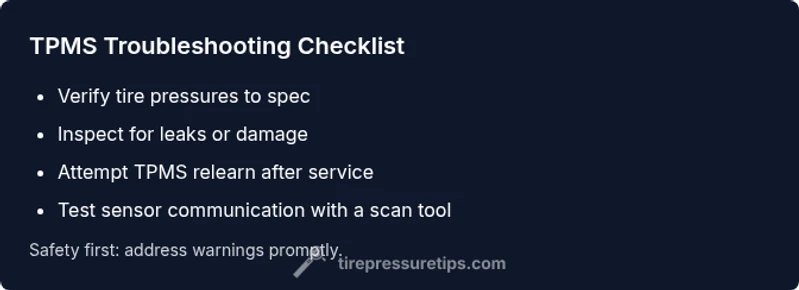
A structured diagnostic path helps isolate issues quickly. Start with the most common, easiest checks (pressure verification, visible leaks). If the TPMS light remains on after confirming correct pressures, proceed to sensor-related checks (battery life, sensor position, relearn needs). If you still cannot resolve the warning, escalate to professional service for sensor testing or replacement.
Step-by-step: Relearning TPMS after tire maintenance
- Ensure all tires are within the recommended pressure and the vehicle is on a level surface.
- Access the TPMS relearn procedure from the Traverse’s driver information display or the vehicle settings menu (refer to the owner’s manual for exact steps).
- Initiate the relearn process and drive at a steady speed (typically around 30–50 mph) for 10–15 minutes to allow sensors to relearn.
- Confirm each sensor is communicating by observing the TPMS warning light behavior or using a scan tool.
- If the light remains or sensors don’t respond, inspect the sensor valves for damage or remove and re-seat them, or schedule a professional relearn.
Maintenance, safety, and best practices
Keep the TPMS system healthy by performing regular tire pressure checks, especially before long trips or seasonal temperature changes. Always follow the recommended pressures for the Traverse, and consider scheduling sensor checks when rotating tires or replacing rims. Safety first: never drive with significantly underinflated tires, and get sensor issues addressed promptly to avoid tire failure or compromised handling.
When to seek professional help
If you notice repeated TPMS warnings after confirming pressures and attempting a relearn, seek professional help. A technician can diagnose sensor battery health, wiring faults, or module issues and perform TPMS sensor replacement or recalibration with proper tools. Timely professional attention ensures accurate readings and maintains safety on the road.
Steps
Estimated time: 20-45 minutes
- 1
Verify tire pressures
Use a trusted gauge to confirm all tires are within the vehicle’s recommended range. Compare against the door jamb label or owner’s manual to ensure accuracy.
Tip: Record the readings for future reference. - 2
Inspect tires for leaks or damage
Look for nails, screws, cracks, or bead leaks. If you find a leak, address it before continuing or replace the affected tire.
Tip: Ventilate the area and avoid overheating tires during inspection. - 3
Attempt a TPMS relearn
From the Traverse's settings, locate the TPMS relearn option and start the process. Drive at a steady speed for 10–15 minutes to allow sensors to re-sync.
Tip: If you can’t locate relearn, consult the owner’s manual or dealer. - 4
Test sensor communication
Use a scan tool to verify each sensor responds and reports proper pressure. If a sensor doesn’t respond, it may be faulty.
Tip: Avoid removing sensors unnecessarily to prevent damage. - 5
Decide on next steps
If the warning persists, consider sensor replacement or professional diagnosis. Do not ignore the warning for long.
Tip: Safety first: replace tires or sensors promptly if readings are unreliable.
Diagnosis: TPMS warning light on dashboard or inconsistent TPMS readings in a Chevrolet Traverse
Possible Causes
- highLow tire pressure in one or more tires
- mediumTPMS sensor battery dead or sensor fault
- lowSensor relearn required after tire service or rotation
Fixes
- easyCheck all tire pressures with a gauge and bring them to the recommended level
- mediumRelearn TPMS using the vehicle’s procedure or professional tool; replace faulty sensor if needed
- hardInspect or replace TPMS sensors or valves if a sensor battery is dead or the sensor is damaged
Frequently Asked Questions
What causes the TPMS warning light to come on in a Chevrolet Traverse?
Common causes include low tire pressure, a faulty TPMS sensor, a dead sensor battery, or a sensor that needs relearning after service. Start by checking all tires and confirming correct pressures.
The TPMS warning usually signals low tire pressure or a sensor fault. Start by checking all tires, then consider relearning the sensors if you recently serviced a tire.
How do I relearn TPMS on a Chevrolet Traverse?
Most Chevrolet Traverse models use a relearn procedure accessed through the vehicle settings or by initiating a specific TPMS relearn menu. After enabling relearn, drive at moderate speed for several minutes to complete the process.
Use the car’s TPMS relearn option in settings, then drive at a steady speed for a few minutes to finish.
Is a faulty TPMS sensor expensive to replace?
Sensor replacement varies by region and vehicle model. Expect a range of costs for the part and professional labor; some shops offer sensor replacement packages.
Sensor replacement costs vary; talk to your shop about parts and labor prices for TPMS sensors.
Can I drive with a TPMS warning?
If tire pressures are within safe limits, you can drive short distances to reach a repair location. If pressures are low, reduce speed and seek service promptly to prevent tire failure.
You can drive short distances if the tires are properly inflated; otherwise get service as soon as possible.
How can I preserve TPMS sensor life?
Regular checks, avoiding hit-to-curb damage, and replacing tires with sensors when needed helps extend TPMS life. Avoid unnecessary sensor removal.
Keep an eye on pressures and avoid damaging sensors; replace tires with sensors as required.
Watch Video
What to Remember
- Check tire pressure before chasing sensor faults
- Relearn TPMS after tire service or rotation
- Replace sensors only when tests confirm fault
- Seek professional help for sensor replacement and calibration