Cheap Tire Pressure Sensor Replacement: DIY Guide to Save Money
Discover budget-friendly steps to replace a tire pressure sensor, compare DIY vs professional options, confirm sensor compatibility, and perform TPMS relearn to keep readings accurate.


Replacing a TPMS tire pressure sensor on a budget is achievable with a compatible sensor kit and a basic relearn procedure. You’ll save money by doing it DIY, but verify compatibility with your vehicle, and follow the relearn steps to restore accurate readings. If you're unsure, consult a mechanic for safety.
Why cheap tire pressure sensor replacement matters
The price tag on TPMS sensors can vary, but the real value comes from safety and reliability. If your vehicle shows a false low-pressure warning or the TPMS light stays on, you could be running underinflated tires, increasing wear and risk. The Tire Pressure Tips team emphasizes that a budget-friendly replacement is not about sacrificing quality; it’s about selecting the right sensor type for your car and ensuring you can perform the necessary relearn. In many cases, a compatible universal sensor paired with the correct relearn procedure can deliver the same performance as an OEM part at a fraction of the cost. By approaching replacement systematically—confirm compatibility, gather the right tools, and follow a proven relearn method—you reduce the chance of rework or sensor errors. This section helps you map out whether going cheap makes sense for your vehicle and how to avoid common pitfalls in the process.
TPMS sensor types and how to tell if a replacement is compatible
There are several sensor options: OEM sensors designed for specific makes and models; universal or aftermarket sensors that claim broad compatibility; and valve-stem sensors integrated with the stem itself. Compatibility is not just about the wheel; it’s about the car’s TPMS protocol, sensor frequency, and the relearn method your vehicle requires. When you shop, check the vehicle fitment list, or consult a compatibility chart from a reputable source. If you’re aiming for cheap tire pressure sensor replacement, a universal sensor paired with a certified relearn tool can save money while preserving accuracy. Always verify the sensor’s communication frequency (EU vs US standards) and whether the sensor uses a direct-replace or an indirect approach in your vehicle’s system. The goal is to prevent nuisance warnings and ensure accurate readings after install.
DIY vs professional: costs, time, and risk
DIY replacement can significantly cut labor costs and allow you to control the parts you buy. The risk is that you may encounter hidden steps, such as properly seating the sensor, ensuring a leak-free seal, and performing a proper relearn. Tire Pressure Tips analysis shows that many drivers save money by handling the replacement themselves, but only when they have the right tools and guidance. If you fail to relearn or damage a wheel during removal, the cost may exceed the savings. For complex setups (sport models or vehicles with transient codes), professional service ensures correct torque, sensor seating, and a valid relearn. In short, DIY works well for straightforward vehicles with compatible sensors, while complex cases or uncertain relearns are better handed to pros.
Selecting the right sensor: universal vs OEM
Choosing between OEM and universal sensors comes down to compatibility, warranty implications, and installation ease. OEM sensors usually guarantee perfect fit but cost more; universal sensors bring lower upfront price but require careful matching of frequency, protocol, and relearn method. If you drive a common model with broad aftermarket support, a universal sensor from a reputable brand can offer reliable performance. Ensure the sensor is rated for direct replacement and that the package includes a valve stem, grommets, and a relearn method. Also check if your vehicle requires a special relearn procedure, such as a drive cycle, button sequence, or tool-based reset. The right sensor should deliver consistent readings, enough battery life, and a workable warranty.
Relearn and calibration: essential steps for accurate readings
After installing a new sensor, you must relearn the TPMS to calibrate the system to the new hardware. Relearn methods vary: some vehicles perform automatic relearn after driving a set distance; others require a specific sequence or a relearn tool. The Tire Pressure Tips approach is to verify the relearn method in the owner's manual and then execute it in a controlled session. Avoid driving long distances with an unlearned sensor, as the system will continue to display warnings and may misreport pressures. Calibrate by following the exact steps for your vehicle and, if possible, double-check with a TPMS scan tool or your vehicle’s onboard system to confirm that all four sensors report correctly.
Common pitfalls and troubleshooting tips
Weak opportunities: overtightening the valve cap, not seating the tire bead correctly, or ignoring the drive cycle required for relearn can cause false readings. Always replace the valve core if corroded; verify that the wheel weight is balanced; check tire pressures when cold; and ensure no leaks around the valve stem. If the TPMS light stays on after installation, recheck the relearn sequence, inspect the seal, and confirm the sensor's battery status. For stubborn warnings, a professional reset or a dealership tool may be necessary.
Maintenance after replacement to extend sensor life
To maximize lifespan of the new sensor, keep tire pressures within recommended range, rotate tires as scheduled, and inspect valves during routine maintenance. Avoid slamming tires against curbs or hitting potholes; these can damage sensors or seals. If you regularly drive in extreme temperatures, monitor the sensor battery life and consider periodic checks with a TPMS tool. By treating the sensor as part of your vehicle’s tire maintenance routine, you extend its life and preserve accurate readings.
Tools & Materials
- Replacement TPMS sensor (universal or vehicle-specific)(Confirm compatibility with your vehicle and frequency; some vehicles require a relearn tool.)
- Valve core tool / valve stem removal tool(For removing the old valve core and installing the new sensor.)
- Tire removal tools (jack, lug wrench, tire iron)(To access the wheel and TPMS sensor.)
- Torque wrench for lug nuts(Use the vehicle’s specified torque for lug nuts after mounting.)
- TPMS relearn tool or access to dealer/shop system(Some vehicles require a dedicated relearn procedure.)
- New valve stem seal/gasket and spare valve core(Replace if corroded or leaking.)
- Safety gear (gloves, eye protection)(For protection during wheel removal and sensor replacement.)
- Tire bead sealant or lubricant(Helpful when reseating the tire bead.)
Steps
Estimated time: 60-90 minutes
- 1
Verify compatibility and gather tools
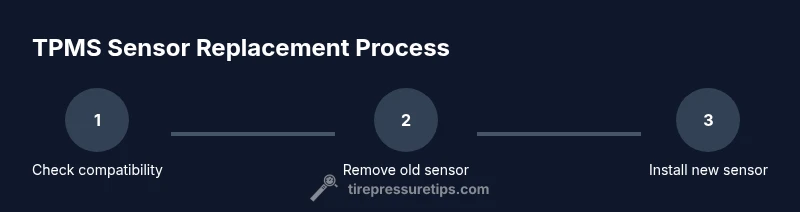
Check your vehicle’s TPMS type (direct sensor vs indirect system), confirm sensor frequency, and identify the relearn method. Gather all tools and parts before you start to prevent mid‑job trips to the parts store.
Tip: Double‑check the exact sensor fitment for your year/make/model in the owner’s manual or a trusted guide. - 2
Safely lift the vehicle and remove the wheel
Park on a level surface, engage the parking brake, and lift the vehicle with a jack per the manual. Remove the lug nuts with a wrench and take the wheel off to access the TPMS sensor.
Tip: Use wheel chocks on the opposite tire to prevent movement. - 3
Access and remove the old TPMS sensor
Deflate the tire enough to unseat the bead if needed, then locate and remove the valve stem cap. Disconnect the old sensor and carefully remove it from the wheel.
Tip: Keep the tire bead intact to avoid bead damage during removal. - 4
Install the new sensor and reseat the bead
Install the new sensor with the correct orientation and seal. Refit the tire bead and inflate to the recommended pressure before remounting the wheel.
Tip: Ensure the sensor is seated securely and the valve stem is straight. - 5
Reinstall the wheel and torque lug nuts
Mount the wheel, hand‑tighten lug nuts, then torque to the vehicle’s specification using a torque wrench.
Tip: Tighten in a star pattern to ensure even seating. - 6
Perform relearn and verify readings
Follow your vehicle’s relearn procedure, using automatic drive‑cycle, a relearn tool, or dealer instruction. Verify all four sensors report correctly via the vehicle display or a TPMS tool.
Tip: Test the system by driving cold and checking for warning light status.
Frequently Asked Questions
Can I replace a TPMS sensor myself?
Yes, many drivers replace TPMS sensors themselves using the right sensor, tools, and relearn method. Some vehicles may require professional assistance for the relearn step or to verify sensor health.
Yes, you can replace TPMS sensors yourself with the proper tools and relearn method. Some vehicles may need professional help for the final verification.
Are cheap TPMS sensors reliable?
Cheap or universal sensors can be reliable if sourced from reputable brands and installed correctly, with attention to compatibility and relearn requirements.
Cheap sensors can be reliable if they fit your car and are installed and relearned properly.
Do I always need a relearn after replacement?
Most vehicles require a relearn or reset after sensor replacement. Check your owner’s manual or use a relearn tool to ensure all sensors are recognized.
Most cars need a relearn after sensor replacement; check your manual for the exact steps.
How long does replacement take?
DIY replacement typically takes about one to two hours for a full wheel, depending on tool access and experience. Professional service can be faster but costs more.
It usually takes about an hour or two for a DIY replacement, depending on your setup.
What is the cost range for a replacement?
Costs vary by sensor type and vehicle, but DIY can be cheaper than professional service when you already own the tools. Expect parts plus any relearn tool or dealership fees if needed.
Costs vary; DIY is usually cheaper, especially if you already own the tools, but check for relearn tool requirements.
Watch Video
What to Remember
- Verify compatibility before buying parts
- Follow vehicle-specific relearn steps to avoid warnings
- DIY can save money on straightforward vehicles
- Inspect valves and seals to prevent leaks after replacement