Portable Tire Pressure Tools: A Practical On-The-Go Guide
Learn how to check and maintain tire pressure with portable tools such as gauges and inflators. This comprehensive, on-the-road guide covers selection, usage, safety, and maintenance for reliable readings anywhere.


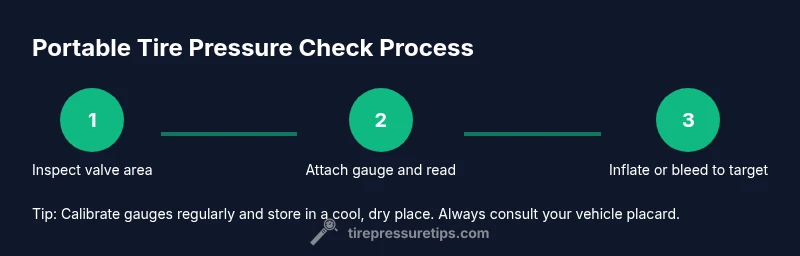
According to Tire Pressure Tips, tire pressure portable tools empower drivers to check and adjust tires anywhere, without relying on a gas station pump. This quick-guide explains how to choose portable gauges, use inflators safely, and maintain accuracy on the road. You'll learn essential steps for on-the-go tire care, plus tips to avoid common mistakes.
Why portable tire pressure tools matter
Maintaining proper tire pressure is a foundational safety habit for every driver. When you think about tire pressure portable tools, you’re equipping yourself with the ability to check and adjust pressure anywhere, without relying on a gas station pump. The Tire Pressure Tips team notes that consistent, on-the-go checks help prevent uneven tire wear, improve fuel efficiency, and reduce the risk of flats or blowouts, especially on long trips or in extreme temperatures. A portable setup also makes it easy to verify that your vehicle remains within the manufacturer’s recommended psi range after adjustments, changes in load, or seasonal shifts. Whether you own a compact daily driver or a heavier SUV, a compact gauge plus a small inflator can save you money, time, and worry. This is why tire pressure portable tools belong in every car kit.
According to Tire Pressure Tips, the emphasis on portable pressure checks is especially valuable when temperatures swing or when you travel with extra cargo. By keeping a lightweight gauge and inflator in your glove box or trunk, you can respond quickly to pressure changes before they affect handling, fuel economy, or tire wear.
-Tag:
Tools & Materials
- 12V Portable air compressor / inflator(Cigarette-lighter powered or USB-rechargeable; check max psi and built-in gauge.)
- Digital tire pressure gauge(Aim for ±1 psi accuracy; ensure calibration is recent.)
- Tire inflator nozzle and adapters(Include Schrader valve adapters and, if needed, Presta-specific fittings.)
- Vehicle door placard or owner’s manual reference(Know the recommended psi for front and rear tires.)
- Storage bag or organizer(Keeps gear together and protects gauges from dust and drops.)
- Backup power source (optional)(Spare battery pack or portable power bank for long trips.)
Steps
Estimated time: 15-25 minutes
- 1
Prepare your portable kit
Gather your portable air compressor, digital gauge, hoses, adapters, and a storage bag. Check that the gauge reads zero when unplugged or not in contact with air, and ensure the inflator is charged or has a fresh power source. This initial check prevents misleading readings and saves time during the actual inflation.
Tip: Power up the inflator first and verify the gauge's zero setting before touching the tire. - 2
Check current tire pressure
Remove the valve cap and firmly attach the gauge to the valve stem. Note the reading and compare it with the vehicle’s recommended psi from the placard or manual. If the pressure is within range, you can skip inflating; otherwise proceed to add or release air.
Tip: Take readings from a cool tire, ideally after it has cooled for a few minutes. - 3
Set target pressure on the vehicle
Refer to the owner’s manual or door placard for the recommended psi. Input this target into your inflator or use the gauge’s comparison readout to guide adjustments. If you have different front/rear pressures, target accordingly.
Tip: If you’re unsure, start with the lower of the two recommended pressures and test handling after adjustments. - 4
Inflate in small increments
Attach the inflator and add air in small bursts, pausing to recheck with the gauge after each burst. This prevents over-inflation and lets you stop precisely at the target PSI.
Tip: Use short bursts (1–2 psi at a time) and pause to read the gauge. - 5
Bleed or add air to fine-tune
If you’re slightly over the target, use the bleed valve or deflate button to release air in small increments. Recheck after each adjustment.
Tip: Deflate in 1 psi steps to avoid overshooting the mark. - 6
Recheck all pressures
Once you’ve matched the target on each tire, recheck all four readings. Temperature changes and tire heat from driving can shift readings, so verify after a short drive or a cooling period.
Tip: Don’t skip rechecks after a warm-up drive; readings can shift with heat. - 7
Inspect for valve and tire health
Scan the valve stems for cracks, leaks, or damaged caps. Check the tire sidewall for embedded objects or wear indicators. A small leak can render a perfect PSI reading ineffective over time.
Tip: Replace cracked valve caps and hoses to prevent slow leaks. - 8
Store gear properly
Turn off devices, coil hoses neatly, and return gauges to their protective case. Keep batteries charged and ready for the next use. This preserves accuracy and extends device life.
Tip: Store in a cool, dry place away from direct sunlight.
Frequently Asked Questions
What is the best portable tire pressure gauge for accuracy?
Look for digital gauges with a stated accuracy of ±1 psi and regular calibration. Choose a compact, rugged model with a clear display and a wide measurement range to cover most passenger tires.
For accuracy, choose a digital gauge with ±1 psi accuracy and regular calibration. Look for a rugged, clear display for quick readings.
Can I use a portable inflator to fully inflate a tire?
Yes, portable inflators can inflate tires to the recommended psi, but monitor closely and avoid over-inflation. Stop in small increments and recheck with a gauge.
Yes, but inflate in small steps and recheck the pressure to avoid over-inflation.
How often should I check tire pressure with portable tools?
Check at least once a month and before long trips. In extreme temperatures, check more often since pressure can change with temperature.
Check at least monthly and before trips; hot or cold days can shift readings, so inspect more often then.
How does TPMS read vs manual gauge?
TPMS indicates whether a tire is under- or over-inflated, but it doesn’t give an exact psi. A manual gauge provides precise numbers to guide adjustments.
TPMS warns you, but a manual gauge tells you the exact psi so you can set the tires precisely.
What PSI should I set my tires to?
Refer to the vehicle’s door placard or owner’s manual; the recommended psi varies by model, load, and sometimes by temperature.
Check your car’s placard for the exact PSI and adjust based on load and conditions.
Is it safe to inflate a hot tire with a portable inflator?
Avoid inflating hot tires; wait for tires to cool before checking or inflating to avoid inaccurate readings and potential hazards.
Don’t inflate hot tires; readings change with heat, so wait for cooling before inflating.
Watch Video
What to Remember
- Use portable tools to check tires on the go
- Match PSI to the vehicle placard for safety
- Inflate in small bursts and recheck
- Bleed air precisely to target PSI
- Regularly calibrate gauges and store gear properly