Tire Pressure Nozzle: How to Use, Maintain, and Check
Learn how to select, connect, and use a tire pressure nozzle for accurate inflation, plus tips to prevent leaks and maintain steady tire pressure. This Tire Pressure Tips guide covers nozzle types, adapters, and best practices for safe, efficient driving.


Using a tire pressure nozzle connects your inflator to the tire valve for precise inflation and leak prevention. See our detailed steps and tips for choosing adapters and maintaining accurate PSI. This guide reflects Tire Pressure Tips guidance for safe, fuel-efficient driving.
What is a tire pressure nozzle and why it matters
A tire pressure nozzle is the connector that attaches your inflator hose to the tire's Schrader valve so you can inject air without leaks. A good nozzle ensures a snug fit, minimizes air loss, and helps you read the pressure accurately with your gauge. By using the right nozzle, you reduce variation in readings and prevent underinflation or overinflation, which Tire Pressure Tips notes can impact handling and fuel economy.
Types of tire pressure nozzles and connectors
There are several nozzle designs designed for different inflators and tasks. The most common on consumer inflators is the locking or snap-on nozzle that grips the Schrader valve. Some nozzles include built-in swivels or swivel adaptors to improve alignment. Universal adapters bridge mismatches between inflator hoses and valve stems. For precise work, choose a nozzle that forms a tight seal and remains secure under pressure. According to Tire Pressure Tips, investing in a high-quality nozzle reduces air leaks and yields more accurate readings.
How to choose the right nozzle adaptor for your inflator
Start by checking compatibility with your inflator's hose end and your vehicle's valve stem. Look for a nozzle with a secure locking mechanism, a clear visual seal, and a durable seal material (silicone or rubber). If you frequently switch between vehicles or use aftermarket gauges, a universal adaptor kit is worthwhile. Always verify that the nozzle can seat squarely on the valve and that air does not escape when the pump is running. Tire Pressure Tips recommends testing a few adapters on a spare tire before use.
Connecting a tire pressure nozzle to the tire inflator and tire
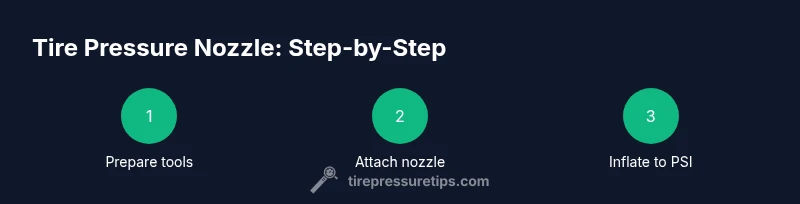
Before you begin, lay out your tools and ensure the nozzle is clean and dry. Attach the nozzle to the inflator hose, then press it onto the tire's Schrader valve. When seated properly, you should feel a secure grip and hear minimal air escaping. If you notice hissing, stop and reseat the nozzle. Connect your gauge or inflator's built-in gauge and set the target PSI to the vehicle's recommended level.
Avoiding leaks and ensuring an accurate reading
To prevent leaks, always wipe the valve stem and nozzle contacts dry, then recheck after a pause. Use the gauge to confirm the pressure reading; if a reading seems off, remove and re-seat the nozzle and retest. Avoid over-tightening or forcing adapters, which can damage the valve core. A quick leak test with soapy water around the valve stem can reveal slow leaks.
Maintenance and storage of the nozzle and accessories
Keep all nozzle parts clean and dry after use. Store adapters in a dedicated case to prevent loss and damage. Periodically inspect seals for wear and replace worn components promptly. If you use your nozzle with multiple inflators, carry a small set of spare O-rings or seals. This practice reduces downtime and extends tool life.
Temperature effects on tire pressure and nozzle use
Tire pressure changes with ambient temperature; cold mornings can drop pressure while hot days can raise it. Use a cold-start pressure check and wait at least 3 hours or drive a short distance for a stable reading if possible. When inflating in cold conditions, target the recommended pressure while accounting for temperature; recheck after a short drive to confirm.
Tools & Materials
- Digital tire pressure gauge(Prefer high accuracy, ±0.5 psi)
- Air compressor or inflator with gauge(Choose one with a reliable gauge; built-in is ideal)
- Tire pressure nozzle adapter (Schrader-compatible)(Check for a secure seal; universal adapters are useful)
- Valve core tool(Useful if you suspect valve stem leaks)
- Soap water spray bottle(For quick leak tests around valve stem)
- Clean, dry cloth(Wipe dry to ensure a proper seal)
Steps
Estimated time: 15-25 minutes
- 1
Gather and inspect tools
Lay out the gauge, inflator, nozzle adapters, and cleaning cloth. Check that the nozzle is clean and dry and that the adapter fits your inflator hose and vehicle valve. A quick inspection helps prevent surprises during inflation.
Tip: If any part feels worn or loose, replace it before starting. - 2
Attach nozzle to inflator hose
Secure the nozzle to the inflator hose according to the manufacturer’s instructions. Ensure the connection is tight and the nozzle is oriented to align with the valve stem for easy seating.
Tip: Do a quick visual check for any gaps or dirt that could cause leaks. - 3
Seat nozzle on valve stem
Press the nozzle squarely onto the Schrader valve stem until it seats firmly. If you hear air escaping, reseat and recheck the seal before inflating.
Tip: If you must wiggle the nozzle to seal, you may be using an incompatible adaptor. - 4
Inflate to target PSI
With the nozzle seated, start inflating and watch the gauge closely. Stop at the vehicle’s recommended PSI from the door jamb label or owner's manual. Do not rely on a rough estimate.
Tip: If the gauge reads quickly rising pressure, pause to recheck after a moment. - 5
Recheck after settling
After inflating, wait 2–3 minutes and recheck the tire pressure. Temperature or air displacement can cause slight changes; adjust as needed.
Tip: For accurate results, check each tire when it’s cold (before driving). - 6
Remove nozzle and cap valve
Carefully remove the nozzle, replace the valve cap, and store the nozzle and adapters in a clean, dry case. This protects components from dirt and damage.
Tip: Wipe away any moisture before storing to prevent corrosion.
Frequently Asked Questions
What is a tire pressure nozzle?
A tire pressure nozzle is the connector that attaches your inflator to the tire valve so you can inflate air without leaks.
A tire pressure nozzle is the connector that fits the inflator to the tire valve so you can inflate air without leaks.
Can I use any nozzle with my inflator?
Most inflators use Schrader-compatible nozzles; check your model and consider a compatible adapter if needed.
Most inflators use Schrader-compatible nozzles, but check yours and consider an adapter if needed.
Why does tire pressure change after inflation?
Pressure can change due to temperature, air settling, and minor leaks. Recheck after a short wait or drive.
Pressure changes with temperature, air settling, and leaks; recheck after a short wait or drive.
How often should I replace valve caps and nozzles?
Inspect for wear regularly and replace worn components to maintain a proper seal.
Inspect for wear regularly and replace worn parts to keep a good seal.
Where can I find the recommended PSI for my car?
The recommended PSI is printed on the driver’s door jamb label or in the vehicle’s owner’s manual.
Look at the door jamb label or the owner's manual for the recommended PSI.
How do I test for leaks around the nozzle and valve stem?
Apply soapy water to joints and watch for bubbles; if bubbles appear, reseat or replace the nozzle.
Apply soapy water to joints and look for bubbles to detect leaks; reseat if needed.
Watch Video
What to Remember
- Check cold tires before inflating to ensure accuracy.
- Choose a nozzle that seals securely to prevent leaks.
- Recheck pressure after settling to confirm accuracy.
- Store nozzle and adapters properly to extend life.