How to Fix Tire Pressure: A Practical Step-by-Step Guide
Learn to check, inflate, and maintain tire pressure safely with practical steps. This Tire Pressure Tips guide helps protect tires, boost safety, and improve fuel economy.


Learn how to fix tire pressure safely and accurately. This quick guide walks you through checking cold psi, locating leaks, and restoring proper pressure using a gauge and an air source. You'll understand when to seek professional help and how to prevent future issues. According to Tire Pressure Tips, maintaining the correct tire pressure improves safety, fuel economy, and tire life.
Why Tire Pressure Matters
Maintaining proper tire pressure is essential for safe handling, braking performance, and optimal tread wear. When tires run near or below the recommended PSI, you lose grip, increase rolling resistance, and risk a blowout under stress. Proper pressure also improves fuel efficiency because correctly inflated tires reduce drag and rolling resistance. According to Tire Pressure Tips, consistent care of your tires helps extend their life and reduces the likelihood of costly roadside failures. Regular checks should be part of your routine, not an afterthought, especially if you drive in city traffic, carry heavy loads, or experience wide temperature swings that affect air volume. By staying within the manufacturer’s recommended range, you preserve ride quality and protect your investment.
How Temperature Affects Tire Pressure
Temperature has a direct effect on tire pressure. For every 10-degree Fahrenheit change, tire pressure can shift by about 1 PSI. Colder weather causes pressure to drop, while hot days can push it up. This is why you may notice readings change with the seasons or after driving long distances. Tire Pressure Tips notes that cold tire readings are the most accurate, so measure when tires are cool, ideally after the car has sat for several hours. If you drive in the morning and temperatures rise later, avoid inflating based on a hot-reading; instead, measure again when tires are cold.
Common Causes of Low Tire Pressure
Low tire pressure isn’t always a slow leak from a nail or puncture. Temperature shifts, small punctures, leaking valve stems, and damaged rims can all lead to gradual pressure loss. Road hazards like curbs and potholes can cause tiny leaks that are hard to see but noticeable in the PSI readings. If you notice frequent pressure loss, inspect the tire surface for cuts, embedded objects, or sidewall bubbles. Remember that TPMS warnings usually indicate underinflation, but a gauge check confirms the exact PSI. Regularly inspecting all tires helps catch issues early and prevents uneven wear.
Understanding Your Target PSI
Your vehicle’s door jamb sticker or the owner’s manual lists the recommended front and rear tire pressures. These numbers are tailored to your car’s load capacity, axle balance, and rim size. Do not inflate beyond the maximum printed on the tire sidewall; that value is for extreme cases and not the normal operating range. Consistency matters: inflate all four tires to the manufacturer’s recommended PSI (or slightly higher for heavy loads and high-speed driving, if advised by the manual). Keeping the proper pressure improves fuel economy, steering response, and tire longevity.
How to Check Tire Pressure: A Quick Guide
To get an accurate reading, use a reliable tire pressure gauge and check when tires are cold. Remove the valve cap, press the gauge onto the valve stem, and note the reading. Compare it to the recommended PSI and decide whether to add air or release pressure. If you need to add air, do so in short bursts, then recheck. Repeat on all tires, including the spare if you rotate tires regularly. Keep a small notebook or app record of the readings to track trends over time.
Step-by-Step Overview: What You’ll Do
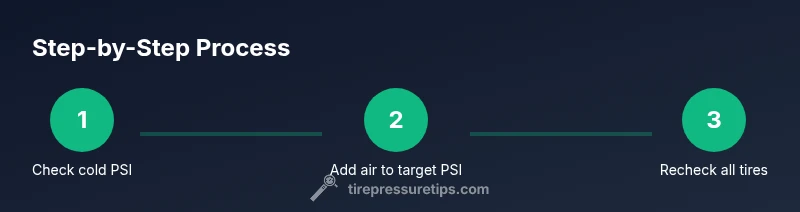
This guide provides a clear sequence: first, verify the current pressure on all tires when cold; next, locate each tire’s target PSI from the door sticker or manual; then, attach your gauge and read each value; finally, add or release air to reach the target, and recheck. If you encounter leaks or persistent underinflation, consider professional inspection to rule out valve, rim, or tire damage. Regular checks every month help maintain safety and prevent uneven wear.
Inflating Safely to the Right Level
When inflating, do so in small increments and recheck after each adjustment. Avoid overinflation, which can cause a harsh ride, reduced traction, and uneven tread wear. If you’re using an air compressor, set the regulator to your target PSI before connecting to the valve. For vehicles with TPMS, be mindful that some sensors require a brief reset after inflating. After inflating, reinstall the valve caps to prevent dust ingress and protect the valve stems from damage.
TPMS and Special Considerations
Tire Pressure Monitoring Systems (TPMS) can warn you about low pressure even if the gauge reads within the target range due to temperature or load changes. If TPMS lights stay on after inflating, confirm with a physical gauge to ensure the readings are accurate. Some older systems require a manual reset after inflating, while others recalibrate automatically. Replacing damaged sensors or seals may be necessary if the warning persists, so consult a technician if you suspect sensor failure.
Maintenance Habits to Prevent Future Issues
Set a monthly reminder to check all tires and inspect for obvious damage. Keep a portable gauge in your glove box for quick checks before long trips. Record readings to detect slow leaks or gradual pressure loss. Rotate tires per the manufacturer’s schedule and after significant mileage: this helps promote even wear and consistent pressures. When in doubt, refer to the Tire Pressure Tips guidelines for best practices and consider a professional inspection if you notice persistent changes.
Tools & Materials
- Tire pressure gauge (digital or analog)(Measure cold tires for accurate PSI; ensure gauge reads in psi)
- Air source (air compressor or access to station)', (Set regulator to target PSI before inflation)
- Vehicle's recommended tire pressure reference(From door jamb sticker or owner's manual)
- Notepad and pen(Record readings and adjustments)
- Valve core tool (optional)(Useful if valve caps or seals need replacement)
Steps
Estimated time: 20-40 minutes
- 1
Check current tire pressure when tires are cold
Park on a level surface and wait for tires to cool, ideally 3 hours after driving. Read each tire with the gauge and write down the values. Compare readings against the manufacturer’s PSI to determine if inflation is needed.
Tip: Record all four readings to spot uneven pressure quickly. - 2
Find the recommended PSI for each tire
Look at the door jamb sticker or the owner’s manual for front and rear values. If the values differ by tire position, follow the higher value to ensure safe handling. Do not rely on the maximum tire pressure printed on the tire sidewall.
Tip: When carrying a heavier load, use the sticker values intended for loaded conditions. - 3
Remove the valve cap and attach the gauge
Carefully remove the valve cap and place the gauge squarely on the valve stem. Press evenly to avoid air leaks and obtain a stable reading. If you hear hissing, reposition and recheck.
Tip: Keep the cap handy to seal the valve after reading. - 4
Read the gauge and decide whether to add or release air
If the reading is below target, plan to add air in small increments. If above target, release air in small amounts and recheck after each adjustment. Repeat until all tires meet the target PSI.
Tip: Avoid guessing; tiny adjustments produce accurate results. - 5
Add air carefully to reach the target PSI
Use the regulator to control flow and inflate to the exact PSI. Stop periodically to measure and avoid overinflation. Recheck all tires after adjusting individual tires.
Tip: Never exceed the maximum pressure listed on the tire. - 6
Re-check pressure and reseal valve caps
After inflating, recheck all tires to ensure consistent readings. Replace valve caps to protect against dirt and leaks. Drive a short distance and re-check again if you suspect changes due to heat.
Tip: A quick test drive can help the tires settle to their proper shape. - 7
Address leaks or sensor warnings
If you observe persistent pressure loss, inspect for punctures, damaged stems, or faulty TPMS sensors. Do not drive long distances with a suspected leak. Seek professional inspection if the issue persists.
Tip: A slow leak may require professional repair; never ignore it. - 8
Reset TPMS if required
Some vehicles require a manual TPMS reset after inflating or changing pressures. Consult the owner’s manual for the correct procedure to avoid false warnings.
Tip: Reset correctly to avoid repeated warning lights. - 9
Document results and schedule future checks
Log the final readings and set a monthly reminder to check tires before trips or seasonal changes. Maintaining records helps identify slow leaks early and supports vehicle maintenance.
Tip: Keep a dedicated tire-check routine in your calendar.
Frequently Asked Questions
How do I know the right tire pressure for my car?
Check the door jamb sticker or the owner's manual for the recommended front and rear PSI values. Use a gauge to verify readings.
Check your door sticker or manual for the recommended PSI and verify with a gauge.
Can I drive with underinflated tires?
Driving on underinflated tires is unsafe and can lead to poor handling and increased wear. Inflate to the recommended PSI as soon as possible.
Underinflated tires are unsafe; inflate to the recommended PSI promptly.
What if the TPMS light stays on after inflating?
A persistent TPMS warning may indicate a sensor issue or a need for recalibration. Check readings with a gauge and consult a technician if the light remains.
TPMS warnings can mean a sensor problem or recalibration is needed.
How often should I check tire pressure?
Check at least once a month and before long trips. Temperature changes can alter readings, so monthly checks are a good habit.
Check monthly and before long trips.
Is it safe to inflate tires when they are hot?
Avoid inflation readings on hot tires. Measure after tires have cooled for accurate PSI, as heat raises the reading.
Don’t inflate based on hot readings; wait for cool tires.
What to Remember
- Check cold PSI before driving.
- Know and follow your vehicle's target PSI.
- Use a reliable gauge and recheck after inflating.
- TPMS warnings require physical gauge checks too.
- Regular checks save tires and fuel.