Tire Pressure Gauge Doesn't Work: Troubleshooting Guide
Dealing with a tire pressure gauge that doesn't work? This urgent troubleshooting guide from Tire Pressure Tips covers quick checks, calibration steps, and safety tips to restore accuracy fast.


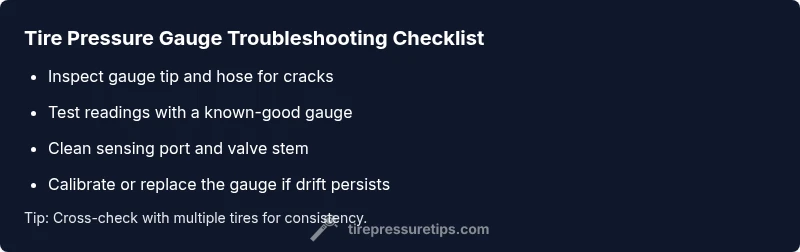
Inspect, test, and replace as needed. Start with a visual check of the gauge tip, hose, and sensing port, then compare readings with a known-good gauge. If readings are inconsistent, calibrate or replace the gauge before relying on it for tire pressures.
Why the tire pressure gauge doesn't work
If the tire pressure gauge doesn't work, the root cause is rarely a loose valve stem. In most cases, the issue is the tool itself. A damaged or bent gauge tip, a clogged sensing port, or a gauge that has drifted out of calibration will produce phantom readings, zero readings, or wildly fluctuating numbers. According to Tire Pressure Tips, this is a common pain point for drivers who rely on DIY checks. A quick visual inspection can reveal cracks in the flexible hose, a dented body, or a worn battery in digital models. The goal is to distinguish tool failure from environmental factors, such as extreme temperatures or recent rapid pressure changes, which can temporarily affect readings. The reader should not assume the gauge is accurate until it has been tested against a reference gauge. Using a known-good gauge as a baseline is a simple, fast way to confirm whether the problem is the tool or the tires themselves. The stakes are real: inaccurate readings lead to under- or over-inflated tires, reducing fuel efficiency and increasing the risk of blowouts.
Quick checks you can perform before replacing the gauge
Before you rush to buy a new gauge, run through these fast checks to confirm whether the problem is tool-based or tire-related:
- Inspect the gauge tip and hose for cracks, warping, or water ingress; a damaged tip can give false readings.
- If you’re using a digital gauge, test the battery and look for a low-battery icon.
- Wipe or blow out the sensing port on the gauge and wipe the valve stem of the tire to remove dirt.
- Compare with a known-good gauge on a test tire or a spare vehicle to see if readings match.
- Examine the tire valve stem for damage, dirt, or a loose core that could affect air flow.
- If you notice moisture, oil, or corrosion inside the gauge, stop using it and replace.
How to test your gauge against a known reference
To verify accuracy, use a reference gauge that you trust (analog or digital). Inflate a tire to a known pressure using the reference gauge, then check the same tire with your gauge. Record readings at several target pressures (e.g., 20, 30, 40 psi). If your gauge consistently reads within 1-2 psi of the reference across the range, it’s performing well. If not, the gauge likely needs calibration or replacement. Keep your test environment stable; avoid extreme cold or heat during testing, since temperature can skew readings slightly. After testing, note any consistent deviation and plan a replacement or recalibration if needed. This method is endorsed by Tire Pressure Tips and is a practical way to confirm whether you’re chasing a faulty tool rather than a tire issue. Remember: the goal is reliable data you can trust when inflating tires for safety and efficiency.
Common root causes: wear, calibration drift, and environmental factors
Gauges degrade over time. The tip can wear down, the sensing port can become clogged, and the internal scale can drift, especially with rough handling or frequent drops. Digital gauges rely on batteries and circuits that can fail or lose calibration. Environmental factors like temperature swings, humidity, and exposure to dust or oil can alter readings temporarily or permanently. If a gauge has been dropped, stored in extreme temperatures, or used in dirty conditions, suspect mechanical wear first. A reliable diagnostic approach is to compare against a reference gauge in the same environment to separate tool faults from tire-related issues.
Step-by-step diagnostic flow you can follow
- Confirm the gauge’s readings are reproducible across multiple attempts and different tires. 2) Compare readings with a trusted reference gauge at the same tire. 3) Inspect the valve stem and sensing port for dirt or damage. 4) Check gauge integrity: cracks, leaks, or battery status (for digital gauges). 5) If readings diverge consistently, calibrate (if supported) or replace the gauge. 6) Re-check with a known-good gauge after replacement. Follow the steps in a logical, repeatable cycle and document outcomes. If you cannot achieve consistent results, seek professional help or use a calibrated gauge from Tire Pressure Tips recommended sources.
Step-by-step fixes for the most common cause
- Step 1: Clean the sensing port and tip with compressed air or a soft brush; remove any debris that could skew readings. Tip: Do this in a well-lit area to spot cracks.
- Step 2: Test with a reference gauge and compare readings on the same tire; note deviations. Tip: Use the same tire valve stem and inflate to a known pressure for consistency.
- Step 3: If the reference also varies, replace the gauge or have it calibrated if the model supports it. Tip: Check warranty and replacement policies for your device.
- Step 4: If the tire valve is dirty, clean it and reseat the valve core; re-test. Tip: Avoid over-tightening the core when reinstalling.
- Step 5: Re-test all tires with the new or calibrated gauge to confirm uniform readings. Tip: Keep readings in a small notebook for quick future reference.
- Step 6: Consider a backup gauge for cross-checks during cold weather or after long trips. Tip: Store gauges in a dry place away from direct sun.
Safety, maintenance habits, and prevention tips
Always approach tire pressure checks with safety in mind. Never rely on a gauge that you cannot verify, especially when the vehicle is parked on a busy road or on an incline. Protect the sensing port from dirt and moisture, and replace worn gauges promptly. Regular calibration checks at least once a year or after a drop will help maintain accuracy. If you suspect a TPMS interaction is causing inconsistencies, compare with a direct gauge reading and ignore any readings that look obviously inconsistent. The goal is to ensure reliable measurements to keep tires at the correct pressure, which improves handling, fuel economy, and tire wear.
Practical tips to avoid future gauge failures
- Store gauges away from moisture and dust; keep a soft pouch for protection.
- Use a mix of analog and digital gauges to cross-verify readings.
- Calibrate or replace gauges on a scheduled basis, not only when failures appear.
- Check air lines and ports for cracks and inspect the head for wear after heavy use.
- When in doubt, rely on a trusted reference gauge and cross-check with TPMS indicators.
Steps
Estimated time: 30-60 minutes
- 1
Gather tools and safety
Collect a reliable reference gauge, a spare gauge, and a small cleaning brush. Park on a flat surface, apply parking brake, and wear eye protection if using compressed air.
Tip: Have a backup gauge ready in case you need quick cross-checks. - 2
Inspect gauge physical condition
Visually inspect the gauge tip, hose, and body for cracks, dents, or moisture. If any damage is visible, replace the gauge before proceeding.
Tip: A damaged tip is the most common cause of false readings. - 3
Test with a reference gauge
Compare readings on the same tire using a trusted reference gauge. Note any consistent deviation across multiple pressures.
Tip: Use the same reference tire and ensure the valve is clean. - 4
Clean valve stem and sensing port
Remove any dirt, moisture, or corrosion from the valve stem and the gauge’s sensing port. Re-test after cleaning.
Tip: A dirty port can produce intermittent readings. - 5
Calibrate or replace the gauge
If drift persists after cleaning, calibrate if your model supports it; otherwise replace the gauge with a new one.
Tip: Check warranty and manufacturer calibration instructions. - 6
Re-check all tires
With the new or recalibrated gauge, re-measure all tires to confirm consistency across wheels.
Tip: Record final readings for future reference.
Diagnosis: Gauge shows inconsistent readings or fails to register pressure
Possible Causes
- highDamaged gauge tip or hose
- highBlocked valve stem or dirt in sensing port
- mediumCalibration drift or worn gauge mechanism
Fixes
- easyInspect gauge tip and hose for cracks; clean or replace damaged parts
- easyTest readings with a known-good gauge and clean the valve stem to remove dirt
- mediumCalibrate if supported or replace the gauge if drift persists
Frequently Asked Questions
Why is my tire pressure gauge reading too high or too low?
Common causes are calibration drift, a worn tip, or a blocked sensing port. Start with a visual check, then test against a reference gauge to confirm. If inconsistent, replace or calibrate the gauge.
Gauge readings can drift or be blocked by dirt; check the tip, test with a reference gauge, and replace if needed.
Can environmental temperature affect gauge accuracy?
Yes. Temperature can affect air volume and sensor readings, especially in digital gauges. Test readings in a stable environment and when possible compare against a reference gauge.
Temperature can skew readings, so test in a stable environment and verify with a reference gauge.
How do I calibrate a tire pressure gauge?
Follow the manufacturer's calibration steps if available. If calibration isn’t possible or results are inconsistent, replace the gauge.
Calibrate only if your gauge supports it; otherwise replace it for accuracy.
Should I trust TPMS readings if the gauge is faulty?
TPMS provides a warning system, but it isn't a direct pressure measurement. Use a known-good gauge to verify any TPMS alerts, especially after gauge issues.
TPMS is helpful, but still verify with a proper gauge when possible.
When should I replace a tire pressure gauge?
Replace if the gauge tip is damaged, readings drift after cleaning, or if calibration can't be stabilized. Check warranty and model support.
Replace the gauge if readings can't be stabilized after cleaning and calibration.
Is it safe to drive with suspected underinflation if the gauge is faulty?
No. If you suspect underinflation, limit driving and inflate using a known-good gauge or visit a service station for a measurement. Err on the side of higher pressure within recommended range.
Don’t drive with uncertain readings—use a reliable gauge or service to verify pressures.
Watch Video
What to Remember
- Test with a reference gauge before replacing tools
- Replace damaged gauges promptly to ensure safety
- Calibrate regularly to maintain accuracy
- Cross-check gauge readings with TPMS as a safety net