Air Cleaner Pressure Machine: Practical Guide for Tire Maintenance
Learn how to use an air cleaner pressure machine safely for tire maintenance, including setup, calibration, and best practices. Practical tips from Tire Pressure Tips to keep tires properly inflated and TPMS reliable.


This guide shows how to use an air cleaner pressure machine for tire maintenance, including setup, safety checks, and calibration. You will need a compatible air cleaner, a regulator, a tire pressure gauge, and the vehicle's TPMS awareness. By following steps, you'll improve pump accuracy, extend tire life, and ensure safe inflation.
Why this topic matters for tire maintenance
Maintaining correct tire pressure is a cornerstone of road safety, fuel efficiency, and tire lifespan. An air cleaner pressure machine can be a versatile tool in your garage, helping you deliver clean air and controlled pressure for inflation tasks and maintenance routines. When used properly, it reduces the risk of over-inflation, under-inflation, and inconsistent readings that can wear tires unevenly. According to Tire Pressure Tips, the combination of a calibrated regulator, a reliable pressure gauge, and a clean, dry air stream makes inflation safer and more precise. This article explains how to select, operate, and maintain an air cleaner pressure machine so you can trust every tire fill you perform. Practical, actionable guidance comes from experience working with TPMS-equipped vehicles and common tire maintenance scenarios.
In most daily scenarios, keeping tires at the recommended pressure delivers the best balance of grip, fuel economy, and longevity. The Tire Pressure Tips team emphasizes that using a proper air-cleaning approach prevents moisture and oil from contaminating valve stems and gauges, which can skew readings over time. In addition, regular checks after long trips or temperature swings help catch slow pressure losses early. This guide aims to empower you to use the air cleaner pressure machine confidently, safely, and efficiently.
Understanding the air cleaner pressure machine
An air cleaner pressure machine is a device that blends two core functions in one tool: delivering air with a regulated, clean flow and providing a controlled pressure source for inflation tasks. The “air cleaner” portion typically means a filter or upstream treatment that removes particulates and moisture before air reaches the regulator and hose. The pressure machine portion refers to a regulator and gauge assembly that lets you set and monitor the target psi (pounds per square inch). When used for tires, the machine should be capable of delivering stable output with minimal fluctuations as the valve opens and closes. A high-quality regulator helps prevent overshoot, while a good inline filter prevents debris from entering the tire valve stems or the TPMS system. Always refer to the manufacturer’s manual for the exact flow and pressure limits of your unit, and avoid using the machine beyond its rated capabilities.
For drivers, the practical value is a predictable inflation process. You can attach the tire hose, set the regulator to the desired target pressure (as specified by your vehicle’s door jamb sticker), and monitor the gauge as you inflate. When the pressure stabilizes, you detach the nozzle and recheck with a tire gauge on all four tires. If you frequently inflate tires in cold weather, remember that air pressure changes with temperature, and a cold tire will show a lower reading than its warm, driven state. This nuance matters when you rely on the air cleaner pressure machine for precise inflation outcomes.
Core features to look for in a unit
Choosing the right air cleaner pressure machine begins with matching features to your tire maintenance needs. Consider these core capabilities:
- Regulated output: A stable regulator minimizes pressure oscillations during inflation. Look for a unit with a clearly marked PSI range that covers your typical tires, usually up to at least 60 psi.
- Inline filtration: A built-in moisture and particulate filter reduces contaminants that can affect readings.
- Quick-connect and adapters: A variety of nozzle sizes and adapters ensures you can seal securely on different valve stems.
- Integrated gauge accuracy: A robust analog or digital gauge with a calibrated scale helps you confirm the target pressure quickly.
- Portability and durability: If you travel to a shop or garage, a compact, rugged design matters. A metal frame and reinforced hoses resist wear over time.
- Safety features: Automatic shutoff or an overpressure relief valve provides an extra layer of protection against accidental over-inflation.
When evaluating options, prioritize compatibility with your vehicle’s tires and TPMS behavior. If you own multiple vehicles, a unit that handles a broader PSI range and offers multiple adapters becomes especially valuable. Remember to verify that the device adheres to relevant safety standards and is designed for consumer use. This choice directly influences measurement accuracy, inflation speed, and the ease of completing routine maintenance.
Safety prerequisites and environment
Before you begin using an air cleaner pressure machine for tire inflation, set up a safe workspace. Park on level ground away from traffic, and turn off the engine. Keep children and pets away from the inflating area. Wear eye protection if you expect any chance of hose whips or accidental spray. Ensure the air line is dry, free of oil, and free from kinks; moisture or oil can compromise both the gauge reading and the integrity of the tire valve stem.
Verify that the regulator is set to a conservative starting pressure before attaching the hose. If your machine has a regulator lock, engage it to prevent accidental drift while attaching the nozzle. After inflation, perform a final pressure check with a reliable tire gauge. If you’re using a TPMS sensor-equipped vehicle, remember that TPMS indicators may not update instantly after a change in tire pressure; a recheck with a manual gauge remains essential. Safety is the foundation of accurate tire maintenance, and safety practices help protect your equipment as well.
Setup and initial checks
A successful inflation starts with proper setup. Begin by inspecting hoses and the nozzle for wear, cracks, or leaks. Replace damaged components before proceeding. Verify that the air cleaner is clean and dry, and ensure the supply source is connected to a suitable power or air supply. Attach the hose to the tire valve stem securely; a loose connection is a common source of under- or over-inflation readings.
Next, identify the tire’s target pressure from the vehicle’s owner’s manual or the doorjamb sticker. If you’re inflating a bicycle or motorcycle tire, adjust to the manufacturer’s recommended PSI for that vehicle class. When a target is unclear, use a conservative mid-point between the typical passenger car tire range and the tire’s maximum rating. Finally, conduct a brief test inflation at a low pressure to check for leaks and ensure the gauge reads steadily before proceeding to full inflation.
Calibrating the device for accurate readings
Calibration is the backbone of accurate inflation. Begin by calibrating the gauge if your unit allows it. If not, verify the gauge’s accuracy against a known standard or by cross-checking with a separate trusted tire gauge. Place the gauge on the valve stem alignment to avoid angle errors that can misread psi. When possible, perform calibration in a cool environment, because heat can affect air temperature and gauge readings. If your air cleaner pressure machine shows any drift over time, consider professional calibration service or a replacement regulator. Regular calibration reduces the risk of under- or over-inflation, especially when inflation tasks extend to high-psi tires or specialty tires with different pressure targets.
As temperatures vary throughout the day, measure during consistent conditions—ideally when tires are cold—for the most reliable readings. This practice minimizes discrepancies caused by heat buildup from driving. The calibration mindset helps you achieve accuracy across seasons and ensures safer, more predictable tire maintenance.
Using with tire valves and TPMS
Correct attachment to the tire valve is critical. Ensure the nozzle seat is clean and compatible with the valve stem type (Schrader or Presta, depending on the vehicle). Avoid forcing incompatible adapters, which can damage the valve core or stem. When you inflate, monitor the gauge and stop as soon as you reach the target pressure. After inflating, remove the nozzle straight away to prevent air from escaping from the valve. If you have a TPMS-equipped vehicle, inflation can trigger a reset or sensor update; use a manual tire gauge to confirm the final psi and allow a few minutes for the system to reflect the new pressure. Regularly checking all four tires after adjustments reinforces safety and efficiency.
Keep a log of inflation sessions, noting tire location, target psi, ambient temperature, and any readings that diverge from expectations. This practice is especially helpful when diagnosing slow leaks or inconsistent readings over time. Consistency is more important than occasional high readings, particularly for winter or hot-season driving where temperature swings play a bigger role in tire pressure fluctuations.
Troubleshooting common issues
Inconsistent readings or slow inflation are common issues with air cleaner pressure machines. First, inspect for leaks along the hose, nozzle, and valve stem—tighten connections and replace worn washers as needed. If readings drift, verify that the regulator is not stuck or leaking and that the inline filter is clean and unobstructed. A clogged filter or degraded washer can introduce air with moisture, skewing readings. If your gauge reads too high, double-check the target pressure against the door jamb sticker and consider performing a quick calibration if possible. For TPMS-related anomalies, ensure the vehicle’s battery is healthy, as a weak battery can delay TPMS updates after inflation; rely on manual gauges for immediate verification.
Finally, if inflation takes unusually long, rule out a partially blocked nozzle, a kinked hose, or an undersized compressor. In such cases, allow the system to rest and cool before continuing, since extended use can overheat components and affect performance. Addressing these issues promptly preserves the machine and ensures precision for your tire maintenance routine.
Maintenance, storage, and lifespan
To keep an air cleaner pressure machine performing reliably, establish a regular maintenance routine. After use, disconnect from the power source and vent residual air. Clean the exterior surfaces to prevent dust ingress, and store hoses loosely coiled to avoid kinks. Periodically inspect the filter element and replace it according to the manufacturer’s recommendations. Keep the regulator free from moisture and oil by using dry, clean air sources, and avoid exposing the unit to extreme temperatures, moisture, or direct sunlight. When stored properly, the machine maintains calibration better and reduces the risk of leaks during future inflation sessions. A simple maintenance schedule and tidy storage habit extend the life of the device and support consistent performance across seasons.
If you notice persistent performance issues, seek professional service or consult the manufacturer’s customer support for guidance. Proper maintenance also protects your investment in the long term, ensuring you can rely on the air cleaner pressure machine whenever you need to inflate tires or perform routine maintenance on TPMS-equipped vehicles.
Best practices and common mistakes to avoid
To maximize results, follow best practices and steer clear of common errors. Always begin with a cold tire when checking or inflating to avoid pressure readings that reflect heat expansion. Use the regulator to manage inflation slowly, especially for low-PSI scenarios, and avoid rapid bursts that can overshoot the target. Keep hoses free from tangles and secure all connections before starting. Don’t ignore physical wear: cracked hoses or damaged adapters can introduce leaks and contaminate readings. Finally, avoid relying solely on the TPMS for precise target pressures—manual gauges provide the most reliable cross-check, especially after long drives or temperature changes. Adopting these habits helps you maintain consistent tire pressure, which supports safer handling, longer tire life, and better fuel economy.
Next steps: integrating the tool into routine maintenance
By now you should have a solid understanding of how to use an air cleaner pressure machine effectively for tire maintenance. Turn this knowledge into a routine: inspect tires and equipment before each use, calibrate when needed, inflate to the manufacturer-recommended pressure while cross-checking with a manual gauge, and log readings for future reference. Integrating a regular inflation schedule into your maintenance plan reduces the risk of driving with under- or over-inflated tires, which can improve handling and fuel efficiency. As you gain experience, adjust your workflow to accommodate seasonal variations and different vehicle specifications. The goal is consistent, safe inflation that supports your tires’ longevity and your vehicle’s performance.
Practical wrap-up: what to remember when you use an air cleaner pressure machine
In practice, the best results come from a methodical approach: use clean air, set a precise target, verify with a trusted gauge, and recheck after any adjustment. Don’t skip safety steps, and always confirm readings when the tires are cold. If you’re uncertain about a setting, consult your vehicle’s manual or the tire manufacturer’s guidelines. By applying the steps outlined in this guide, you’ll have a reliable inflator that complements TPMS, preserves tire integrity, and supports safer driving.
Final note from Tire Pressure Tips
The Tire Pressure Tips team recommends treating any tire maintenance activity as a small safety protocol: verify connections, protect your eyes, and double-check readings. A well-maintained air cleaner pressure machine helps ensure accurate inflation, which in turn promotes optimal tire wear, fuel efficiency, and road safety. Regular use alongside other maintenance tasks keeps your vehicle in peak condition and helps you stay on top of tire health throughout the year.
Tools & Materials
- Air cleaner pressure machine (air compressor with regulator)(Choose a unit with a built-in regulator and gauge; capacity should handle up to at least 60 psi for passenger tires.)
- Inline regulator and fittings(Ensure compatibility with your hose and nozzle types; use copper or brass fittings for durability.)
- Tire pressure gauge (digital or analog)(Calibrated, accurate to at least 0.5 psi if possible.)
- Hose adapters and nozzle attachments(Have Schrader and Presta adapters if you drive a mix of vehicles.)
- Moisture/oil filter for intake line(Optional but helpful to keep air clean and readings stable.)
- Safety gear (eye protection, gloves)(Protect during inflation in case of hose whip or debris.)
- Ignition/air supply source(Ensure a stable power source or air supply rated for the unit.)
Steps
Estimated time: 30-45 minutes
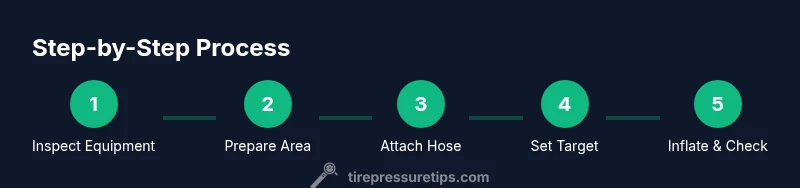
- 1
Inspect equipment
Check hoses, fittings, and nozzle for signs of wear or damage. Replace any cracked hoses or worn o-rings before use to prevent leaks during inflation.
Tip: A quick visual check saves time and avoids mid-inflation failures. - 2
Prepare the vehicle and area
Park on level ground, turn off the engine, and ensure the work area is clean and dry. Keep bystanders away and lay out tools within easy reach.
Tip: A calm workspace reduces mistakes and improves accuracy. - 3
Attach the hose to the tire valve
Select the correct nozzle adapter for your valve stem, seat it firmly, and lock it in place to prevent air leaks during inflation.
Tip: Make sure the connection is tight but not forced to avoid valve damage. - 4
Set the target pressure
Consult the vehicle’s recommended tire pressure from the door jamb sticker or owner’s manual. Set the regulator to a conservative starting point and prepare to adjust if needed.
Tip: Starting low helps prevent over-inflation; you can add air gradually. - 5
Inflate and monitor
Inflate slowly while watching the gauge. Stop when the target pressure is reached, then remove the nozzle and recheck with a handheld tire gauge.
Tip: If readings differ between gauges, recheck connections and calibrate if possible. - 6
Check TPMS and finalize
If your vehicle uses TPMS, confirm it reflects the new pressure after inflation. Use a manual gauge for the final check for accuracy.
Tip: TPMS may blink or refresh after a few minutes; don’t rely solely on the dashboard light. - 7
Stow and inspect again
Let the system cool if it has heated during inflation, then store hoses neatly. Do a quick post-inflation inspection for leaks.
Tip: Keep a brief log of readings and conditions for future reference. - 8
Maintenance and calibration
Periodically calibrate the gauge and inspect the filter. Replace worn parts to maintain accuracy and safety.
Tip: Regular maintenance improves long-term accuracy and performance.
Frequently Asked Questions
What is an air cleaner pressure machine and how does it help with tire maintenance?
An air cleaner pressure machine combines air cleaning and regulated pressure output to assist tire inflation. It helps reduce contaminants and maintain stable pressure readings. Always follow manufacturer guidance and cross-check with a manual gauge.
An air cleaner pressure machine cleans the air and provides a steady inflated pressure for tires, with precautions and manual checks for accuracy.
Is it safe to use this device for all tire types?
Yes, when used with proper adapters and within the device’s rated pressure range. Check tire specifications and use the right nozzle adapters for different valve stems.
Yes, as long as you use the correct adapters and stay within the allowed pressure range.
Do I need any special adapters for Presta or Schrader valves?
Yes. Have compatible adapters for Schrader and Presta valves to ensure a secure seal. An improper seal can cause leaks and inaccurate readings.
Yes, you need the right adapters for your valve type to prevent leaks.
How often should I calibrate the gauge?
Calibrate or verify accuracy regularly, especially if you notice readings drifting or after long periods of storage. Use a known standard or compare with a trusted gauge.
Calibrate regularly or when readings drift, especially after storage.
What are common mistakes to avoid when inflating tires?
Avoid over-inflation by inflating slowly and rechecking with a manual gauge. Do not force air into a tire, and always inspect hoses and adapters for wear before use.
Inflate slowly, recheck with a gauge, and inspect equipment for wear before use.
Can TPMS readings be trusted immediately after inflation?
TPMS readings may take a few minutes to reflect new pressure. Always confirm with a handheld gauge and recheck after driving a short distance.
TPMS can lag; verify with a manual gauge and recheck after a short drive.
Watch Video
What to Remember
- Check equipment before use.
- Inflate to vehicle-recommended pressure.
- Calibrate gauges regularly.
- Cross-check with a manual gauge.
- Maintain safety and cleanliness to ensure accuracy.