Tire Pressure Light Troubleshooting for Nissan Altima
Urgent guide to diagnosing and fixing the tire pressure light on Nissan Altima, with step-by-step checks, TPMS insights, safety notes, and prevention tips.


Facing the tire pressure light on a Nissan Altima? The most likely causes are underinflation, a TPMS fault, or a sensor issue. First, check all tires with a pressure gauge and inflate to the recommended level. If the light stays on, consult your owner's manual for TPMS reset steps. According to Tire Pressure Tips, don’t ignore the warning—address it before a trip.
Why the Tire Pressure Light Comes On in a Nissan Altima
The tire pressure light, or TPMS warning, isn't a nuisance—it's there to prevent a blowout or poor handling. In a Nissan Altima, several factors can trigger it, from seasonal temperature changes to a loose tire valve stem. According to Tire Pressure Tips, the most common reason is underinflation caused by everyday driving and weather. Low pressure reduces tire contact with the road and can affect fuel economy. The Altima's TPMS monitors each wheel, and when readings diverge beyond the system's threshold, the warning engages. While the light can indicate a real tire issue, sometimes a sensor battery or module fault triggers a false alarm. Understanding the difference helps you respond quickly and safely.
How TPMS Works and Why It Might Fail on Your Altima
Most modern Altima models use either direct TPMS (with a sensor in each wheel) or indirect TPMS (relying on wheel speed sensors). Direct TPMS alerts when a sensor loses its signal, which can happen if a battery dies or a sensor is damaged. Indirect TPMS recalculates pressure based on rotation and may misread after a tire change. If you notice the light after a tire change or rotation, firmware or calibration issues can be the culprit. Knowing which system your car uses helps determine the proper remedy and whether a reset is enough or sensor replacement is required. Tire Pressure Tips notes that many drivers assume a simple refill will fix the alert, but TPMS complications require careful diagnosis and safe handling.
Common Causes and Quick Fixes You Can Try at Home
Start with the simplest fix: verify all tires are inflated to the vehicle's recommended spec, as shown on the door jamb placard or owner manual. If inflation is correct and the light remains, there may be a slow leak, a faulty valve stem, or a failed TPMS sensor. For a slow leak, listen for hissing at the tire bead or run soapy water around the valve stem and sidewall to spot bubbles. If you suspect a dead sensor battery, a professional can test the TPMS module and replace sensors if needed. Do not drive long distances with an unresolved TPMS warning; address it promptly for safety and fuel efficiency.
A Practical Step-by-Step Troubleshooting Plan for the Light
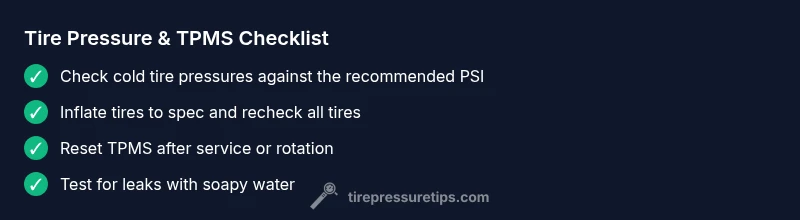
Follow a structured approach to isolate the issue. Begin with verifying tire pressures while tires are cold. If pressures are correct, perform a TPMS reset per the owner's manual. If the light persists, inspect for tire damage and leaks, then test the TPMS system. When in doubt, document symptoms and seek professional diagnosis to avoid risking a blowout or improper tire wear.
Safety First: Prevention and Maintenance
Regular tire pressure checks are essential, especially as seasons change. Use a reliable gauge and keep all tires at the recommended PSI. Temperature fluctuations can cause pressure swings that trigger the TPMS. Rotate tires as recommended and replace TPMS batteries when indicated. By maintaining proper pressures and addressing TPMS issues promptly, you reduce rollover risk, improve handling, and maximize fuel efficiency.
Steps
Estimated time: 30-60 minutes
- 1
Prepare and safety first
Park on level ground, engage the parking brake, and gather a tire pressure gauge, air source, and a flashlight. Ensure you are in a safe location away from traffic. Inspect tires visually for obvious damage before you start.
Tip: Wear gloves and stay aware of hot wheel surfaces after driving. - 2
Check cold tire pressures
Measure pressures when tires are cold for the most accurate reading. Compare each reading to the vehicle placard on the door jamb or owner manual. Record any deviations.
Tip: Take readings quickly to avoid heat buildup. - 3
Inflate to the recommended PSI
Inflate each tire to the recommended PSI, allowing for slight tolerance. Recheck after inflation to ensure equalization across all tires.
Tip: Don't over-inflate beyond the spec. - 4
Reset or recalibrate TPMS
Follow the Nissan Altima owner's manual to reset TPMS after servicing or tire changes. Drive for a short distance to allow the system to relearn the new pressures.
Tip: Some models require a specific sequence or a dedicated TPMS reset button. - 5
Test for leaks and damage
Inspect tires for nails, punctures, or sidewall damage. Use soapy water on the valve stem and bead to uncover leaks.
Tip: If bubbles appear, replace or repair the affected tire. - 6
Reassess and drive
Take a short test drive and recheck pressures after they cool. If the light returns, move to sensor testing.
Tip: Drive at moderate speeds to avoid overworking a marginal tire. - 7
Decide on professional help
If the TPMS light persists after these steps, schedule a professional inspection for TPMS sensor replacement or calibration.
Tip: Professional service can verify calibration and sensor health.
Diagnosis: Tire pressure light stays on after inflating tires to spec
Possible Causes
- highUnderinflation due to temperature changes or slow leak
- mediumTPMS sensor fault or dead battery
- lowTPMS reset not performed after tire rotation or change
Fixes
- easyRe-check tire pressures when tires are cold and inflate to the recommended spec
- easyInspect valve stems and tire for leaks; apply soapy water to locate slow leaks
- mediumReset TPMS according to the owner's manual; replace faulty sensors if needed
Frequently Asked Questions
What does the tire pressure light on my Nissan Altima actually indicate?
The tire pressure light signals that the TPMS detected unsafe tire pressure. It can mean underinflation, a failed sensor, or a calibration issue following tire work. Address it promptly to maintain handling and safety.
The TPMS warning means your tires may be underinflated or there’s a sensor issue; it's a safety alert you should act on soon.
How do I reset the TPMS on a Nissan Altima?
Reset procedures vary by model year. Typically you inflate to spec, drive for a short distance, or use a dedicated TPMS reset button or menu option. Refer to the owner's manual for exact steps.
Resetting TPMS usually involves inflating to the correct PSI and driving briefly, or using a reset option in the car’s menu.
Is it safe to drive with the tire pressure light on?
Short trips at moderate speeds are usually acceptable if pressure is within range, but you should not ignore the warning for long drives. Low pressure can increase heat and risk a blowout.
It’s best not to ignore the warning; limit driving distance and get it checked soon.
How often should I check tire pressure, especially in winter?
Check tire pressures at least once a month and before long trips, paying extra attention during temperature swings. Tires lose pressure naturally with temperature changes.
Check monthly and before trips, especially when temperatures drop.
Why does the light come back after inflating tires?
Recurrent lighting can indicate a slow leak, a faulty sensor, or calibration drift. If inflation is correct but the light returns, schedule a diagnostic with a professional.
If it comes back after inflation, there might be a leak or a faulty TPMS sensor.
Watch Video
What to Remember
- Check all tires to the recommended PSI first
- TPMS faults can mimic real underinflation
- Reset TPMS after inflation or tire work
- If the light persists, consult a professional