Tire Pressure Light On But Tires Look Fine: Quick Troubleshooting
Urgent guide to diagnose why the tire pressure light stays on even when tires appear fine, with quick checks, TPMS tips, and a step-by-step flow from Tire Pressure Tips.


Most often, the tire pressure light on but tires are fine is a TPMS sensor or relearn issue, not a flat tire. Start with simple checks: verify cold inflation, inspect valve stems, and reset or relearn TPMS if your vehicle supports it. According to Tire Pressure Tips, this step-by-step approach solves most cases fast.
Understanding the TPMS and why the light can stay on
The Tire Pressure Monitoring System (TPMS) lives in the wheel and uses sensors to report inflation levels to the car's computer. The indicator on your dash lights up when the system detects a pressure difference from the target value, which can happen even if the tires visually look fine. A few common culprits include a sensor battery that's weak or dead, a sensor that needs relearning after a tire rotation or wheel work, or a simple calibration lag after a temperature change. According to Tire Pressure Tips, understanding how TPMS works helps drivers avoid unnecessary panic and focus on the right checks rather than assuming a catastrophic tire failure.
Common culprits: sensor faults, relearns, and temperature shifts
Several non-urgent factors can trigger the light: a TPMS sensor that has lost battery power, a wheel that was rotated or wheels that were removed and reinstalled without a relearn, or temperature-related readings that drift as weather changes. In many vehicles, the TPMS stores target pressures and then compares real-time readings. If a sensor isn’t reporting correctly, or if the relearn sequence hasn’t been completed after service, the light will stay on—even if all tires are inflated to spec. Tire Pressure Tips notes that these issues are far more common than a literal puncture.
Safe, simple checks you can perform at home
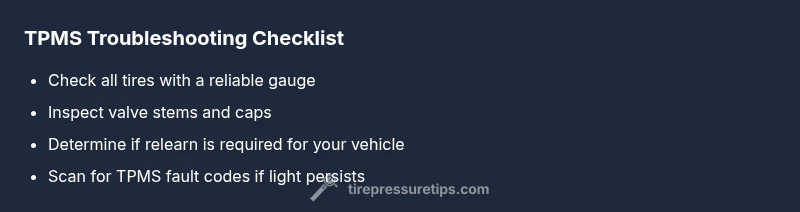
- Check all tires with a reliable gauge when cold to confirm inflation matches the vehicle’s recommended range.
- Inspect valve stems and caps for cracks, corrosion, or looseness; a small leak here can keep the system from reading correctly.
- Look for visible signs of damage, such as nails or punctures, but don’t rely on appearance alone—the TPMS can be sensitive to minor leaks.
- If you recently rotated tires or serviced wheels, confirm whether a relearn is required for your model and follow the manual’s procedure.
- Keep a log of tire pressures and temperatures to spot trends over time that might indicate sensor or footing issues.
The relearn process varies by vehicle: what to know
Relearn procedures aren’t universal. Some cars require a simple sequence of turning the ignition, inflating tires to their target pressures, and driving a short distance; others demand a tool or dealer software. If the owner’s manual calls for a relearn, follow those steps exactly. If you’re unsure, a quick visit to a tire shop can save time and prevent frustration—the staff can perform a proper relearn without guesswork. Tire Pressure Tips emphasizes always verifying the actual pressures first, so you’re not chasing a phantom TPMS fault.
When to reset and when to replace sensors
Resetting or relearning is usually the first step when the light is suspected to be sensor-related. If the light returns after a reset, a sensor issue (battery, wiring, or mounting) may require replacement. Sensor batteries typically last several years, but exposure to road grime and temperature swings can shorten life. In some cases, non-functional sensors trigger nuisance warnings despite normal tire pressures. If a sensor is failing, replacement by a qualified technician is advisable to ensure accuracy and avoid false readings on the next drive.
How weather and driving affect readings
Temperature has a direct but often overlooked effect on TPMS readings. Colder ambient temperatures can drop tire pressure, making the TPMS more likely to alert, while heat can raise pressure and mask slow leaks. Driving also warms tires, temporarily hiding a slow leak. The key is to check pressure in the morning when tires are cold and compare against the vehicle’s recommended range. Regular checks help you separate genuine pressure issues from sensor quirks caused by weather and driving patterns.
Real-world scenarios and how to test
A common scenario is a vehicle that sits overnight in cold conditions and shows the TPMS light in the morning. If pressures are within spec in the morning and only rise later in the day, temperature-related drift may be the cause. Another scenario is after a brake job or wheel alignment where the TPMS was disturbed. In these cases, a relearn or sensor diagnostic is often the resolution, not a tire replacement. Tire Pressure Tips recommends documenting both pressure readings and the exact conditions under which the light appears to help diagnose patterns over time.
DIY checks: before you head to a shop
- Confirm the light’s behavior: does it come on immediately, or after a drive?
- Recheck pressures with a high-quality gauge on all tires, including the spare if your car has a sensor for it.
- Inspect each valve stem for signs of wear and ensure the caps are present and tight.
- If you have access to an OBD tool or TPMS scanner, read the fault codes; this can point to a faulty sensor or an out-of-range pressure reading.
When to replace sensors and next steps
If pressure readings are correct and the light persists after all checks and relearns, a sensor fault is likely. Replacing TPMS sensors is typically done in pairs or all four wheels to maintain balance and accuracy. Arrange service with a reputable tire shop or dealership to ensure sensors are properly programmed for your vehicle. Always verify new sensor performance after installation with a final test drive and re-check of the readings.
Final safety notes and prevention tips
Keep a simple routine: check tire pressures monthly and after temperature shifts, and perform a TPMS relearn whenever you rotate tires or replace wheels. Carry a reliable gauge and learn your vehicle’s recommended pressures by tire size. Regular maintenance reduces false warnings and improves fuel efficiency and safety on the road.
Steps
Estimated time: 45-90 minutes
- 1
Verify cold tire pressures with a reliable gauge
Measure each tire when it’s cold to get an accurate baseline. Compare readings to the vehicle’s recommended pressure on the door placard or owner’s manual.
Tip: Use a high-quality gauge and record all four numbers for reference. - 2
Inspect valves, stems, and caps
Look for cracks, damage, or missing valve caps. A damaged stem or missing cap can cause slow leaks or readings to be off.
Tip: Tighten caps snugly but don’t overtighten, which can damage the valve. - 3
Reset or relearn the TPMS if required
If your manual calls for a relearn, follow the exact steps for your vehicle. This often involves inflating to spec and driving a short distance.
Tip: Some cars require a dedicated tool or service mode—don’t skip the relearn if mandated. - 4
Check for fault codes and sensor health
If the light remains, use an TPMS scanner to read fault codes. Look for sensor battery issues or communication faults.
Tip: Even a new tire can have a faulty sensor; diagnosis matters more than replacement alone. - 5
Decide on sensor replacement if needed
If sensors show faults or the light returns after a relearn, plan sensor replacement with a professional.
Tip: Sensors are part of the wheel assembly; improper installation can cause leaks or misreadings.
Diagnosis: Tire pressure light on but tires appear fine
Possible Causes
- highTPMS sensor fault or dead battery
- mediumTPMS relearn required after tire rotation or wheel work
- lowTemperature-related drift causing readings to differ from target
Fixes
- easyPerform a TPMS relearn according to the vehicle manual or dealer guidance
- easyManually verify all tire pressures with a gauge and inflate to spec
- mediumScan for TPMS fault codes and inspect sensors, wiring, and battery health; replace as needed
Frequently Asked Questions
Why is the tire pressure light on if my tires look fine?
The TPMS can warn even when tires appear normal due to sensor issues, a relearn requirement, or temperature-related drift. Visual inspection isn’t enough to rule out a sensor fault.
The TPMS warning can come from sensor faults, a relearn need, or temperature changes, even if tires look fine.
Can cold weather make the TPMS light come on?
Yes. Cold temperatures can reduce tire pressure slightly and trigger TPMS warnings, especially if the pressures were set close to the minimum of the recommended range.
Cold weather can lower tire pressure enough to trigger the TPMS warning even if tires seem fine.
Is it safe to drive with the TPMS light on?
If the tires are inflated to the recommended pressure and there are no obvious leaks, you can drive, but monitor the tires closely and address the issue soon to avoid unsafe conditions.
You can drive if pressures are correct and there are no leaks, but don’t delay diagnosing the TPMS warning.
How do I reset the TPMS on my car?
Reset procedures vary by vehicle. Check the owner’s manual or a dealer/independent shop for the exact relearn steps, which often involve inflating to spec and a short drive.
TPMS reset steps differ by model; refer to your manual or a shop for the correct process.
Should I replace TPMS sensors myself?
Replacing TPMS sensors is possible with the right tools and training, but many owners prefer professional service to ensure proper installation and programming.
Sensor replacement is doable with the right tools, but a professional can ensure correct installation and programming.
What if the light returns after a relearn and new sensors?
If the warning persists, there may be a leak, wiring issue, or sensor fault that requires diagnostic testing and possibly replacement.
If it comes back after relearn and sensors, have the system checked for leaks or sensor faults.
Watch Video
What to Remember
- Verify actual pressures with a gauge before assuming tire issues
- Follow the vehicle’s TPMS relearn steps if required
- Weather and temperature affect TPMS readings; check when tires are cold
- Consider TPMS sensor health if warnings persist after relearn
- Seek professional diagnosis if light returns after basic checks