Tire Pressure Light on Honda CR-V: Troubleshooting Guide
Learn how to diagnose and fix the tire pressure light on your Honda CR-V with practical steps, TPMS tips, safety guidance from Tire Pressure Tips.


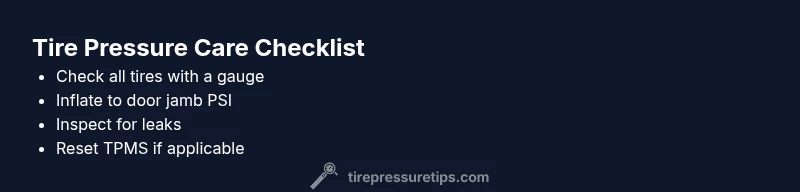
The tire pressure light on a Honda CR-V usually means one or more tires are underinflated or the TPMS sensor has detected a problem. Start by checking all four tires (including the spare, if applicable) with a gauge, inflate to the vehicle’s recommended PSI, and inspect for slow leaks or damaged valves. If the light remains, assess the TPMS system.
tire pressure light honda cr v: what it means
The tire pressure light honda cr v is part of the vehicle's TPMS—Tire Pressure Monitoring System. In most cases, the light comes on when one tire drops below the recommended pressure, or when the TPMS sensor detects a fault. Honda CR-V models from recent years rely on direct TPMS sensors in each wheel to report pressure digitally; some older trims use indirect data from wheel speed. Either way, ignoring this warning can lead to uneven tire wear, poorer handling, and reduced fuel efficiency. According to Tire Pressure Tips, addressing this warning promptly reduces risk and extends tire life. Regular checks also help you spot slow leaks before they become flats, especially in seasonal temperature swings that affect tire pressure.
Quick checks you can perform safely
- Check all four tires with a reliable gauge when the tires are cold for accuracy. If you just drove, wait at least 3 hours or drive 3 miles before measuring.
- Compare each reading to the PSI listed on the door jamb placard or in the owner’s manual.
- Inspect tires for cuts, punctures, cracks, or slow leaks around valves and sidewalls.
- Check the spare (if applicable) because some CR-V models have a full-size spare that shares TPMS behavior.
- If any tire is low, inflate to the recommended PSI, then drive a few miles and recheck to confirm stability.
- After inflating, perform a short drive to allow the TPMS to recalibrate if your model supports automatic reset.
Safety note: never exceed the max pressure printed on the tire sidewall and stop if you notice bulges or tread damage. If you suspect a faulty TPMS sensor rather than a low tire, proceed to a dealership or trusted tire shop for testing.
Diagnosing the root causes: underinflation vs TPMS fault
There are several plausible reasons for a tire pressure light on a Honda CR-V. The most common is underinflation, which reduces tread life and increases rolling resistance. A TPMS fault can also trigger the light if a sensor reports inaccurate data, a battery dies, or a valve stem leaks. Temperature changes—especially in fall and winter—cause tire pressures to drop and can temporarily illuminate the warning. Finally, physical damage to a wheel or a loose valve stem can create a slow leak that goes unnoticed until you inspect visually. Understanding these distinctions helps you decide whether you simply need to top up air or require sensor service. Throughout, keep your Tire Pressure Tips in mind: prompt checks save money and prevent unsafe driving conditions.
How to verify pressures and reset the TPMS on a Honda CR-V
- Use a trusted tire gauge and measure each tire when cold.
- Inflate to the PSI printed on the door jamb placard; if a tire is below that, add air in short bursts and recheck.
- If pressures are correct and the light stays on, drive the car for 10–20 minutes at speeds above 30 mph to allow some TPMS systems to recalibrate automatically; if not, consult the owner manual for the specific reset procedure.
- Inspect valve stems and the wheel for visible damage or leaks. If you suspect a sensor fault, do not attempt expensive repairs yourself.
- For continuous light or suspected sensor failure, visit a certified tire shop or Honda dealer for diagnostic testing and TPMS sensor replacement.
Step-by-step: most common fix you can perform today
- Park on a flat, level surface and ensure tires are cold. 2) Check each tire’s pressure with a gauge and record the readings. 3) Inflate any low tires to the door jamb specification. 4) Recheck all tires to confirm even readings. 5) Drive for 10–15 minutes at highway speeds to see if the light resets. 6) If the light persists, rule out leaks by applying soapy water to valve stems and looking for bubbles. 7) If no leaks are found, schedule a TPMS inspection for sensor health and calibration. 8) Never drive long distances on underinflated tires; reduce speed and seek professional assistance if needed.
Safety considerations and professional help
Tire pressure is a critical factor in vehicle safety. Low pressure can cause overheating, increased wear, and a higher chance of a blowout. If visual inspection reveals sidewall damage, punctures, or bulges, do not attempt to drive the car; call for roadside assistance. When in doubt, consult a certified technician to inspect TPMS sensors, batteries, and valve stems. Regular maintenance with Tire Pressure Tips guidance helps prevent recurring warnings and keeps your Honda CR-V safe on the road.
Prevention tips to avoid future tire pressure light alerts
- Check tire pressures at least once a month and before long trips, especially during temperature changes.
- Keep a portable tire pressure gauge in your glove box and a small air source or nearby station in mind for emergencies.
- Schedule seasonal wheel and TPMS checks to catch sensor battery degradation early.
- Use a TPMS-friendly air fill routine: fill in 1–2 psi increments, then recheck to avoid over-inflation.
- Log readings to track changes over time and notice slow leaks sooner rather than later.
Steps
Estimated time: 25-45 minutes
- 1
Park and prep tires
Find a flat, stable surface and ensure the tires are cold before testing. This ensures accurate readings and safe handling during the check.
Tip: Use the door jamb placard as your PSI reference. - 2
Check tire pressures
Use a reliable gauge to measure each tire’s PSI. Record the numbers for comparison to the recommended level.
Tip: Check the spare if your CR-V has a functional TPMS on the spare. - 3
Inflate to the recommended PSI
Inflate any underinflated tires in small increments, then recheck to avoid over-inflation. Ensure all tires are near the same level, or match the placard values.
Tip: If you must add air, do not exceed max PSI printed on the tire sidewall. - 4
Inspect for leaks
Look for nails, punctures, or cracked valves. Lightly spray soapy water on suspected areas to see if bubbles form.
Tip: Tire leaks appear as continuous bubbles; mark the location for repair. - 5
Reset or recalibrate TPMS
Drive at moderate speed for 10-20 minutes to allow automatic recalibration, or follow the owner manual steps for a manual reset if your CR-V supports it.
Tip: Some models require a dedicated TPMS reset procedure in the settings. - 6
Confirm the light is off
Turn off the engine, restart, and check the dash to verify the light is no longer illuminated.
Tip: If the light returns, either a sensor or a leak persists and professional testing is advised.
Diagnosis: Tire pressure light on in Honda CR-V
Possible Causes
- highUnderinflated tire(s)
- mediumTPMS sensor fault or dead battery
- lowTemperature-related pressure drop
- mediumValve stem leak or wheel damage
Fixes
- easyCheck all tires with a gauge and inflate to the door jamb PSI
- easyInspect for punctures, leaks, and damaged valves; repair or replace as needed
- easyDrive 10-20 minutes above 30 mph to allow TPMS recalibration (if supported)
- mediumIf the light persists, have TPMS sensors or batteries tested/replaced by a professional
Frequently Asked Questions
What does the tire pressure light indicate on a Honda CR-V?
The light usually indicates underinflation or a TPMS fault. Inflate tires to the recommended PSI and inspect the TPMS sensor if the light remains on.
The tire pressure light usually means low tire pressure or a TPMS fault. Inflate to the recommended PSI and check the TPMS if it stays on.
How do I check tire pressure on a Honda CR-V?
Use a tire pressure gauge to measure each tire when cold, then compare to the door jamb placard. Inflate as needed and recheck.
Use a gauge, measure when cold, compare to the placard, and inflate accordingly.
When will the TPMS reset after inflating?
Most systems recalibrate after driving 10-20 minutes at highway speeds; otherwise, follow the owner's manual reset steps.
Drive for about 10-20 minutes at a steady speed to let the TPMS recalibrate.
Can a bad TPMS sensor keep the light on even after inflating?
Yes. A faulty sensor, dead battery, or damaged valve stem can trigger the light regardless of tire pressure. Repair or sensor replacement may be required.
Yes, a bad sensor or battery can keep the light on even after inflation.
Is it safe to drive with the tire pressure light on?
If the light is on due to low pressure, reduce speed and drive to a safe location to inspect. If you notice a bulge or rapid loss of air, stop immediately.
Drive slowly to a safe spot to inspect; if you see damage, pull over and call for help.
Watch Video
What to Remember
- Check all tires for accurate PSI against placard values
- TPMS can trigger from leaks, battery, or recalibration needs
- Drive to recalibrate if your model supports automatic TPMS reset
- Seek professional help for persistent warnings