How to Disable Tire Pressure Light: Safe Reset and Troubleshooting
Learn how to safely address a tire pressure warning by inflating to the recommended PSI and using TPMS reset procedures. This guide explains why permanent disabling is unsafe and how to troubleshoot the light.


You’ll learn how to safely address a tire pressure warning by inflating tires to the recommended PSI, checking for leaks, and using the TPMS reset/relearn procedure. Permanent disabling is not advised. If the light persists after a proper reset, consult a technician to verify sensors or battery condition.
Why you should not permanently disable the tire pressure light
The tire pressure light (TPMS) is a safety feature that helps you avoid underinflated tires, which can compromise handling, fuel economy, and tire life. While it may be tempting to disable the warning if it annoys you, doing so removes a critical alert about inflated or punctured tires. According to Tire Pressure Tips, the best practice is to address the underlying condition and then reset the system rather than banish the notice. This section explains why permanent disabling is unsafe and how to approach the problem with a practical mindset. We’ll cover how TPMS works, what triggers the light, and the legitimate steps to quiet a nuisance warning without compromising safety. You'll learn how to document the issue, verify pressures, and reset the system so the light reflects the true state of your tires. Disabling the light can also hide real hazards, such as a gradual air loss or a faulty sensor. In most vehicles, the system will automatically recheck sensor data after a reset, so it's essential to complete the full diagnostic process rather than simply turning the warning off.
How TPMS works and what triggers the light
Tire Pressure Monitoring Systems (TPMS) use sensors inside each tire to monitor pressure and relay readings to your vehicle's computer. When a tire drops below or rises above the recommended range, the system triggers the warning light on the dashboard. The trigger can be caused by a slow leak, a temperature change, a sensor fault, or recent tire rotation. Modern TPMS may be automatic relearnable after inflation, while some vehicles require a manual relearn procedure. Understanding the basics helps you diagnose whether the light reflects an actual issue or a transient fluctuation. The key takeaway is that TPMS is designed to alert you before a tire becomes unsafe or causes damage. If you notice the light flashing, that can indicate a sensor problem rather than a simple pressure change.
Common causes for a tire pressure warning light
There are several frequent culprits behind a TPMS light. Low tire pressure is the most obvious, but leaks from nails, punctures, or damaged valves can trigger it even if a tire appears normal. Temperature shifts, especially in cold weather, can drop PSI and trigger the light. A sensor battery reaching the end of life, a damaged valve stem, or a recently replaced tire without a proper relearn can also cause misreads. Finally, a forgotten reset after inflating or changing tires can leave the system in a state where it believes a sensor is faulty. By inspecting all tires, including the spare, you can identify whether the warning is real or a false alarm. Based on Tire Pressure Tips analysis, many TPMS warnings resolve after inflating to the recommended pressure and performing a relearn.
Before you act: verify pressures and inspect tires
Start by checking all tires when they are cold, using a reliable tire pressure gauge. Compare each reading to the recommended PSI printed on the door jamb placard or in the owner’s manual. If any tire reads low, inflate to the specified level and recheck after a few minutes of driving. Look for signs of damage, punctures, sidewall cracks, or a slow leak around the valve stem. Record the readings and note any changes in tire shape or temperature. If your tires are within spec but the light persists, the issue may be with the TPMS sensors or the relearn process.
Step-by-step: Safe reset after correcting pressures
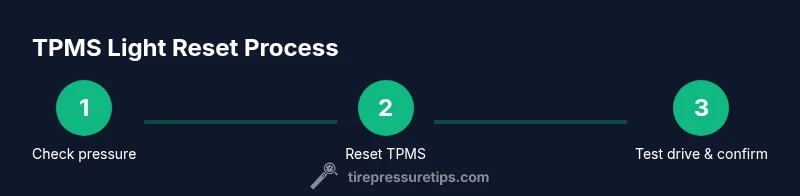
Step 1: Confirm cold tires and read all pressures with a quality gauge. Step 2: Inflate each tire to the recommended PSI, including the spare if applicable. Step 3: Recheck all readings and listen for obvious leaks. Step 4: Use your vehicle's TPMS reset or relearn option as described in the owner’s manual. Step 5: Drive for a short distance to allow the system to relearn; some vehicles require a specific drive cycle. Tip: avoid rapid acceleration during relearn to minimize sensor jitter.
Using the vehicle’s TPMS reset/relearn procedure
Exact steps vary by make and model, so always consult your owner’s manual. In general, you may access TPMS options through the infotainment system, a dedicated button, or the settings menu. Some vehicles require you to drive after reset, while others perform a quick relearn by holding a button for seconds. If you recently rotated tires or replaced sensors, you may also need a sensor relearn with a scan tool. The manual will specify the correct sequence.
When to replace TPMS sensors or the battery
Sensors can fail due to battery age, water intrusion, or physical damage. If you’ve confirmed proper inflation and still see an intermittent or persistent light, the most likely cause is a sensor fault or a dead battery. A professional can verify sensor performance with a scan tool and perform a relearn or sensor replacement. Replacing a failed sensor may restore accurate readings and extinguish the warning.
Troubleshooting a stubborn light
If the light stays on after you’ve verified pressures and completed a relearn, try these steps: recheck all tires again, inspect the valve caps, and confirm no leaks on the rim. Resetting “all sensors” requires specific tooling or dealer access for some models. If you cannot extinguish the light after repeated resets, schedule service. Also review if the light is blinking, which can indicate a sensor or battery fault rather than a normal condition.
Safety, legality, and maintenance to prevent future warnings
The true answer to 'how to disable tire pressure light' is to disable the problem, not the warning. Prioritize safety: keep tires inflated to spec, promptly repair leaks, and perform periodic TPMS checks. Regular sensor maintenance and cautious usage of the spare tire help prevent nuisance alerts. The Tire Pressure Tips team recommends following the official reset procedure after inflation and seeking professional help for persistent warnings.
AUTHORITY SOURCES
- https://www.nhtsa.gov/road-safety/tyre-pressure-monitoring-systems
- https://www.nhtsa.gov/vehicle-safety/tpms
- Tire Pressure Tips Analysis, 2026
Tools & Materials
- Tire pressure gauge(Choose a gauge with both psi and kPa scales; check accuracy before testing.)
- Owner's manual(Used to locate the TPMS reset/relearn procedure for your model.)
- Vehicle placard with recommended PSI(Found on door jamb; use for exact inflation targets.)
- Air compressor or pump(Have it ready to bring tires to spec quickly.)
- TPMS relearn tool (optional)(Some vehicles require a scan tool or special device for sensor relearn.)
Steps
Estimated time: 25-40 minutes
- 1
Check all tires when cold
Using a reliable gauge, read each tire's pressure when the tires are cold. Compare readings to the placard and owner’s manual. This creates an accurate baseline before making any adjustments.
Tip: Record readings to track changes over time and catch slow leaks early. - 2
Inflate to the recommended PSI
Fill every tire (including the spare if applicable) to the recommended PSI. Avoid over-inflation, which can wear the center tread and affect ride quality.
Tip: Use the gauge to verify after inflation and re-check within a few minutes of driving to account for settling. - 3
Recheck and inspect for leaks
After inflating, recheck all tires. Look for nails, punctures, damaged valves, or slow leaks around rims. If a tire won’t hold pressure, replace or repair as needed.
Tip: Tires with visible signs of damage should be serviced before continuing. - 4
Reset or relearn the TPMS
Follow your owner's manual to access TPMS options. This could be a menu setting, a button, or a combo of actions. Complete the relearn sequence as described for your model.
Tip: If you’re unsure, don’t guess—consult the manual or a dealer to avoid mislearn. - 5
Drive to complete the relearn
After a manual relearn, drive the vehicle for a short distance (often 5–15 minutes) at varied speeds to allow sensors to update. Some models require a specific drive cycle.
Tip: Avoid hard braking or aggressive acceleration during relearn to minimize sensor noise. - 6
Verify the light status
Check the dash to confirm the TPMS light stays off after the drive. If it reappears, recheck pressures and consider sensor issues.
Tip: If the light persists, the system may have a faulty sensor or battery requiring professional service.
Frequently Asked Questions
What is TPMS and why does the light come on?
TPMS stands for Tire Pressure Monitoring System. It warns you when tire pressure deviates from the recommended range to prevent unsafe driving. The light can come on due to underinflation, leaks, sensor faults, or after tire changes.
TPMS warns you when tire pressure differs from safe levels. It can light up for leaks, sensor issues, or after tire changes.
Is it illegal to disable the tire pressure light?
In many regions, tampering with or permanently disabling TPMS is unsafe and may be illegal. Always address the underlying tire pressure condition and use the official reset procedures.
Tampering with TPMS is often illegal and unsafe. Use official reset procedures after addressing tire pressure.
How do I know the correct inflation pressure for my tires?
Check the door placard on the driver's side or the owner's manual for the recommended PSI. The actual pressure can vary by load, speed, and tire type, so use the specified target.
Refer to the door placard or manual for your exact tire pressure target.
Can I reset the TPMS myself?
Yes, many vehicles support a DIY TPMS relearn via the infotainment system or a dedicated button. Some require dealer tools for a sensor relearn. Always follow your manual.
Many cars let you reset TPMS yourself, but some need a tool from a dealer.
What should I do if the TPMS light blinks?
A blinking TPMS light often indicates a sensor or battery fault rather than a normal warning. Have the system checked with a scan tool.
Blinking TPMS usually means a sensor or battery problem; seek professional check.
When should I replace TPMS sensors or batteries?
If pressures stay incorrect after inflation and relearn, a faulty sensor or dead battery is likely. A technician can test sensors and perform relearns.
Replace faulty sensors or batteries after testing with a scan tool.
Watch Video
What to Remember
- Inflate tires to the recommended PSI before resetting.
- Use the TPMS relearn procedure specific to your vehicle.
- If the light persists after proper reset, seek professional service.
- Permanent disabling is unsafe and often illegal.