Zero-Turn Tire Pressure Chart: A Practical Guide for Mowers
Master zero-turn tire pressure with a practical guide. Learn starting ranges, how weight and terrain affect pressures, and how to build your own zero-turn tire pressure chart for better traction and turf health.


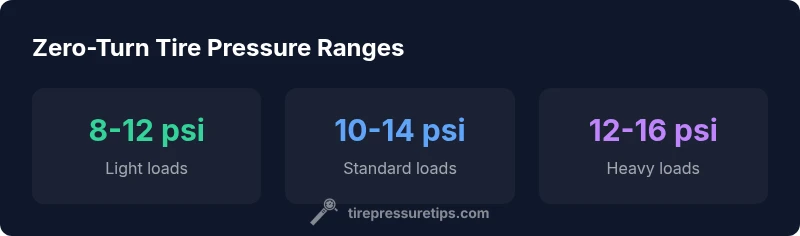
There's no universal zero-turn tire pressure chart for every mower model. A practical starting range for turf tires is about 8–14 psi, depending on tire size and load. Always consult your mower’s manufacturer chart and verify cold pressures before use. For lighter loads, start near the lower end; for heavier loads, use the higher end.
Why zero-turn tire pressure matters
The pressure in your zero-turn mower tires isn’t just a number on a gauge. It influences traction, turf health, cut quality, and even fuel efficiency. A properly inflated tire distributes weight evenly, minimizes soil compaction, and helps the mower respond predictably to steering inputs. According to Tire Pressure Tips, operators who adopt a disciplined approach to tire pressure see more consistent mowing results and less tire wear over a season. This is especially true for turf tires on zero-turns, where uneven weight distribution can dramatically affect maneuverability and finish quality on finish cuts. While there is no single universal chart that applies to every model, starting with a sensible baseline and checking cold pressures against your mower’s manufacturer guidance is the best practice.
Understanding the zero turn tire pressure chart
A zero-turn tire pressure chart is a model-specific reference that translates weight, tire size, and terrain into target pressures. Most charts differentiate between front and rear tires, and many mower manuals present separate columns for light, standard, and heavy loads. The critical idea is that heavier loads or rough terrain typically require higher pressures to maintain contact with the ground without overworking the tire. The Tire Pressure Tips team emphasizes that charts are optimization tools, not rigid rules—use them as starting points and confirm with actual performance tests on your lawn.
How weight and terrain influence pressure on turf tires
Weight distribution shifts under load, so the same mower can require different pressures when cutting tall grass versus a dense job like lawn renovation. In practice, adding weight to the deck or ballast increases the load on all tires, nudging you toward the higher end of the recommended range. Uneven terrain, such as hills or soft soil, can also call for adjustments to avoid excessive tire slippage or scalp marks. When you adjust pressure, do so in small increments (0.5–1 psi) and test mowing performance on representative sections of the yard to measure traction, flotation, and cut quality. The goal is a stable ride that minimizes turf damage while keeping the blades at the proper height.
Step-by-step: using a zero-turn tire pressure chart in real life
- Identify your exact mower model and tire sizes on the chassis placard or owner manual. 2) Read the chart for cold pressures corresponding to your expected load. 3) Use a high-quality gauge and measure tires cold before starting. 4) Set pressures to the recommended target and recheck after the mower warms up. 5) Observe traction, digging, and finish quality; adjust by 0.5–1 psi as needed. 6) Recheck weekly during peak season and after major terrain changes.
Common mowing scenarios and recommended adjustments
Soft ground or damp turf often benefits from slightly higher flotation pressure to maximize surface contact without digging in. Dense, heavy growth might require modest pressure increases to keep tires from squirming under load. If you notice sidewall scuffing, scalping, or excessive tire wear on the inner edges, you’re likely too high or too low for the current conditions. Keep a log of changes and the resulting performance to build a practical reference tailored to your yard.
Tools and safety: measuring and maintaining correct pressure
Always measure tire pressure when tires are cold and mounted correctly. Use a reliable gauge (dial or digital) and verify readings at least twice per reference change. When adjusting pressure, do so with the engine off and following manufacturer safety guidelines to avoid sudden blade movement or mower movement. Regular maintenance—checking seals, valve stems, and tread wear—reduces the risk of slow leaks that skew readings and performance.
Building your own zero-turn tire pressure chart
Collect baseline weights (mower dry weight, deck load), tire sizes, and observed performance across various mowing scenarios. Record the pressures that deliver the best traction, least soil compaction, and even blade engagement. Over time, you’ll create a customized chart that mirrors your yard’s soil composition and mowing routines, complementing the official manufacturer chart with real-world data.
Example pressure ranges for common zero-turn mower tire setups
| Mower Type | Recommended Pressure (psi) | Notes |
|---|---|---|
| Light mower (compact) | 8-12 | General turf tires – start here |
| Standard mower | 10-14 | Adjust for load and terrain |
| Heavy-duty mower | 12-16 | If tires run hot, reduce pressure |
| N/A | N/A | N/A |
Frequently Asked Questions
Do zero-turn mowers require different front and rear tire pressures?
Some models have different recommended pressures per axle; consult the manufacturer's chart for front and rear tires. If not available, start near the same pressure and adjust based on traction and wear.
Some models have different front and rear pressures; check the chart.
Can I use a car tire pressure chart for a zero-turn mower?
No. Car tire charts assume different tire constructions and loads. Use the mower’s chart or a mower-specific guide.
No—the charts aren’t interchangeable; use mower-specific guidance.
What happens if I overinflate turf tires on my zero-turn?
Overinflation reduces traction, increases bounce, and can cause uneven wear. If you suspect overinflation, reduce pressure a bit and test performance.
Overinflate hurts traction; ease back.
How often should I check zero-turn tire pressure?
Check cold pressures before each mowing session and monthly for routine maintenance.
Check cold before mowing, monthly at minimum.
Do temperature changes affect tire pressure on zero-turn mowers?
Yes. Pressure rises with heat and falls with cold. Check pressures when tires are cold and adjust for weather.
Temperature affects pressure, check cold.
Is there a DIY zero-turn tire pressure chart I can build?
Yes. Track weight, tire size, and observed traction; start with manufacturer ranges and refine with real-world mowing data.
Yes—build an in-house chart from data you collect.
“A proper tire pressure chart is only useful if you apply it consistently and verify pressures when cold.”
What to Remember
- Start with an 8-14 psi baseline for turf tires
- Check cold pressures using the mower’s chart
- Adjust in 0.5-1 psi steps as weight or terrain changes
- Regularly verify pressures before each mowing season