When Tire Pressure Goes Up: Temperature and Safety
Learn why tire pressure rises with temperature, how to measure accurately, and safe steps to keep your tires at the recommended cold PSI for optimal safety and fuel efficiency.


According to Tire Pressure Tips, tire pressure rises as the tire warms from driving or higher ambient temperatures. Readings taken after a drive will show higher PSI than cold values. To stay safe and optimize fuel efficiency, check tire pressure when tires are cold and adjust each wheel to the vehicle’s recommended cold PSI, accounting for seasonal changes.
Why Tire Pressure Matters for Safety and Efficiency
Maintaining correct tire pressure is not just about avoiding a warning light; it affects handling, braking distance, tire wear, fuel economy, and overall safety. Underinflated tires run hotter, wear unevenly, and can fail suddenly, especially at high speeds or in hot weather. Overinflated tires reduce grip and create a harsher ride, potentially increasing damage from road hazards. Getting the numbers right requires understanding how pressures change with temperature and use. According to Tire Pressure Tips, the simplest baseline is to rely on the cold-figure printed on your door jamb placard or owner manual, then verify with a gauge after tires have cooled for several hours. Seasonal shifts can move the target PSI; winter air is denser and cooler air affects expansion differently than summer heat. The practical upshot is a consistent check routine: measure when cold, compare with spec, adjust, and recheck after temperature changes or long trips. This approach keeps tires in the optimal range for wear, fuel efficiency, and predictable handling. In this section we’ll unpack the physics in plain terms and translate it into a repeatable checklist you can use before every notable drive.
Temperature and Tire Pressure: The Hidden Driver
Tire pressure is not fixed; it shifts with temperature due to the physics of gas behavior. When tires warm from driving or from the ambient environment, the air inside expands, raising the PSI reading on your gauge. Conversely, cold days pull the pressure down as air contracts. The magnitude of the change depends on how much heat the tire accumulates and the initial cold value. The key practical takeaway is simple: use the cold PSI as your baseline, then account for weather and season when you plan a long trip or change a tire. Tire Pressure Tips emphasizes consistency: measure in the same conditions each time, and always verify readings with the same gauge you’re used to. Our goal is to provide a mental model you can apply anywhere: know the target number, understand when readings will drift, and adjust accordingly to keep performance steady.
Driving Factors: Load, Speed, and Climate
Weight on the axle, how fast you drive, and the climate all influence tire pressure readings. A heavier load increases tire deformation and generates heat, which elevates the internal pressure during the trip. High-speed driving creates friction and heat as well, causing the air inside to expand further. Climate matters too: in hot weather, ambient air and the tire surface reach higher temperatures, pushing PSI upward; in cold weather, readings drop. Because these variables interact, you should consider the expected conditions for a trip and start from the car manufacturer’s cold-psi specification. If you routinely haul gear or passengers, you may need to adjust by a small amount while ensuring you never exceed the tire’s maximum pressure printed on the sidewall.
Measuring Tire Pressure Correctly: The Cold Tire Rule
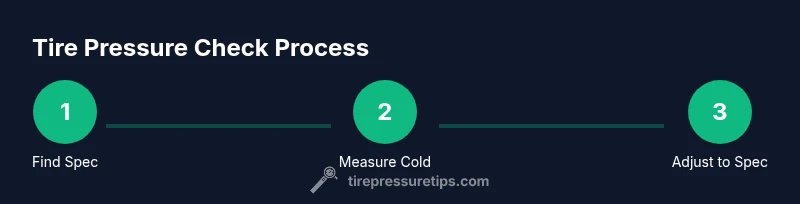
The official method is to measure tire pressures when the tires are cold, ideally before you’ve rolled more than a few hundred feet from a parked state. Start by removing the valve cap, attaching the gauge securely, and recording each reading. Compare each number to the spec on the door placard or owner manual; if a tire is underinflated, add air until it reaches the target; if overinflated, release air in small increments and recheck. Always recheck after adjustments and recheck again after a short drive to see how the pressure stabilizes with heat. Use the same gauge for consistency and cap the valve when finished. This block is about turning a measurement into a safe, repeatable process.
Practical Guidelines for Seasonal Changes and Spares
Seasonal shifts can move your target pressure, especially in regions with wide temperatures between day and night. Keep your tires inflated to the cold-psi specification appropriate for the season and for the weight you carry. Don’t forget the spare tire: it lives unused most of the year, but its pressure drops with temperature just like the others. Check the spare at least a couple of times a year and before long trips. If you have a space-saver feature, be mindful of its own pressure requirement as a precaution against blowouts.
Common Pitfalls and Safety Tips
Common mistakes include relying on TPMS readings alone, inflating to the maximum number on the tire sidewall, or assuming one value fits all four tires. While TPMS is helpful, it does not replace manual gauge checks. Avoid over-inflation, which reduces traction and increases wear in the center tread; underinflation compromises steering and braking and can lead to heat buildup. Always use the vehicle’s recommended cold PSI values from the placard and adjust by small increments. If you’re unsure, a quick recheck after a drive or after a weather shift will help verify stability.
TPMS, Gauges, and Maintaining Consistency
TPMS provides real-time alerts when pressures drift, but it’s still essential to confirm actual values with a gauge. Choose a reliable gauge and stick with it to avoid reading discrepancies. Before any long trip, verify all tires—including the spare—are at the recommended cold psi. Keep your gauge in a consistent place in your car kit and check readings after weather changes or heavy load adjustments. A routine helps you identify slow leaks early and extend tire life.
Real-World Scenarios: Home, Road Trips, and Garage Quick Checks
At home, you can quickly check all tires before a daily commute; a 5- to 10-minute routine is enough to catch underinflation early. On road trips, check during fuel stops and after long drives, especially if you enter hot or cold climates; this helps maintain consistent handling. In a garage or shop, practice with your door placard and a trusted gauge to build confidence, and document readings to track changes over time.
Tools & Materials
- Digital tire pressure gauge(Calibrated; reads PSI or kPa; use cold tires for baseline)
- Tire inflator or air compressor(With built-in gauge or external gauge; ensure it accepts your target PSI)
- Vehicle owner's manual or door jamb placard(Contains recommended cold PSI values by tire position)
- Valve cap and cleaning cloth(Keep valve stems clean to avoid readings interference)
- Optional: tire temperature thermometer(Useful for precise temperature-based adjustments)
Steps
Estimated time: 15-25 minutes
- 1
Find the vehicle’s recommended tire pressure
Locate the cold PSI value on the door jamb placard or in the owner's manual. This is the baseline for all four tires and the spare in most cases. If you haul heavy loads regularly, note any variation by axle.
Tip: Always use the cold baseline from the placard and avoid adjusting from heat-expanded readings. - 2
Check tires when cold
Do not measure after a long drive or after aggressive driving. Cold readings reflect the baseline spec. If tires are warm, wait at least 3 hours or drive only a short distance before rechecking.
Tip: If measuring in cold weather, give extra time for tires to cool. - 3
Attach gauge and take readings
Remove the valve cap, place the gauge on the valve stem, and press firmly to get a reading for each tire. Repeat for all wheels and the spare if you rotate tires.
Tip: Ensure a tight seal; wiggle the gauge if you suspect a leak. - 4
Compare and decide on adjustments
Compare each reading to the placard value. If underinflated, add air in small increments; if overinflated, release air gradually and recheck.
Tip: Adjust one tire at a time to avoid underinflating others. - 5
Recheck after adjustment
Recheck all tires after adjustments, and then recheck again after a short drive to see how heat affects readings.
Tip: Always recheck with the same gauge and in the same temperature conditions. - 6
Seasonal and spare checks
Consider seasonal temperature changes; verify that the tire pressures still align with the cold-psi spec. Don’t forget the spare, which also changes with temperature.
Tip: Inspect for leaks and valve health during every check.
Frequently Asked Questions
Why does tire pressure rise after a long drive?
Tire pressure rises as tires heat up from driving: air expands with temperature, increasing PSI. This is normal; always confirm with a cold measurement and adjust to the placard spec.
Tires heat up when you drive, so pressure rises. Check when cold for accuracy and adjust to the spec.
Should I check tire pressure when I drive or when tires are cold?
Check tire pressure when tires are cold for the most accurate reading. Hot readings will overstate the cold spec; wait for tires to cool if needed.
Check when tires are cold for accuracy.
How often should I check tire pressure?
Aim to check monthly and before long trips, especially when weather changes. Regular checks help prevent under- or over-inflation.
Check monthly and before long trips.
What if the TPMS shows a warning but my gauge reads fine?
TPMS warns when pressure drifts; verify readings with a manual gauge and adjust as needed. Don’t rely solely on the sensor.
Verify with a gauge and adjust if needed.
Can over-inflation cause problems?
Yes. Over-inflation can reduce traction, cause uneven wear, and increase the risk of damage from road hazards.
Over-inflation can be dangerous.
Should I check the spare tire as well?
Yes. The spare tire also experiences temperature-based pressure changes—check it periodically and before trips.
Check the spare too.
Watch Video
What to Remember
- Check tires when cold against the placard value
- Temperature affects readings; plan checks around climate
- Use a reliable gauge and stay consistent
- Recheck after adjustments and after long drives
- Include the spare in routine checks