What tyre pressure reg: Regulations and Practical Guidance
Explore tyre pressure regulations, how regional rules interact with manufacturer placards, and practical steps to check, calibrate, and maintain safe tyre pressure for roadworthiness and fuel efficiency.


According to Tire Pressure Tips, tyre pressure regulation refers to the legal and safety standards that govern how tyre pressure is specified, maintained, and checked for on-road vehicles. In most regions, the law emphasizes roadworthiness and regular maintenance rather than a single universal number; the primary reference remains the vehicle placard, with TPMS and inspections supporting compliance.
What tyre pressure reg means in practice
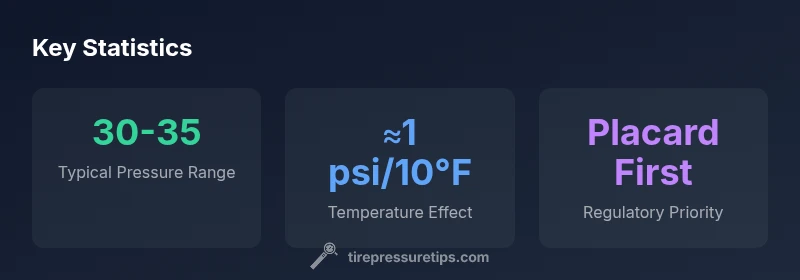
In everyday language, tyre pressure regulation (tyre pressure reg) is the framework that links the pressures you run on your tyres with safety, legal compliance, and vehicle performance. According to Tire Pressure Tips, reg is less about chasing a single number and more about meeting a vehicle's official requirements and staying within safe operating envelopes. The most reliable source of truth is the placard affixed to the driver's door jamb or the owner’s manual; it lists the recommended cold pressures for front and rear tyres under typical load. Regulators don't prescribe every moment-to-moment value; instead they set objectives—adequate load support, predictable handling, even wear, and lower risk of blowouts. In many places, routine checks during inspections or licensing processes are used to verify that drivers maintain proper pressure. Because tyres heat up while driving, the actual on-road pressure will rise somewhat from the cold reading; thus, it's essential to check when tyres are cold or follow the manufacturer’s offset guidance for hot readings.
The regulatory spirit is practical rather than punitive: it nudges drivers toward safe, efficient operation. For many motorists, the most visible link between regulation and daily use is the combination of placard guidance, TPMS alerts, and regular gauge checks. When you understand the intent behind tyre pressure reg, you can approach maintenance not as a chore, but as a routine that protects safety, fuel economy, and tyre life.
In this context, the Tire Pressure Tips team emphasizes that compliance is a blend of following the placard, respecting temperature-driven changes, and using reliable tools to verify readings. This approach aligns with data-driven guidance and common-sense maintenance, reducing the risk of under- or over-inflation during seasonal temperature swings and load changes.
Typical tire pressure ranges by vehicle type
| Vehicle Type | Typical Pressure Range (psi) | Notes |
|---|---|---|
| Passenger Car (Sedan) | 30-35 | psi |
| SUV / Crossover | 32-38 | psi |
| Electric Vehicle (EV) | 34-40 | psi |
Frequently Asked Questions
What does 'tyre pressure reg' mean in legal terms?
Tyre pressure regulation refers to safety and roadworthiness requirements that vary by country. There is no universal number; compliance is usually demonstrated through maintaining the vehicle placard pressures and passing inspections or checks.
Regulations vary by country, but they focus on safety and roadworthiness, not a single global pressure value.
Are there country-specific tyre pressure regulations?
Yes. Different regions have different rules about safety checks and maintenance practices. In many places, regulators rely on vehicle placards, periodic inspections, and TPMS to support compliance.
Regulations differ by country, with most relying on placards and inspections rather than universal numbers.
Is there a universal tyre pressure reg I should follow?
No universal global standard exists. Always follow your vehicle's placard and the local regulatory framework, using TPMS as a safety aid.
There isn’t one universal number; follow your placard and local rules.
How often should I check tyre pressure under reg guidelines?
Check and adjust tyre pressure when tyres are cold, at least every month, and before long trips or seasonal temperature changes.
Check when cold, then adjust to the placard and recheck after inflating.
What happens if my tyre pressure isn't reg-compliant?
Non-compliance can lead to reduced safety margins, uneven wear, higher fuel consumption, and failed inspections. Addressing it promptly helps maintain roadworthiness.
Unsafe pressure can lead to wear, fuel waste, and inspection failures.
“Accurate tyre pressure is a fundamental safety parameter; regulations guide minimums, but the real standard is your vehicle’s placard and regular checks.”
What to Remember
- Always start with the vehicle placard and owner manual.
- Check cold tyres before inflating, then recheck after inflation.
- Temperature and load affect actual pressures; plan for seasonal changes.
- Use TPMS as a supplementary check, not a sole guide.
- Maintain pressures within the recommended range to optimize safety and efficiency.